Scientists find a surprising genetic twist behind octopus intelligence
The remarkable intelligence of octopuses, squid, and cuttlefish may trace back to an ancient reshuffling of their DNA that created new connections between genes. Scientists discovered that these changes in the genome's 3D structure may have helped drive the evolution of their unusually complex nervous systems.
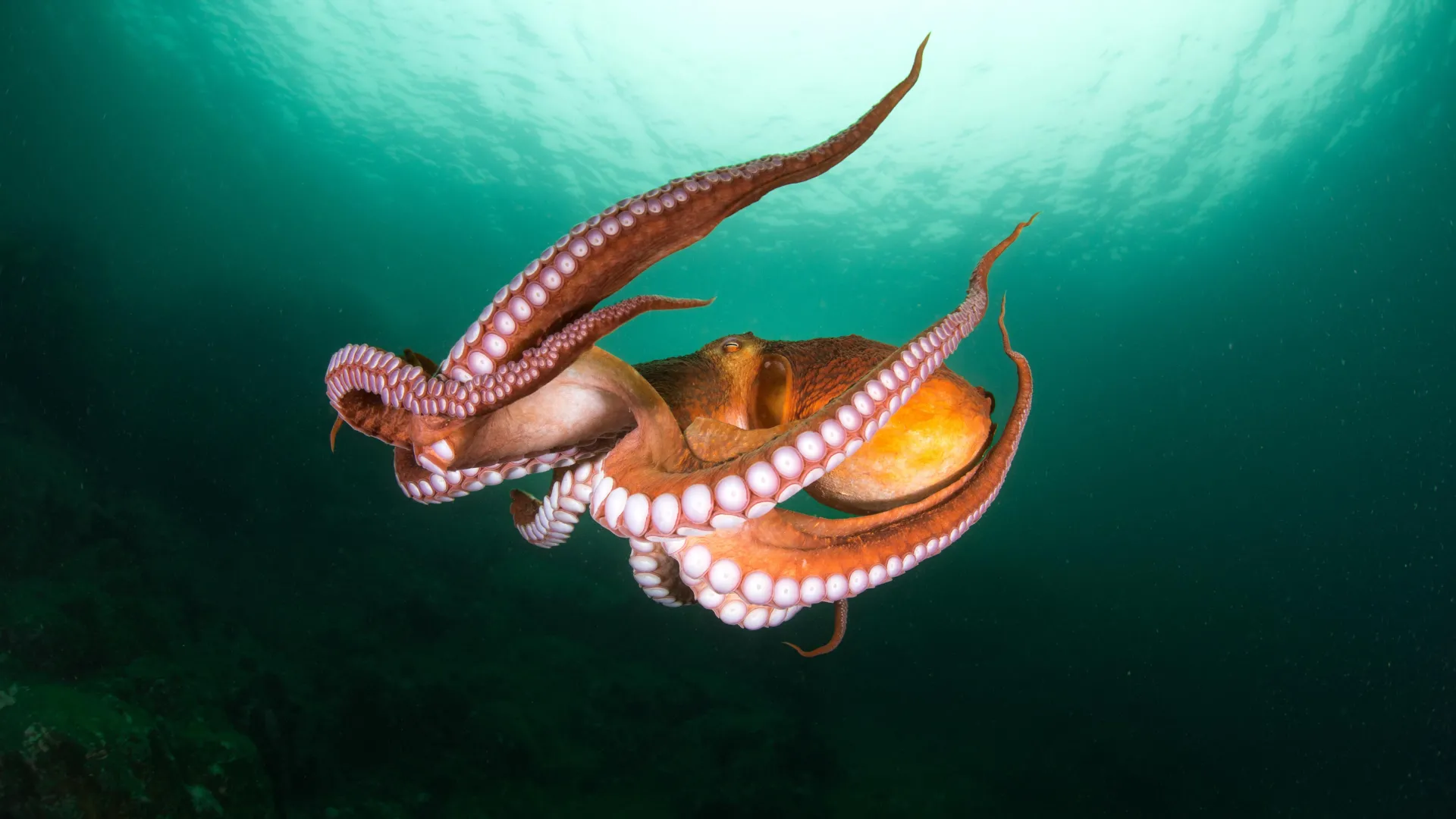
Key points
- Researchers at the University of Vienna found that a massive reorganization of DNA hundreds of millions of years ago brought previously separated genetic regions into contact in octopuses, squid, and cuttlefish.
- The study, published in Nature Communications, suggests that the three-dimensional folding of DNA may play a more active role in evolution than previously thought.
- Smaller DNA structures called chromatin loops varied significantly between species and tissues and were often located near genes linked to nervous system development.
Scientists at the University of Vienna have uncovered a genetic clue that may help explain the evolution of complex nervous systems in octopuses, squid, and cuttlefish. The research, published in Nature Communications, found that a massive reorganization of DNA hundreds of millions of years ago brought previously separated genetic regions into close physical contact.
These new connections changed how genes could interact and be controlled, potentially contributing to the evolution of the unusually sophisticated nervous systems in these animals, known as coleoid cephalopods. The findings suggest that the physical structure of DNA may play a more active role in evolution than scientists once thought.
Ancient DNA reshuffling created new connections
The researchers reconstructed the three-dimensional organization of the genome in octopuses, squid, and cuttlefish and compared it with patterns of gene activity. They found evidence that cephalopod genomes underwent an extensive period of reorganization hundreds of millions of years ago, during which large sections of genetic material were rearranged, bringing previously separated chromosome regions into close proximity.
This reshuffling created opportunities for DNA regions to interact in new ways, gradually establishing more elaborate networks of genetic regulation. Over time, these interactions could become increasingly interconnected, a process the scientists call regulatory entanglement. This mechanism may explain how evolution produces new biological features without disrupting essential functions.
The genome isn't just a sequence of genes. It's folded into a complex three-dimensional structure.
— Dr. Thea Rogers
Flexible DNA loops near nervous system genes
The study found that large structural regions called chromatin domains remained stable over long evolutionary periods, while smaller structures called chromatin loops showed substantial differences between cephalopod species, tissues, and developmental stages. Many of these flexible loops appeared near genes associated with important cephalopod traits, including nervous system development and function.
This pattern suggests that smaller, more adaptable DNA structures may be especially responsive to major genetic rearrangements. By changing which regions of DNA can communicate, these loops could help generate new patterns of gene activity and contribute to the evolution of complex traits. The results do not prove that these DNA changes directly caused cephalopod intelligence, but they reveal a potential mechanism.