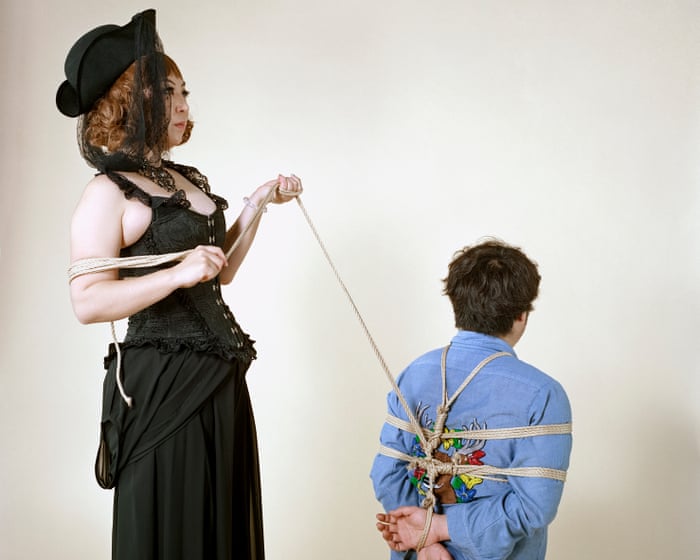
A dominatrix and her tightly bound client: Giada Ripa’s best photograph
‘Karen is a Japanese dominatrix and “rope artist” who ties up her clients in a way that echoes how samurai bound their prisoners. Clients are mostly men with high-pressure jobs’ Ten years ago, my dad called to say he had found these amazing images hidden under piles of maps and stuff in an attic in our family home in Piemonte, northern Italy. He had come across a leather-bound album of 53 black and white…
Key points
- Giada Ripa found a 53-photo album by Felice Beato in her family's Italian attic.
- Ripa traced the album to ancestor Mathilde Ruinart, who lived in Japan from 1867.
- The Yokohama Project pairs Beato's images with Ripa's photos of 40 Japanese professions.
Photographer Giada Ripa has described how a leather-bound album of 53 black and white photographs by Felice Beato was found in an attic in her family home in Piemonte, northern Italy, about ten years ago. Beato, the first foreign photographer to arrive in Japan in 1863, photographed geishas, fishers, samurai, teachers and government officials, producing some of the first images of Japan seen in the west.
Ripa later traced the album to her ancestor Mathilde Ruinart, an intellectual and painter who accompanied her husband, the first Italian ambassador to Japan, there in 1867 and stayed four years. Ripa said Ruinart likely bought the photographs from Beato, which is how they ended up in her house.
The Yokohama Project
Ripa's project is a dialogue between Beato, Ruinart and herself across 150 years. In its first chapter she followed their footsteps, shooting on large-format film; in the second she photographed about 40 Japanese professions, including the geisha and shamisen player, and invited people to a Tokyo studio to present themselves as they wished.
She is a therapeutic person for them, and they talk to her
— Giada Ripa
Karen and shibari
The portrait shows Karen, who describes herself as a BDSM dominatrix and rope artist. She practises shibari and kinbaku, tying and binding clients who are mostly men with high social and professional pressures.
Ripa said Karen's practice lets clients step outside their daily identities and express a side they cannot show elsewhere. The man in the image was an assistant on the project who agreed to take part and said afterwards that he enjoyed it.