A mother’s touch helps premature babies grow strong in Gaza
At Nasser Hospital, a kangaroo mother care pilot programme helps vulnerable newborns.
Key points
- Rania Fadel gave birth to twins Ilyas and Yahya on September 25 in Khan Younis.
- Ilyas weighed 1.4 kilogrammes at birth and spent nearly two weeks in intensive care.
- Nasser Medical Complex introduced kangaroo mother care with WHO, UNICEF and UNFPA support.
In Khan Younis, southern Gaza, Rania Fadel gave birth to twin boys, Ilyas and Yahya, on September 25. While Yahya was born healthy, Ilyas was admitted to the neonatal intensive care unit at Nasser Medical Complex, where he remained for nearly two weeks.
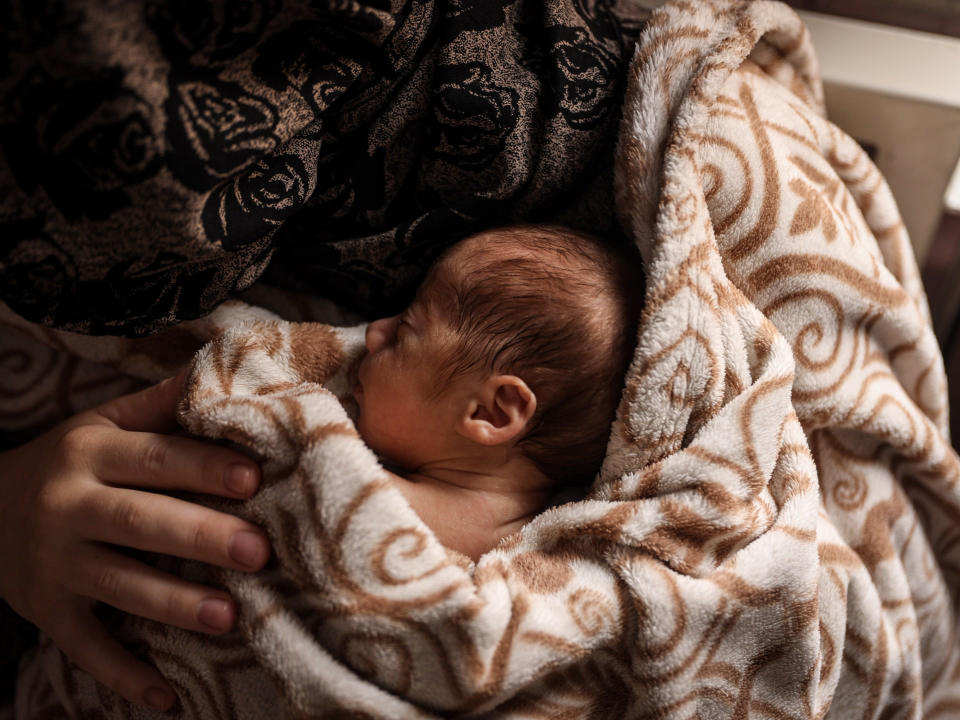
Ilyas was born prematurely, weighing just 1.4 kilogrammes, and had medical issues affecting his blood and lungs, according to his mother. Rania, 24, was recovering from a Caesarean section and could not hold him for 11 days.
Kangaroo mother care at Nasser
As Ilyas's condition improved and he moved to the hospital's neonatal care unit, Rania was able to hold him against her bare chest. This practice, known as kangaroo mother care, is part of a newly launched programme at the hospital. It involves prolonged skin-to-skin contact between a caregiver and baby, along with exclusive breast milk feeding.
Khawla al-Madhoun, director of nursing at the hospital's maternity and neonatal departments, said the approach supports growth and strengthens the mother-baby bond. She noted that babies who were unwell or underweight begin to grow faster with kangaroo care and may leave the hospital sooner. The programme is supported by WHO, UNICEF and UNFPA and is being introduced gradually.
When we place a baby on the mother's chest, it helps the baby grow.
— Khawla al-Madhoun
Gaza's neonatal care crisis
Gaza's health system continues to struggle with damaged facilities, shortages of equipment and overcrowded neonatal units. Before the war began in October 2023, Gaza had eight neonatal intensive care units with 178 incubators, according to UNICEF. By November 2024, three units had been destroyed and available incubators had fallen to about 54, a reduction of 70 percent.
Al-Madhoun stressed that kangaroo care cannot replace an incubator or other treatment when a baby needs intensive care. The hospital is prioritising medically stable babies who do not require oxygen support. Meanwhile, mothers like Linda Abu Nasira, 23, are learning the technique while living in a tent in al-Mawasi, where conditions are difficult.