Aberfan: The Village That Fought Back review – the contempt they have faced to get justice is sickening
As we witness the endless indignities these grieving families have endured in the six decades since the mining disaster, it is impossible not to turn red with rage ‘I’d like to have known her that bit longer, really. Those eight years went very, very quickly. I loved the child. I lost her. And that seemed to me to be the end of everything really, when she’d gone.” Ray Lee, now 90, lost his daughter Anne on 21…
Key points
- A BBC documentary revisits the 1966 Aberfan disaster, which killed 116 children and 28 adults.
- It details the National Coal Board's and government's conduct toward the grieving village.
- Survivors and bereaved families describe decades of fighting for justice and compensation.
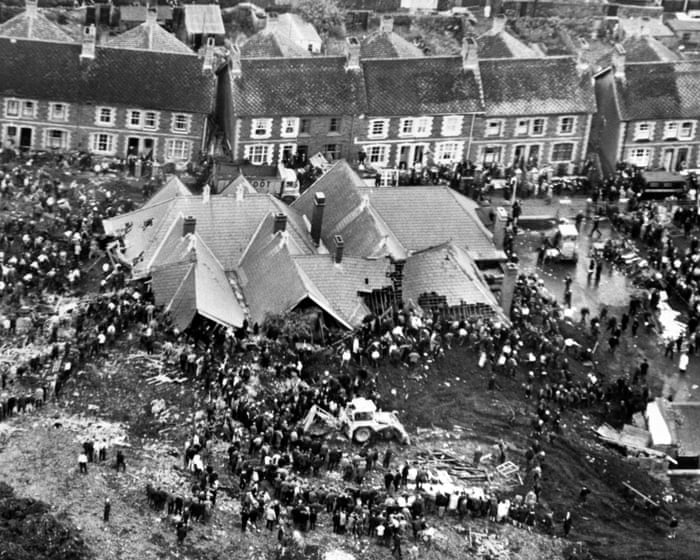
A new documentary, Aberfan: The Village That Fought Back, examines the aftermath of the 21 October 1966 disaster in which an estimated 100,000 tonnes of slurry from a colliery spoil tip engulfed Pantglas junior school and surrounding houses in the Welsh mining village. The collapse killed 116 children and 28 adults.
The film opens with the accounts of those affected. Ray Lee, now 90, lost his daughter Anne, then eight. Gaynor Madgwick, the same age and at the same school, was severely injured but survived; her grandfather dug her out, and her father told her in hospital that her brother and sister had gone to heaven. Marlene Gerlach, who survived with all three of her children, recalls screaming for them across the unrecognisable school site.
Blame and official conduct
The programme focuses on the conduct of the National Coal Board and the government of the day, including secretary of state for Wales George Thomas, who the film says failed to stand up to the board and its chairman Sir Alf Robens. Robens went ahead with his installation as chancellor of the University of Surrey on the Friday rather than travelling to Wales, arriving on Saturday evening.
The waste heap had been built over several springs, making it unstable. The tribunal that inquired into the causes found the NCB knew the tips were built over water sources in contravention of guidelines, and laid the blame with the board, but no further action was taken against it.
He said it was murder, every day.
— Gaynor Madgwick
Fighting for compensation
The Aberfan Disaster Fund received donations from more than 50,000 members of the public. When the NCB agreed to remove the tip, it demanded £250,000 from the fund; the fund, which the Charity Commission left unprotected, paid £150,000. When funds were disbursed, the Commission offered £500 a household if parents could prove they had been close to the dead child.
Villagers formed committees, wrote letters and visited Thomas's London offices, where they emptied a bag of slurry on the floor. Government material released in 1997 under the 30-year rule showed how deep the sense of betrayal ran. The Blair government returned the money, and ten years later the new Welsh Assembly adjusted the payment for inflation and added £2m. Nobody was ever held personally accountable for the disaster.