Some New Yorkers hail ban on horse-drawn carriages, but drivers fear for incomes
As councillors prepare to banish the vehicles, views in Central Park are divided over the 160-year-old tradition.
Key points
- New York City Council is expected to vote on Thursday to ban horse-drawn carriages in Central Park starting in June 2028.
- About 200 carriage drivers say they are devoted to their horses and fear losing incomes of roughly $60,000 to $70,000 a year.
- The ban, named Romanch's Law, follows the June death of 18-year-old tourist Romanch Mahajan and the death of a carriage horse, Deniz, this year.
New York City Council is expected to vote on Thursday to outlaw horse-drawn carriages in Central Park, with the ban set to begin in June 2028. Mayor Zohran Mamdani backs the proposal and says he will help develop a transition plan for workers in the industry.
The legislation is named Romanch's Law after Romanch Mahajan, an 18-year-old tourist from India who died in June when the horse pulling his carriage bolted and he fell out. The planned ban also follows the death this year of a carriage horse named Deniz, who ate a toxic plant in Central Park.
Drivers dispute mistreatment claims
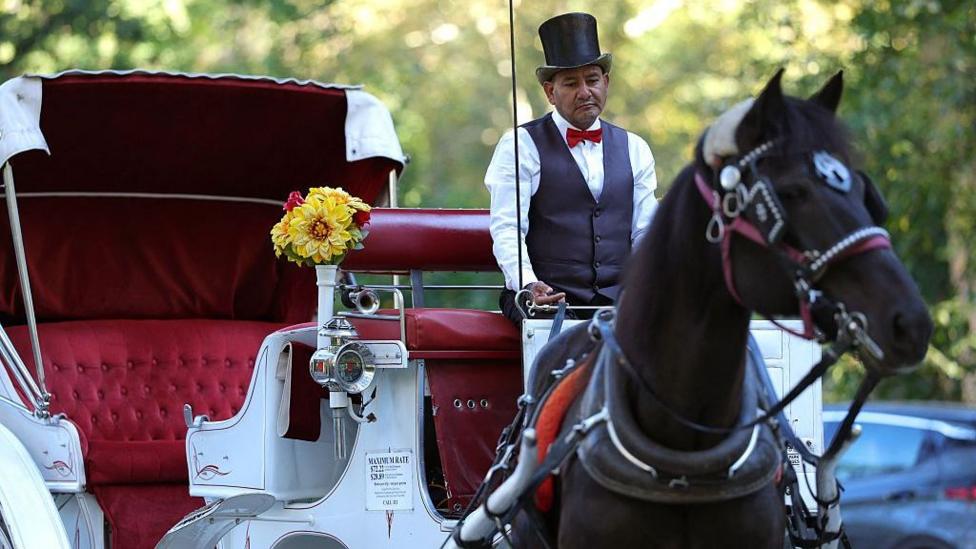
Roughly 200 drivers work the carriages in Central Park, a tradition of more than 160 years that has become a popular tourist activity. Several drivers told the BBC they are devoted to their horses and reject claims of mistreatment and safety risks.
Alexus Lawson, 28, who has driven for six years and owns six horses, said city carriages are the most regulated in the country. She questioned why a ban would take effect in two years rather than immediately if safety were the real concern.
What am I supposed to do with my horse?
— carriage driver Alexus Lawson
Safety incidents and transition plan
The Central Park Conservancy, which manages the park and backs the ban, said there had been seven horse-related incidents in the past 13 months. These included a May crash that sent a driver to hospital and a January incident in which a horse named Destiny ran into traffic near the park.
The bill proposes job placement, training, career counselling and financial compensation for industry workers. The Transport Workers Union said the plan lacks guarantees, including compensation, and warned workers would be economically wiped out. The bill also forbids selling horses for slaughter or similar work.