Ancient ape fossil in Egypt could rewrite the story of human origins
A 17- to 18-million-year-old ape fossil discovered in Egypt is challenging long-held beliefs about where the ancestors of humans and other modern apes first evolved. Scientists now suspect that North Africa and the Middle East, rather than East Africa, may have been the cradle of modern ape evolution.
Key points
- A fossil ape named Masripithecus moghraensis lived 17 to 18 million years ago in northern Egypt.
- It is the first definitive fossil ape found in North Africa, reported in Science on March 26, 2026.
- Researchers say the find challenges the idea that living apes' ancestors originated in East Africa.
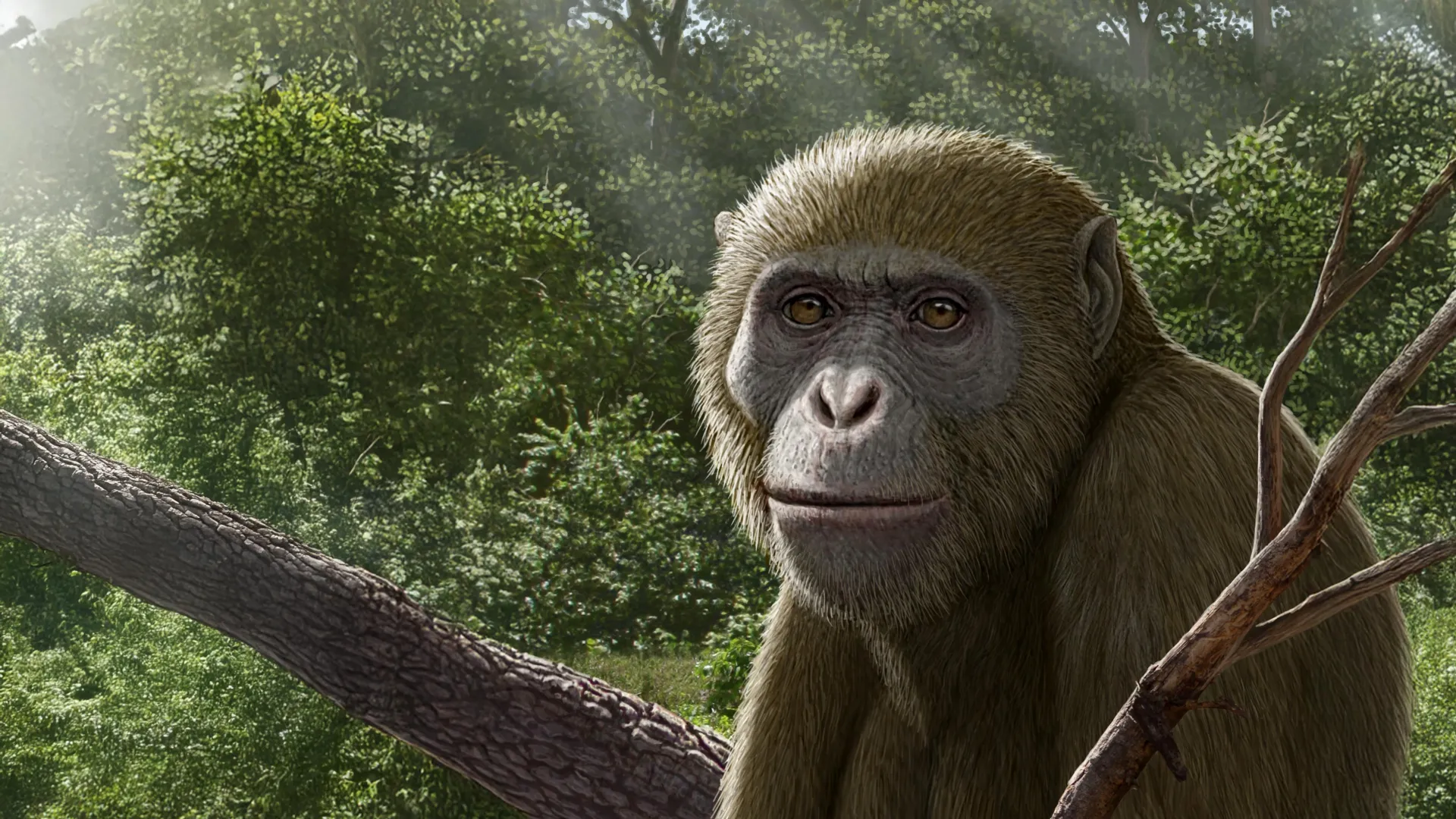
A newly identified fossil ape from northern Egypt is challenging the long-held view that the ancestors of modern apes, including humans, first evolved in East Africa. The species, named Masripithecus moghraensis, lived about 17 to 18 million years ago during the Early Miocene. Its remains were found at Wadi Moghra in northern Egypt, making it the first definitive fossil ape discovered in North Africa.
The study, published March 26, 2026, in Science, was conducted by an international team from the Mansoura University Vertebrate Paleontology Center in Egypt and the University of Southern California in the USA. The researchers suggest that northern Africa and the Middle East may have played a central role in the emergence of the lineage that gave rise to all living apes.
What the fossil shows
The remains consist only of lower jaw material, but they contain an unusual mix of features. The jaw is exceptionally sturdy, with large canine and premolar teeth and molars that have rounded chewing surfaces covered in pronounced textures. Researchers believe Masripithecus mainly ate fruit but had teeth strong enough to process tougher foods when needed.
The genus name combines Masr, the Arabic name for Egypt, with pithēkos, the Greek word for ape. The species name honors Wadi Moghra, where the fossils were uncovered during expeditions in 2023 and 2024.
For my entire career, I considered it probable that the common ancestor of all living apes lived in or around East Africa. But this new discovery, and our new and novel analyses of hominoid phylogeny and biogeography, now strongly challenge that idea.
— Erik Seiffert
Rethinking ape origins
Analyses using Bayesian methods, combining anatomical data from living and extinct apes with genetic evidence and fossil ages, suggest that Masripithecus was more closely related to living apes than any known Early Miocene ape from East Africa. Additional analyses of ancient animal distributions pointed to northern Africa and the Middle East as the most likely home of the common ancestor of all living apes.
The researchers stress that Masripithecus was not necessarily a direct ancestor of humans or living apes. Only part of the jaw has been recovered, leaving questions about its appearance, body size, movement and behavior. Further exploration of North Africa and the Middle East could reveal more species and clarify when and where major ape branches emerged.