Bones found in Philadelphia's "house of horrors," sources say
Bones were discovered outside the so-called "house of horrors" in Philadelphia, but it's unclear whether they are related to the ongoing investigation into Raymond "R.C." Horsch, a suspected serial killer.
Key points
- Bones were found in the backyard of the Philadelphia house tied to suspected serial killer Raymond Horsch.
- It is unclear whether the bones are human or animal and if they relate to the investigation.
- The search is expected to continue until at least the middle of next week, then move to the front yard.
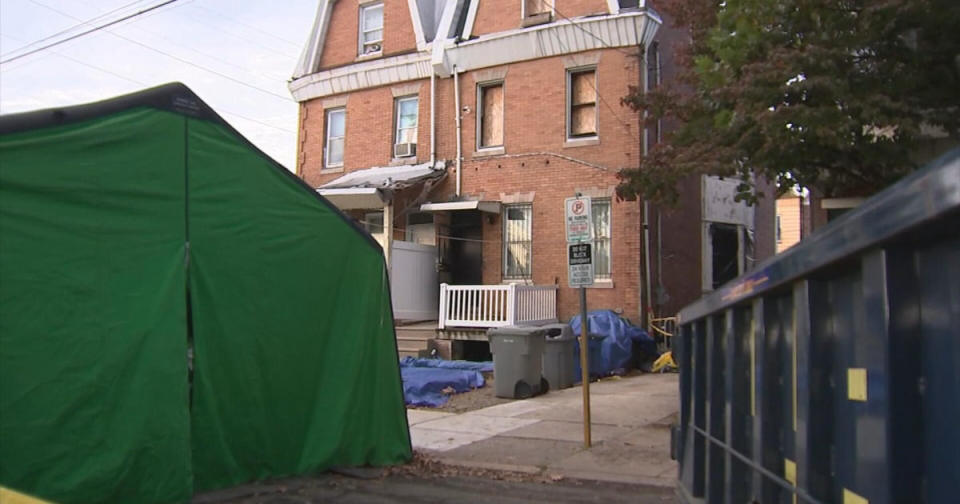
Bones were discovered outside the so-called house of horrors in Philadelphia's Olney section on Thursday, sources told CBS News Philadelphia. The Philadelphia Medical Examiner's Office responded to the house at 417 West Chew Ave., according to sources close to the investigation.
It is not clear whether the bones are human or animal, and more testing is needed to determine their origin and any connection to the investigation into Raymond "R.C." Horsch, a suspected serial killer who died last year.
Search of the property
The bones were found in the backyard, where agents and detectives have been searching for human remains and evidence linked to at least seven women connected to Horsch and the house, some of whom are feared dead. Investigators have been sifting through soil in layers, going down about 3 feet.
Earlier this week, police sources confirmed that human DNA was found when luminol was used in the home. A source also said opossum carcasses were found near the house, and remnants of a brick outhouse were uncovered in the yard.
If they find something related to the body, then that's when they would want to call the medical examiner
— Richard Marx
What officials said
Richard Marx, a retired FBI supervisory agent who specialized in evidence collection, said the medical examiner's presence is significant. "If they find something related to the body, then that's when they would want to call the medical examiner," Marx said.
Investigators believe Horsch used alkaline hydrolysis to dispose of bodies, law enforcement sources said. He described the steps in one of his books, in which he called himself an empathetic serial killer. Chemicals found in the home have been sent to laboratories for testing.
What comes next
The investigation at the house is expected to continue until at least the middle of next week, sources said. Once the backyard work is finished, investigators are set to dig up the front yard.
Before his death, Horsch lived in the house with his son, Eugene, whose arrest during a traffic stop in June began the investigation.