Could Danish model help Scotland solve talent crisis?
How Nordsjaelland have become a powerhouse of youth football development - and what Scottish clubs could learn from them.
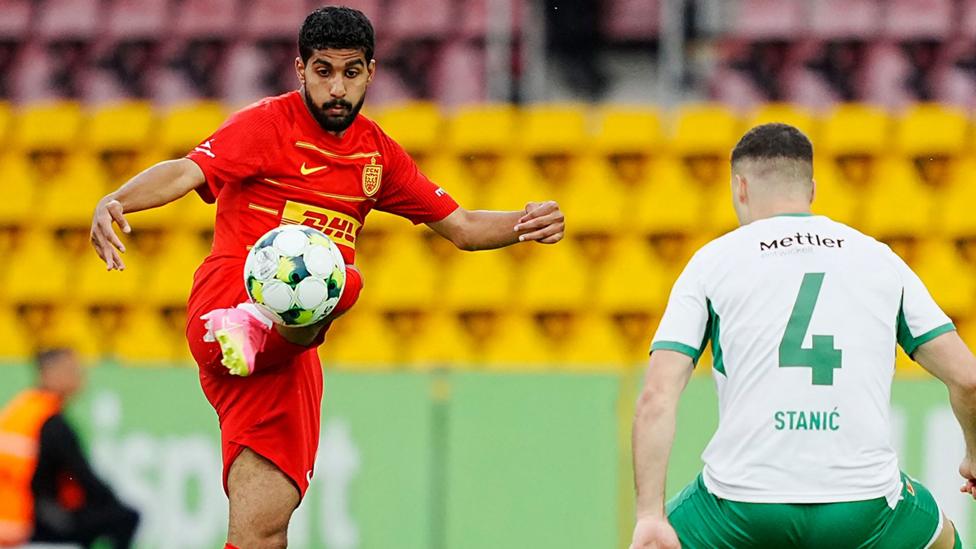
Key points
- Nordsjaelland made over £170m from player sales between 2015 and 2024.
- Teenagers played 39% of Nordsjaelland's minutes last season, versus 4% in the Scottish Premiership.
- Sporting director Alexander Riget says patient ownership and a club-wide playing model are crucial.
Nordsjaelland, a Danish club from the small town of Farum, has become one of European football's leading developers of young players, and BBC Sport Scotland has examined what Scotland could learn from it amid a crisis in youth development there. The club, which faces Heart of Midlothian at Tynecastle in the Conference League, has fielded the youngest sides in European football over the past decade.
A Uefa report last season found 39% of Nordsjaelland's total minutes were played by teenagers, the highest in Europe, compared with an average of 4% in the Scottish Premiership. From 2015 to 2024 the club made a profit of more than £170m on player sales, one of the highest in Europe, and this summer sold midfielder Caleb Yirenkyi to Coventry City for a club record 27m euros (£23m).
Why the club picks teenagers
Sporting director Alexander Riget said the club has no choice but to give youth a chance, because it cannot compete financially for the same talent at an older age. He said Nordsjaelland's best players are normally aged 18 to 20, and that young players are often braver because they have fewer bad experiences.
Nordsjaelland spend about 5.5m euros (£4.6m) on their academy and 10m euros (£8.4m) on the first-team squad, a ratio Riget said is very different from most clubs. The club has 32 young players living on its campus.
You need to be willing to invest
— Alexander Riget
African link and patience
The club was bought in 2015 by the Right to Dream Academy, founded in Ghana by former Manchester United scout Tom Vernon, giving Nordsjaelland access to west African talent. Riget said the Cairo and Giza area alone has close to 30 million people and no real academy structure, and that there is still potential in Africa for clubs in Scotland.
Riget said results from academy investment often arrive after seven to 10 years, making patience and consistent ownership crucial. He added that the club, rather than the coach, decides how the team plays, which eases young players' move into the first team.