Devil in the detail: 100 years on, FW Murnau’s Faust scrapbook reveals the secrets of his silent masterpiece
A rediscovered collection of drawings and on-set photos finally reveals the intricate on-set mysteries of one of early cinema’s most gifted pioneers FW Murnau was one of the greatest of all silent film-makers, with a rare genius for making beautiful images on screen. His peers liked to say he “had a camera instead of a head”. The director of such stunning films as vampire tale Nosferatu (1922) and marital romance…
Key points
- A new book marks 100 years since FW Murnau's silent film Faust was released.
- The book publishes unseen images from the shoot and shows how the film was made.
- Murnau was secretive about his methods and banned producers from his sets.
A new book marks 100 years since the release of FW Murnau's silent film Faust, based on Goethe's play about a deal with the devil. The Faust Bible: The Making of FW Murnau's Masterpiece publishes unseen images from the shoot and offers a rare look at how the film was made.
Murnau, who died in 1931 at the age of 42, directed Nosferatu (1922) and Sunrise: A Song of Two Humans (1927). His peers said he "had a camera instead of a head".
A secretive director
Murnau kept his methods private and was devoted to his work. Early collaborator Edgar G Ulmer called him "a great purist who worked under a sort of hypnosis".
He banned producers from his sets and executives from watching his rushes, and mostly did not allow on-set photography that would reveal his camerawork and special effects. This secrecy left room for speculation about whether Murnau or his crew deserved credit for his films.
a great purist who worked under a sort of hypnosis
— Edgar G Ulmer
How the film was made
The book places sketches for individual scenes opposite matching stills from the film. It shows how compositions by designers known as "film architects" were re-created on film by Murnau and cinematographer Carl Hoffmann.
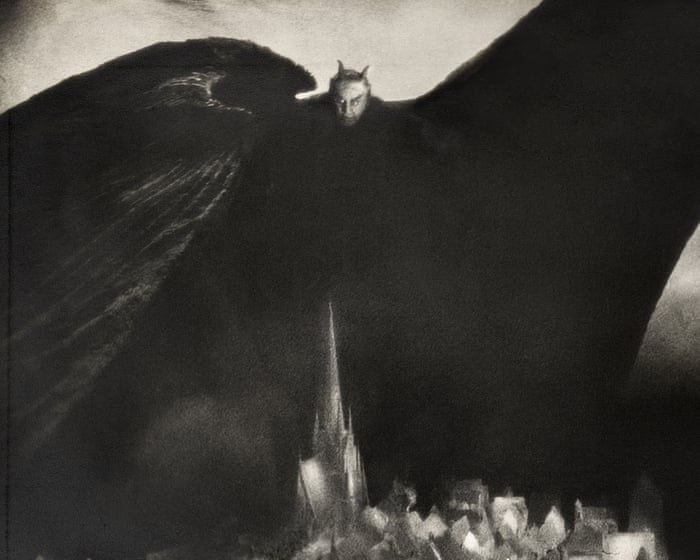
The book also includes collages, images of the cast and crew on set, and diagrams for the Weltflug sequence, in which Mephistopheles flies Faust through the sky on his cloak. The flight was achieved with a low wooden trolley moving along a plaster ramp.