Duane "Keffe D" Davis sentenced to 40 years to life for Tupac's murder
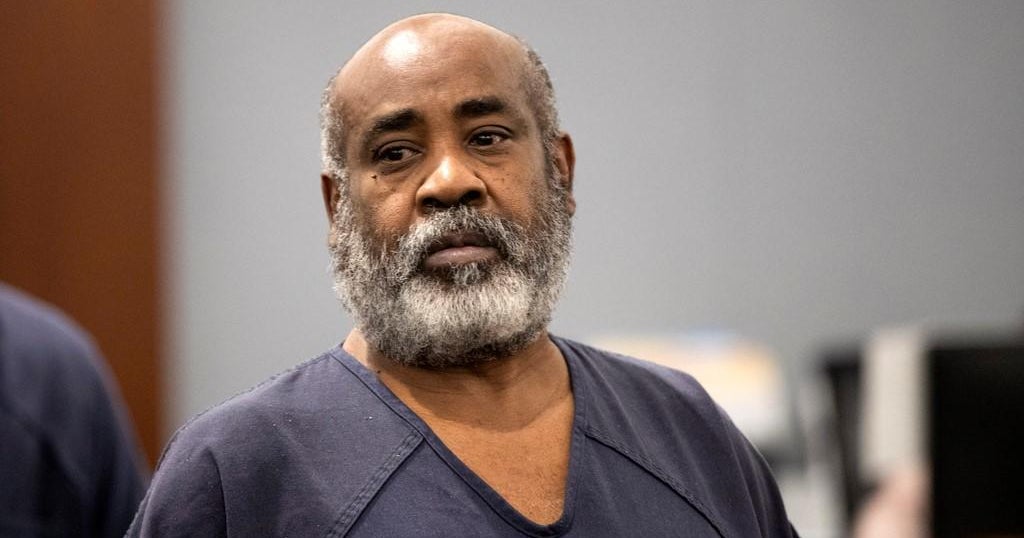
Duane "Keffe D" Davis was sentenced to 40 years to life in prison Tuesday in Las Vegas for the 1996 murder of rapper Tupac Shakur.
Key points
- Duane Davis, 63, was sentenced to 40 years to life for Tupac Shakur's 1996 murder.
- Judge Carli Kierny gave Davis credit for time already served.
- Davis was convicted in August of murder with a deadly weapon.
A Las Vegas judge sentenced Duane "Keffe D" Davis to 40 years to life in prison on Tuesday for the 1996 murder of rapper Tupac Shakur. Judge Carli Kierny said Davis, 63, would receive credit for time already served.
Davis was convicted in August of murder with a deadly weapon with intent to promote a criminal gang. Prosecutors said the state would dismiss the gang-related part of the charge. Davis had pleaded not guilty.
What happened in court
At his sentencing hearing, Davis spoke briefly and asked the judge to return belongings police took from his house, including his pictures. He said he had nothing more to say.
Clark County District Attorney Steve Wolfson said in a statement that justice had been served for Shakur and his loved ones. He said the sentencing could bring some closure and peace to Shakur's family after nearly 30 years.
Today, justice has been served for Tupac Shakur and his loved ones.
— Clark County District Attorney Steve Wolfson
The case and the shooting
Shakur, a hip-hop legend, died six days after being shot while stopped at a red light in Las Vegas on Sept. 7, 1996. The shooting also wounded Marion "Suge" Knight, co-founder of Death Row Records.
Prosecutors argued Davis went "hunting" for Shakur in retaliation after Davis and Knight had beaten up Davis' nephew. They said four men were in the white Cadillac from which the shots came, and Davis was the only one still alive at his 2023 arrest and conviction.
Davis's attorney, Michael Sanft, said no evidence beyond Davis's own statements placed him in Las Vegas that night. Davis described his involvement in his 2019 memoir, which his attorneys tried to exclude from trial.