G20 finance ministers, central bankers gather amid fallout from Iran war
Officials meet in Thailand as conflict drives energy prices higher and casts uncertainty over global economy.
Key points
- G20 finance ministers and central bank governors meet in Bangkok on Thursday amid global uncertainty from the US-Israel war on Iran.
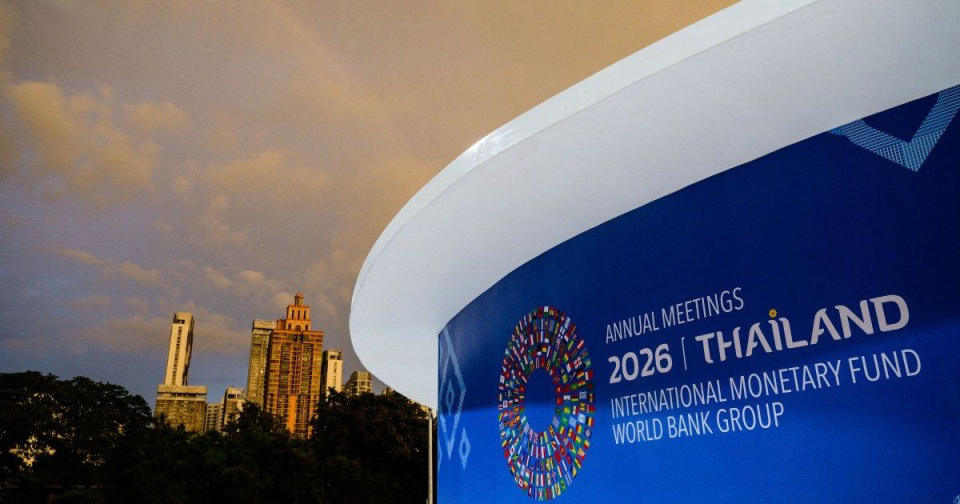
- The meetings coincide with IMF and World Bank annual meetings in the Thai capital from October 12 to 18.
- US Treasury Secretary Scott Bessent will skip the gatherings, with Deputy Secretary Francis Brooke and Undersecretary Erin Browne representing Washington.
G20 finance ministers and central bank governors are gathering in Bangkok, Thailand, on Thursday amid an uncertain global outlook shaped by the US-Israel war on Iran. The meetings are being held alongside the annual meetings of the International Monetary Fund and the World Bank, which run in the Thai capital from October 12 to October 18.
The G20 is an economic forum of 19 major economies plus the European Union and the African Union, with a rotating presidency currently held by the US. Its members account for about 85 percent of global GDP and three-quarters of global trade.
Who is attending
Most G20 finance ministers and central bank governors will be in Bangkok, along with IMF Managing Director Kristalina Georgieva and World Bank Group President Ajay Banga. US Treasury Secretary Scott Bessent will be a notable absence, with US officials citing “domestic engagements” for his decision. Washington will be represented by Deputy Secretary Francis Brooke and Undersecretary for International Affairs Erin Browne.
The war in the Middle East is having a devastating economic impact and is pushing up fuel prices, inflation and interest rates around the world.
— Jim Chalmers
Agenda and economic fallout
The economic fallout from the US-Israel war on Iran is expected to dominate discussions. Attacks across the Middle East have upended regional economic activity, while disruption to shipping in the Strait of Hormuz has driven a surge in energy prices worldwide. Crude oil prices have exceeded $100 a barrel for much of the past eight months, straining government coffers and household budgets, particularly in the Gulf region and the rest of Asia.
Australia’s Treasurer Jim Chalmers said he would call for an end to the conflicts and the reopening of the Strait of Hormuz “because that’s what the global economy desperately needs”. Other issues likely to feature include ballooning debt levels, which exceed 100 percent of GDP in the US, Canada, Japan, Italy and France. In a speech on Wednesday, Georgieva warned that mounting debt posed a threat to the global economy and that there was no “magic” formula to avoid tax hikes or spending cuts.