How OpenAI turned its coding tools into dots, an always-on personal assistant
Alexander Embiricos, the OpenAI executive responsible for dots, never wants to have a meeting with someone else's AI agent.
Key points
- OpenAI released its always-on personal assistant, dots, at its developer day in late September.
- Alexander Embiricos said dots repackages Codex functionality so it feels intuitive to users.
- Embiricos said dots has proactive research but needs much more granular privacy controls.
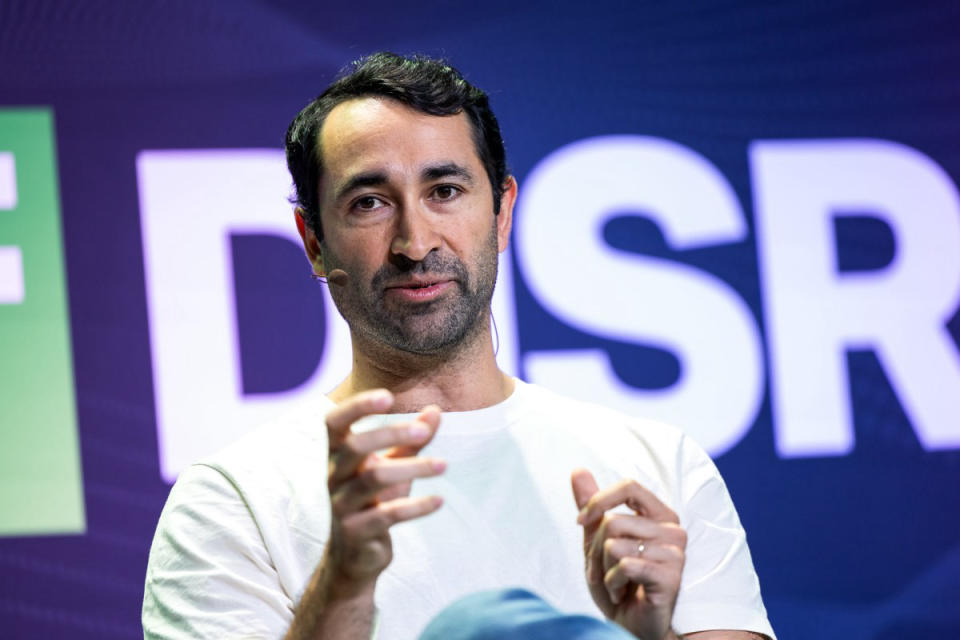
OpenAI released its always-on AI personal assistant, called dots, at its developer day in late September. Alexander Embiricos, who leads OpenAI's enterprise product team, discussed the product at TechCrunch Disrupt this month, explaining how the company turned its coding tools into a consumer assistant.
Embiricos said much of dots' functionality could be achieved with OpenAI's Codex coding app, released at the beginning of this year, but that approach requires more work and hand-holding. He said the key was repackaging the models' capabilities so they feel intuitive and accessible to users.
How dots works
The assistant is designed to work in the background without prompting. Embiricos said this means more token usage for OpenAI and a more proactive assistant for users. In testing, the assistant flagged calendar conflicts and upcoming deadlines, though not always in a timely fashion.
Embiricos recalled that early in development his dot warned him about a conflict three minutes before it happened. He expects the timing to improve over time. He also cited an engineer at a drone delivery startup whose dot noticed an outage and analyzed it before the engineer did.
There’s kind of this convergent evolution happening
— Alexander Embiricos
Privacy and scaling questions
Embiricos said dots includes a feature called proactive research, which periodically reviews what it knows about the user and proposes ways to be more helpful. OpenAI says the agent has the same privacy controls as ChatGPT, including the ability to turn off model training and control what resources it accesses, though Embiricos acknowledged the controls are not granular.
Embiricos said OpenAI needs to build out much more granular controls. He also said the company is in talks with payment processors about letting agents work with the wider ecosystem, and that he personally never intends to meet with someone else's agent.