Hubble reveals a stunning twist in how the universe emerged from darkness
A surprising discovery by astronomers using the Hubble Space Telescope is challenging a leading explanation for how the early universe emerged from a dense fog of hydrogen roughly 13 billion years ago. Scientists once believed powerful winds from exploding stars helped radiation escape galaxies and clear that cosmic fog, but new observations reveal that these winds actually block radiation instead.
Key points
- Hubble observations suggest supernova winds block ionizing radiation from escaping galaxies, contrary to a leading theory.
- Galaxies with the fastest winds let the smallest fraction of ionizing radiation escape.
- Researchers say radiation from young stars may escape before supernovae explode and stir up gas and dust.
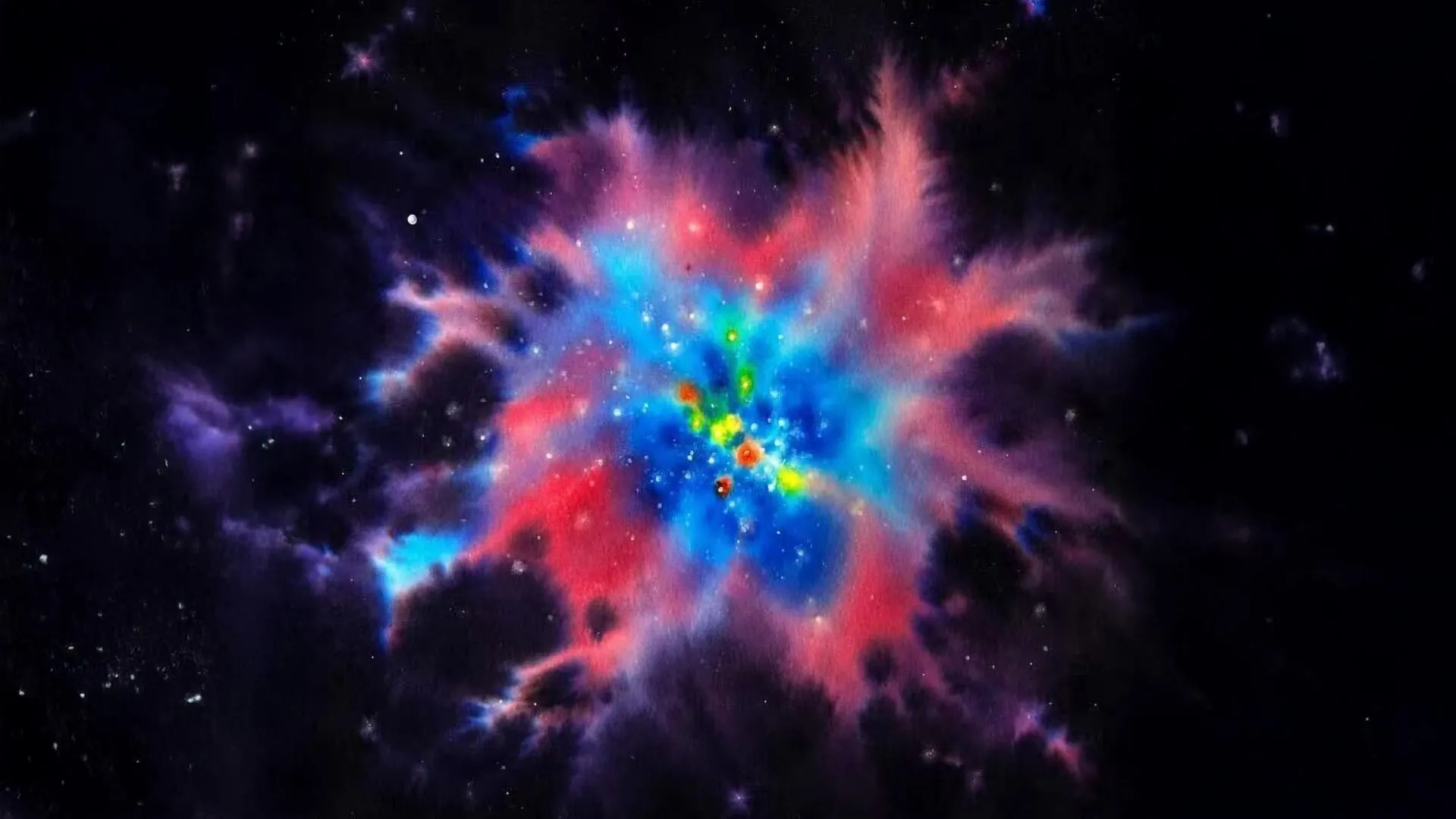
New Hubble Space Telescope observations challenge a leading explanation for how the early universe emerged from darkness, suggesting that explosions from dying stars may have hindered a process scientists thought they helped drive. An international team including astronomers from the University of Michigan found that powerful winds from exploding stars can prevent ultraviolet radiation from escaping galaxies, the opposite of what the widely accepted theory predicted. The study was published in Nature Astronomy.
The findings offer new clues about how the universe became transparent to ultraviolet light roughly 13 billion years ago, during a period called reionization.
The cosmic fog and reionization
During the first billion years after the Big Bang, neutral hydrogen filled the space between galaxies, forming a cosmic fog that absorbed ultraviolet radiation. Reionization began approximately 13 billion years ago, when intense radiation from early galaxies stripped electrons from hydrogen atoms, allowing ultraviolet light to travel much farther.
Cody Carr, a postdoctoral researcher at the University of Michigan, said astronomers still do not fully understand which objects supplied the radiation or how enough of it escaped. "We know that it took place, but we don't have complete answers to those questions," he said.
It appears that energy input from supernovae has stirred up the surroundings and increased, rather than decreased, the coverage of neutral gas and dust that suppresses ionizing radiation escape
— Stephan McCandliss
What Hubble found
The team used Hubble to examine nearby starburst galaxies, comparing wind speeds with the amount of ionizing radiation escaping each galaxy. Galaxies with the fastest winds allowed the smallest fraction of radiation to escape, suggesting supernova energy stirs up gas and dust that blocks the light rather than clearing a path for it.
The results support a different possibility: radiation from young, massive stars may escape before those stars explode as supernovae. Carr said the observations show "these photons are escaping before galactic winds form." The team is seeking more Hubble observing time to examine additional galaxies.