The asteroid killed the dinosaurs. Why did crocodiles survive?
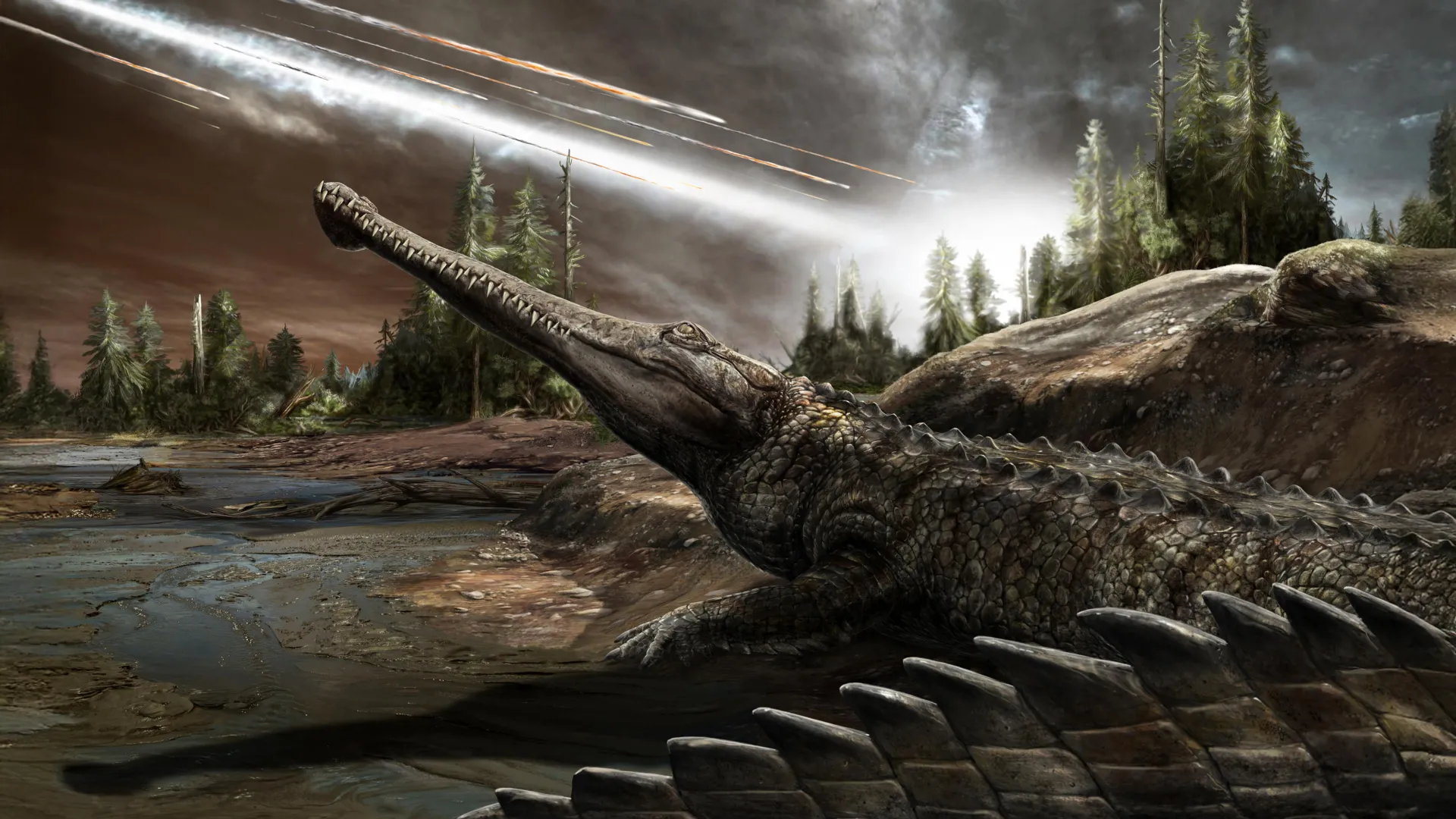
Scientists may have solved a 66-million-year-old mystery: how crocodiles survived the asteroid that wiped out the dinosaurs. A sweeping analysis of fossils and ancient climates suggests that their preference for warm environments placed them in tropical refuges that remained habitable even after the catastrophic impact.
Key points
- Crocodiles and their relatives followed warm climates for 250 million years, moving toward the tropics as Earth cooled.
- Climate models suggest equatorial regions stayed warm enough for crocodiles after the asteroid impact 66 million years ago.
- Researchers warn that roads, farms and cities may limit how far today's crocodiles can move as the planet warms.
New research led by UCL suggests that crocodiles survived the asteroid impact that killed the dinosaurs 66 million years ago partly because of their long-standing preference for warm environments. The study, published in Science Advances, analyzed more than 7,000 fossils and records from over 400 living and extinct species alongside computer models of Earth's climate and geography across 245 million years.
The researchers found that crocodiles and their ancient relatives generally followed warm climates rather than adapting to very different temperatures, expanding into new regions during hot periods and retreating toward the tropics as temperatures fell. Their simulations indicated that areas near the equator may have remained warm enough to support crocodile relatives after the asteroid struck 66 million years ago.
Refuges near the equator
The team examined conditions in the decades and centuries after the Chicxulub asteroid impact. When simulations reduced sunlight by 5% or 10%, warm equatorial regions remained suitable for crocodile relatives, potentially giving surviving populations places to persist and recover. A more severe scenario with a 15% reduction in sunlight left those regions unsuitable, though the researchers noted this extreme level is now considered unlikely.
Lead author Dr. Alfio Alessandro Chiarenza, based at UCL Earth Sciences, said the asteroid "did not make the whole planet equally hostile to every group." He said crocodiles' preference for warm environments may have placed survivors where suitable climates held up best.
The asteroid did not make the whole planet equally hostile to every group.
— Dr. Alfio Alessandro Chiarenza
Diverse ancient relatives
The broader crocodile lineage, known as pseudosuchians, once included armored plant eaters, land-dwelling predators and animals weighing more than a metric ton. Among them was Sarcosuchus, nicknamed the "super croc," which could reach 12 meters in length, and Postosuchus, a land hunter that could move on two legs or all four.
The researchers said favorable temperatures were probably only one reason crocodiles survived, alongside small body sizes, the ability to live partly in water, flexible diets and modest energy requirements. Professor Philip Mannion, also at UCL Earth Sciences, said today's species will need room to move as the planet warms, and that loss of suitable areas to roads, farms and cities is making that harder.