Iran steps up Hormuz surveillance: Attacks soar, oil flows crash again
Ships in the Strait of Hormuz have been experiencing the worst spate of attacks since the start of the war.
Key points
- Iran deployed new naval units east of the Strait of Hormuz for real-time surveillance of ships.
- Ten tankers were struck between September 28 and October 4, with more attacks since.
- Oil flows fell to 2.9 million barrels on October 11 from 20.8 million on October 8.
Iran's military said it has expanded surveillance of the Strait of Hormuz by deploying new units to target ships, as attacks in the waterway surge and oil transit falls. The announcement comes with a US naval blockade of Iran's southern ports in place and sanctions tightening.
Iran's Navy said the units were deployed in a new formation east of the strait and across the Sea of Oman and the Arabian Sea, after a damaged, burning tanker was identified, according to Press TV on Tuesday. The navy said the units would keep real-time watch on enemy activity and maritime traffic, warned vessels not to switch off transponders, and urged them to coordinate with Iranian forces for safe passage.
Attacks and oil flows
Maritime tracking firm Kpler recorded 10 tankers struck in the strait between September 28 and October 4, plus another strike on October 5. UKMTO logged 15 more attacks from October 6 to October 14, 11 in the past four days, including a container ship and a tanker hit by unknown projectiles on Tuesday.
Kpler said only 2.9 million barrels of oil passed through the waterway on October 11, the lowest this month, down from nearly 20.8 million barrels on October 8. The pre-war average was 17.1 million barrels a day. Brent crude rose 89 cents, or 0.8 percent, to $106.58 a barrel as of 00:30 GMT on Wednesday.
American forces and regional partners clearly control the Strait of Hormuz
— CENTCOM
Claims over the strait
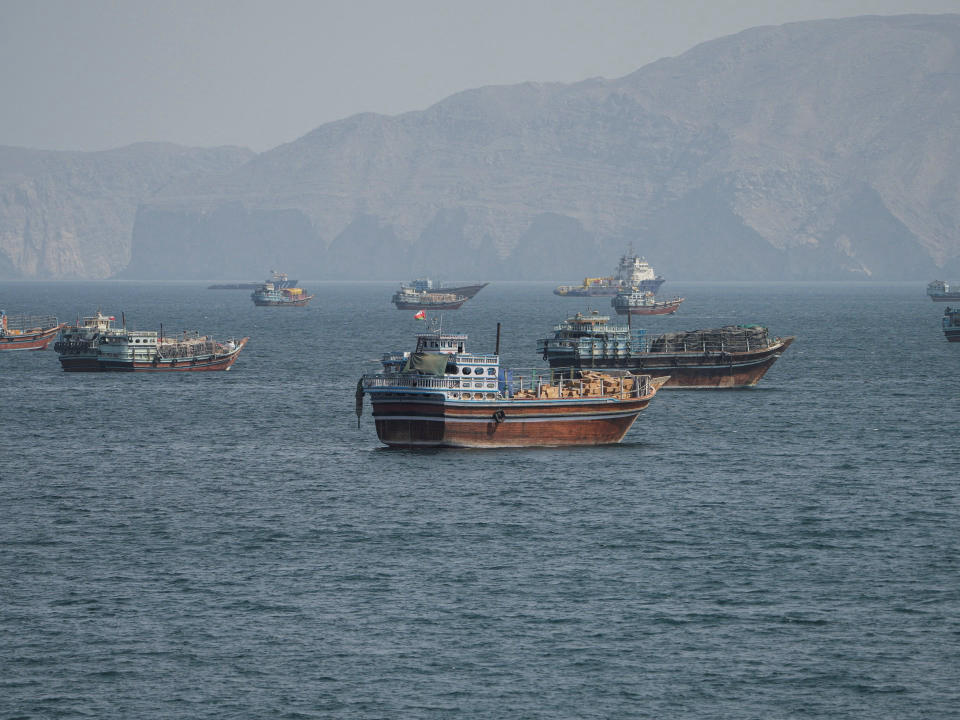
A US military official told Reuters that after Washington destroyed much of Iran's radar capabilities, the IRGC began using unarmed spotters in small boats, operating from dhows, to identify targets including US naval vessels. US forces confronted one such vessel, told its occupants to abandon ship and destroyed it.
CENTCOM rejected the IRGC navy commander's assertion that Tehran controls the strait and would sink approaching US warships. "American forces and regional partners clearly control the Strait of Hormuz," CENTCOM said on X, adding that US forces helped Gulf partners ship more than 19 million barrels of crude through the chokepoint on Monday.
Iran's security chief, Mohsen Rezaei, said the US shuttle system moving oil to larger tankers was an explicit target, and that Iran has struck five or six participating vessels nightly for weeks. "You are smuggling, but the strait is under Iran's control, and we manage it," he said.