Israel halts commercial goods from entering Gaza; Hamas denies tax claims
The halt to commercial shipments, including fruit and winter clothing, cuts off a key source of critical supplies.
Key points
- Israel says no commercial goods have entered Gaza for two days over a tax dispute.
- COGAT claims merchants halted trade over Hamas fees of 10,000 shekels per truck.
- Gaza's media office denies the claims, calling them blatant disinformation.
Israeli authorities say no commercial goods have entered Gaza for two days, citing what they call a tax dispute between local merchants and Hamas. COGAT, the Israeli military body that oversees humanitarian affairs in Gaza, announced the halt on Wednesday.
COGAT claimed local merchants made the decision in response to a 10,000 shekel ($3,220) fee imposed by Hamas on each truck entering Gaza, and a demand that 30 percent of all sales be carried out in cash. The halt is expected to affect a crucial source of food and goods for the 2.1 million people in the Strip, who rely on Israel's border crossings in a territory still suffering from famine.
Hamas denies Israeli claims
Gaza's government media office refuted the claims on Thursday and condemned what it called a blatant disinformation campaign and false statement. It said the move was an attempt to hold the government apparatus in Gaza responsible for the disruption of truck entry.
The media office said the fee was a voluntary payment to a fund providing aid for widows and orphans. It said cash payments were encouraged due to an acute cash shortage in the war-torn territory, but were never mandatory.
The humanitarian sector on its own cannot meet the needs of all the people. The markets need to be functioning.
— Shaina Low, spokesperson for the Norwegian Refugee Council
Impact on supplies and prices
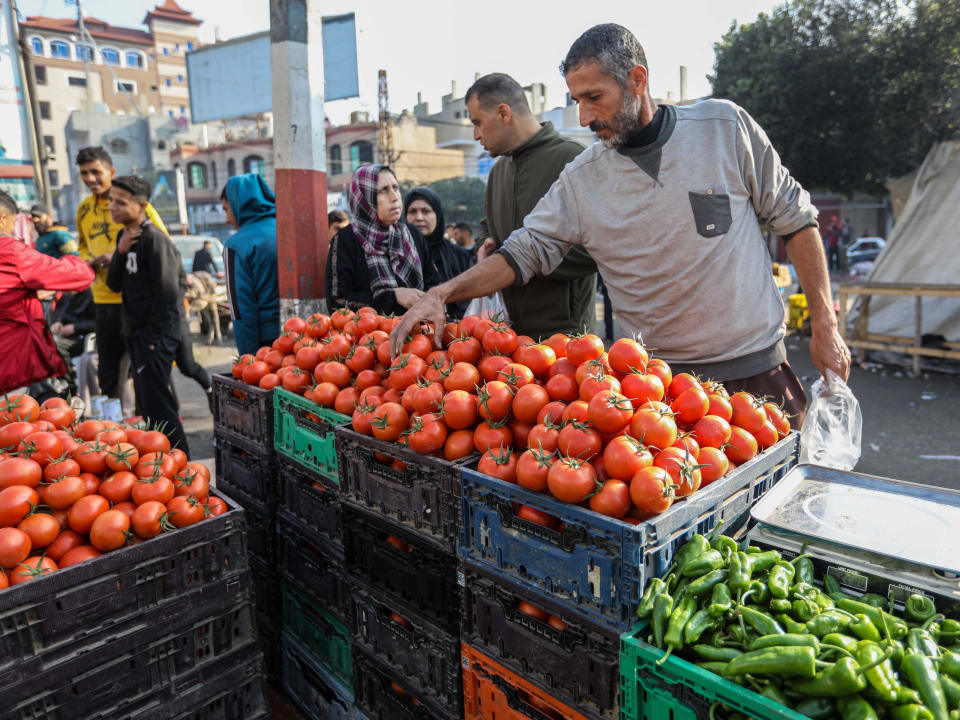
The suspension of commercial shipments, including fruit and winter clothing, cuts off a key source of food and other critical supplies as fears mount ahead of the encroaching winter. Aid groups generally bring in staples such as flour, while merchants import more perishable foods like fruits and meat, according to earlier COGAT data.
Humanitarian workers say a combination of aid and a robust commercial market is needed to keep prices under control. Shaina Low, a spokesperson for the Norwegian Refugee Council, said the humanitarian sector on its own cannot meet the needs of all the people, adding that markets need to be functioning.
Nahed Sheheiber, head of Gaza's private truckers union, denied the Israeli narrative. He said the Israeli coordinator is claiming Gaza's merchants are responsible, but the truth is that the Israelis imposed the restrictions. His union met with Gaza's Ministry of Economy and said Israel was citing ministry fees as a pretext to cut off commercial goods.
A global hunger monitor warned in July that more than two-thirds of people in Gaza could face acute hunger by the year-end. Israel is obliged under a US-mediated agreement to allow at least 600 trucks carrying humanitarian aid to enter Gaza each day. Diplomats say far fewer than 600 trucks normally enter, and Sheheiber said the figure was closer to 300, with two-thirds carrying commercial goods.