Middlemarch review – World’s Greatest Novel hurtles from costume drama to jolting marital tragedy
Swan theatre, Stratford-Upon-Avon This RSC staging of the sprawling middle England masterpiece has humour, compassion – and even George Eliot herself as a character Is there a literary achievement greater than George Eliot’s stonking masterpiece? Not according to a Guardian poll, topped by this sprawling, contemplative and profound book about marriage, moral goodness, debt, death, God and everything in between. So…
Key points
- The Royal Shakespeare Company has staged a two-part, nearly six-hour adaptation of George Eliot's Middlemarch at the Swan theatre in Stratford-Upon-Avon.
- The reviewer says Part One sacrifices character depth for plot and pace, while Part Two finds its footing.
- Nina Raine's script turns the omniscient narrator into a character, revealed to be Eliot herself.
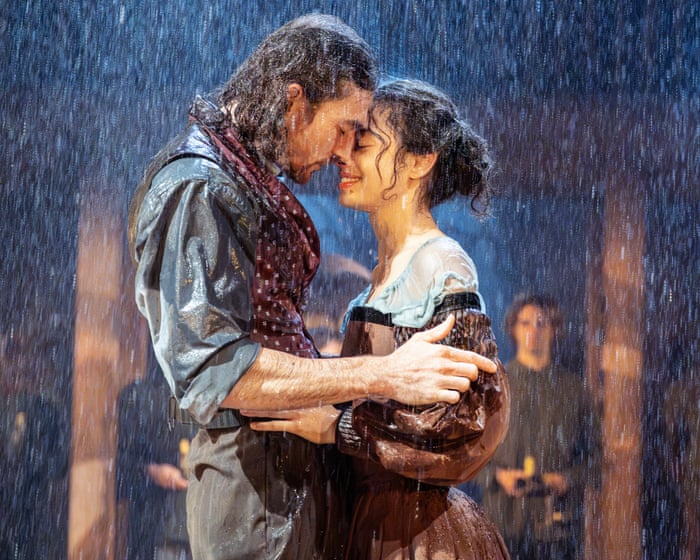
The Royal Shakespeare Company has adapted George Eliot's Middlemarch for the stage at the Swan theatre in Stratford-Upon-Avon. The production, directed by Jeremy Herrin, is divided into two parts totalling almost six hours including intervals, with a script by Nina Raine.
The Guardian review says the first part initially trades character study and emotional connection for plot and pace, though it hits the beats of a pleasing costume drama and suits the town of Middlemarch visually. The reviewer notes Ian Drysdale's Casaubon as the highlight of Part One.
Narrator becomes a character
Raine keeps many of Eliot's lines but turns the omniscient narrator into a character played by Amanda Root, who is revealed to be Eliot herself, watching over the story and listening to characters. The reviewer calls this an inventive way to deliver backstory but says it feels too much like a device.
The review also says the script leans into humour, verging on pantomime in scenes featuring Peter Featherstone (Peter Forbes) on his deathbed, played like a provincial Scrooge.
Each scene shakes you, each performer excels.
— The Guardian reviewer
Part Two finds its footing
The reviewer says Part Two does not take a wrong step, with humour working in occasional flecks and drama leading with emotion and the everyday tragedy of marital disappointment. Dorothea, now a widow, carries great depths, and the marriage between Lydgate and Rosomond is described as heartbreaking.
The interaction between the characters and the narrator takes on a tender texture, and the reviewer says each scene shakes you and each performer excels.