Scientists uncover a hidden map of the brain with 539 distinct regions
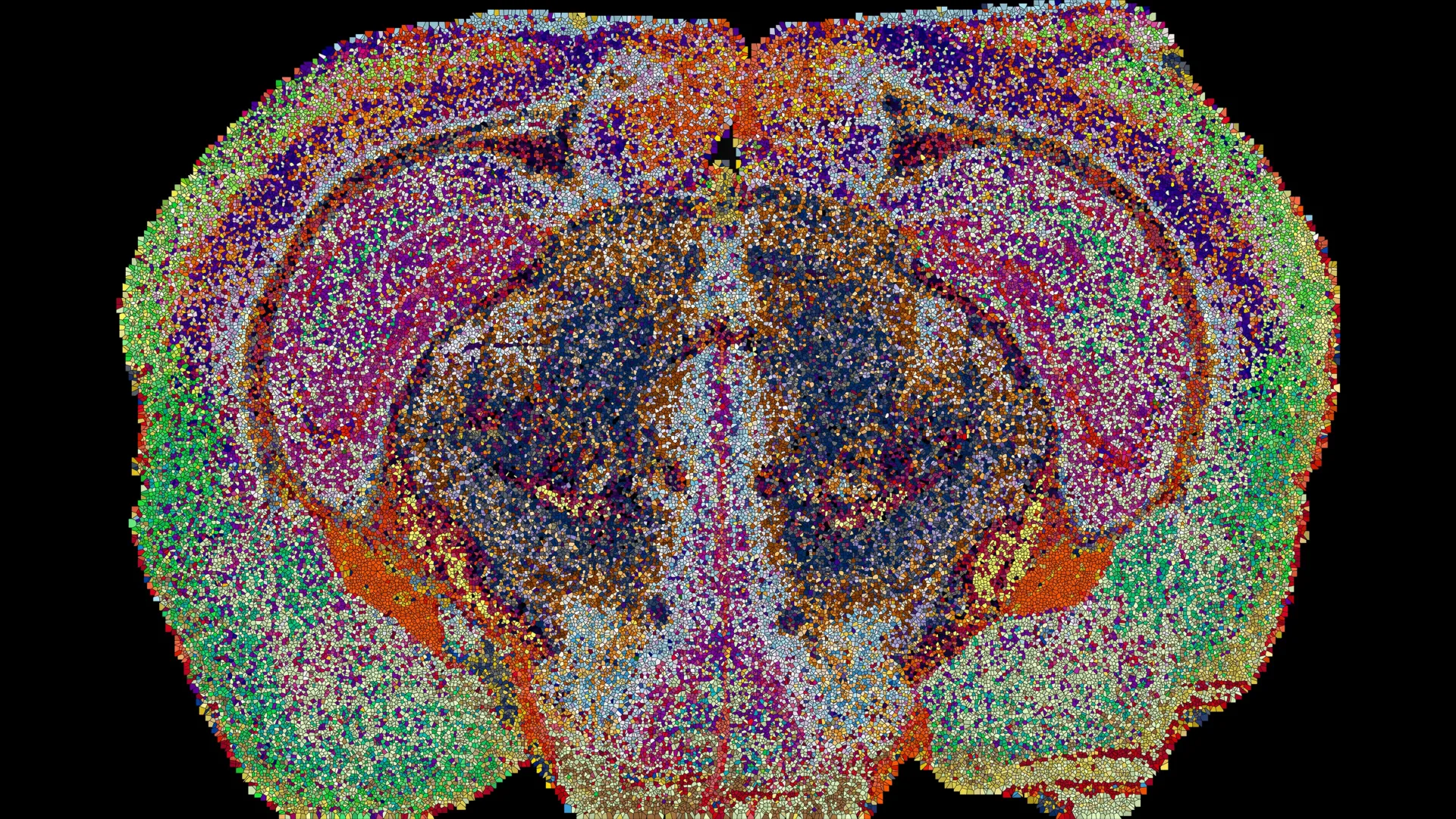
Scientists have uncovered a hidden layer of organization in the brain by creating the first detailed 3D map of its lipids, the fatty molecules essential for brain structure and communication. By analyzing millions of measurements from mouse brains, researchers identified 539 distinct chemical zones, revealing patterns and boundaries that traditional brain maps have missed. Surprisingly, even white matter, once…
Key points
- EPFL researchers mapped lipids across the mouse brain, identifying 539 distinct chemical territories called lipizones.
- The atlas used mass spectrometry imaging on 109 brain slices from 11 mice, producing about 7 million measurements.
- Pregnancy caused widespread lipid shifts in the mouse brain, with marked changes in the cortex and white matter.
Researchers at EPFL have created a detailed map of how lipids are distributed throughout the mouse brain. The Lipid Brain Atlas, described as the first of its kind, identifies 539 chemically distinct territories that the team named lipizones.
The work was led by Giovanni D'Angelo, Luca Fusar Bassini and Gioele La Manno. The atlas is freely available online, according to the article.
How the atlas was built
The team used mass spectrometry imaging, in which a laser scans thin brain sections one location at a time. They examined 172 lipids in 109 brain slices from 11 mice, generating roughly 7 million measurements.
Machine learning tools developed for the project combined the data into a 3D reconstruction. Each lipizone has a characteristic lipid combination, and the patterns were distinctive enough to identify where a tissue sample came from.
In effect, lipids work like postal codes, giving distant but related parts of the brain the same chemical address
— Giovanni D'Angelo
What the findings show
Many lipizones match known brain structures and cell types, while others reveal unexpected links between groups of nerve cell bodies and distant connected regions. The atlas also found distinct lipid zones within white matter, which scientists had considered relatively uniform.
In pregnant mice, lipid composition shifted substantially across many brain regions, more so than typical differences between male and female mice. The cortex changed extensively, and galactosyl ceramide levels rose sharply in much of the white matter.