‘Seismic shift’: Native American women made significant gains in US midterms
Nationwide, voters elected at least 75 Native women or non-binary candidates in Tuesday’s elections, report says The US midterm elections saw voters elect a slew of historic representatives – from the country’s first Muslim senator to the first Black female governor – but among the most significant gains were those for Native American women. On Tuesday, voters elected the first Native American woman governor…
Key points
- Voters elected the first Native American woman governor, senator and leaders of two tribal nations.
- At least 75 Native women or non-binary and Two Spirit candidates won in the midterms.
- A record 363 Indigenous candidates ran, with at least 180 winning their races.
The US midterm elections produced historic firsts for Native American women, with voters electing the first Native American woman governor, senator and leaders of two tribal nations. Nationwide, at least 75 Native women or non-binary and Two Spirit candidates were elected, according to Advance Native Political Leadership and the news site ICT.
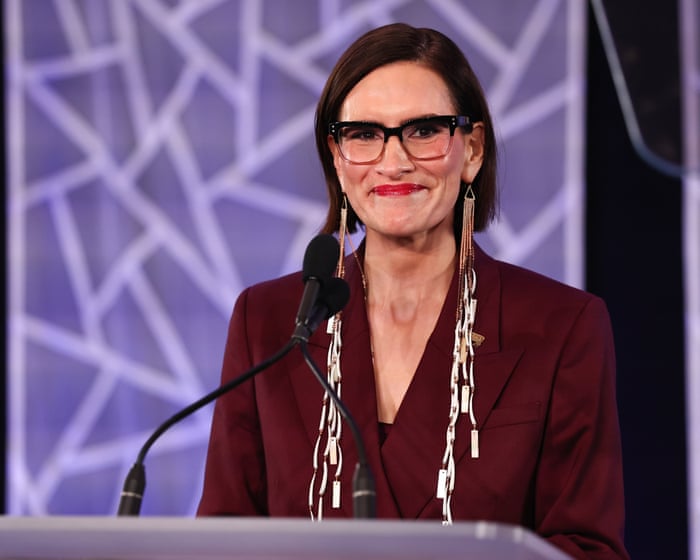
Deb Haaland, a citizen of Laguna Pueblo and Joe Biden's former interior secretary, will lead New Mexico. Peggy Flanagan, a member of the White Earth band of Ojibwe and Minnesota's lieutenant governor, will represent her state in the US Senate. Crystalyne Curley will become the first woman to lead the Navajo Nation, and Tina Abrams will lead the Seneca Nation of Indians in western New York.
A record field of candidates
A record-setting 363 Indigenous candidates ran for local, state and federal office this cycle, with at least 180 winning. Among them was Claire Valdez, a citizen of Ysleta del Sur Pueblo and New York Democrat, who will join Sharice Davids in the US House of Representatives.
Mary Peltola, who is Yup'ik, could join Flanagan as another first Native woman in the Senate, pending the results of her undecided race in Alaska. Flanagan will be the first Native woman in the chamber when she joins in January; four Native men have represented their states in the Senate's 237-year history.
This is a seismic shift that is happening in our communities.
— Jordan James Harvill
What the winners said
Jordan James Harvill, a citizen of the Cherokee Nation and strategist with Advance Native Political Leadership, told the Associated Press: "This is a seismic shift that is happening in our communities."
At her victory party in St Paul, Minnesota, Flanagan told supporters: "I could not run for the US Senate without Native women." Curley told the AP that as women "we have to work twice or triple as hard, especially within Navajo politics," calling her win "a win for all Navajo women."