The US army just detonated a poison bomb over Iowa | Steven Donziger
The shocking situation in Iowa is a metaphor for much of what is wrong with the United States There’s no way to hide it: the US government just deliberately detonated a poison bomb of lead azide over the state of Iowa when a totally safe alternative was available. The problem in Iowa was relatively simple to solve. The army for decades had stored lead underground at a munitions facility. As far back as 2009, the…
Key points
- The US army detonated 68 barrels of lead azide in Iowa after cancelling a safer chemical neutralisation contract.
- The author says the blast spread toxic dust about 100 miles and that officials gave an unsupported all-clear.
- Donziger compares the response to East Palestine, Flint and 9/11, where he says officials downplayed danger.
The US army deliberately detonated 68 barrels of lead at a munitions facility in Iowa on Wednesday, according to an opinion article by lawyer Steven Donziger. He writes that the army had earlier hired a Georgia-based company to neutralise the lead with a chemical spray, but cancelled the contract two months later and went ahead with the explosion despite public opposition.
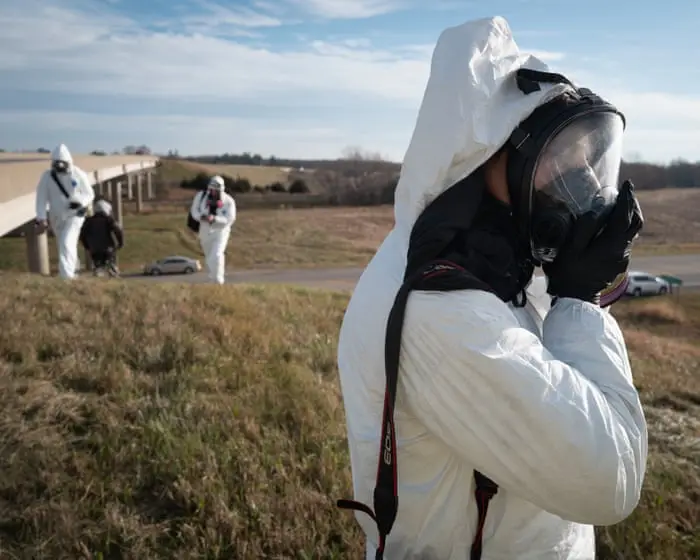
Donziger says the detonation produced a plume of cancer-causing toxic dust that spread an estimated 100 miles south-west over farmland, crops, forests, rivers, homes, hospitals and schools. He writes that the government knew since 2009 that the stored lead was deteriorating and might explode on its own, but delayed action.
Safety claims questioned
Donziger writes that Trump officials gave an all-clear within hours and said evacuated residents could return home. He says the recommendation has no scientific basis, noting that at the time of writing no air or soil sample from the explosion had been tested in an independent lab with a known result.
He cites the EPA's position that lead is especially harmful to children and women and that no level is considered safe, linking it to impaired fetal brain development and lung, stomach and kidney cancers.
basically nuked a town with chemicals so we could get a railroad open
— a former hazmat official, quoted in the article
Comparisons to past disasters
The article compares the Iowa response to earlier incidents, including the 2023 vinyl chloride burn-off after a train derailment in East Palestine, Ohio, and the Flint water crisis. It also cites the EPA's 2001 statement that air in lower Manhattan was safe after 9/11, which the agency's inspector general later found had no scientific basis.
Donziger argues officials routinely give overly optimistic assessments after toxic disasters to reassure the public, and that the media repeat those assurances without checking them.