
210-million-year-old dinosaur discovery reveals a lost world in Africa
A newly identified 210-million-year-old dinosaur from Zimbabwe is helping scientists uncover a surprisingly distinct prehistoric ecosystem. The discovery suggests that ancient climate differences may have separated dinosaur populations across southern Africa, leading to unique species that challenge previous assumptions about their evolution.
Key points
- A new dinosaur species, Musango matusadonaensis, was identified from fossils found near Musango Island in Zimbabwe's Matusadona National Park.
- The 210-million-year-old sauropodomorph was bipedal, about 4.5 meters long, weighed 220kg, and was a subadult when it died.
- Zimbabwean dinosaurs were distinct from South African species, suggesting environmental factors like climate may explain the differences.
Paleontologists have described a new dinosaur species from fossils discovered in Zimbabwe, offering evidence of a distinct Late Triassic ecosystem in the region. The species, Musango matusadonaensis, lived around 210 million years ago and was found in the shoreline of Lake Kariba inside Matusadona National Park.
The research was conducted by an international team led by Jonah Choiniere of the University of the Witwatersrand, with fieldwork in 2017 and 2018. The findings add to the growing understanding of early dinosaur evolution in Africa.
What the fossils reveal
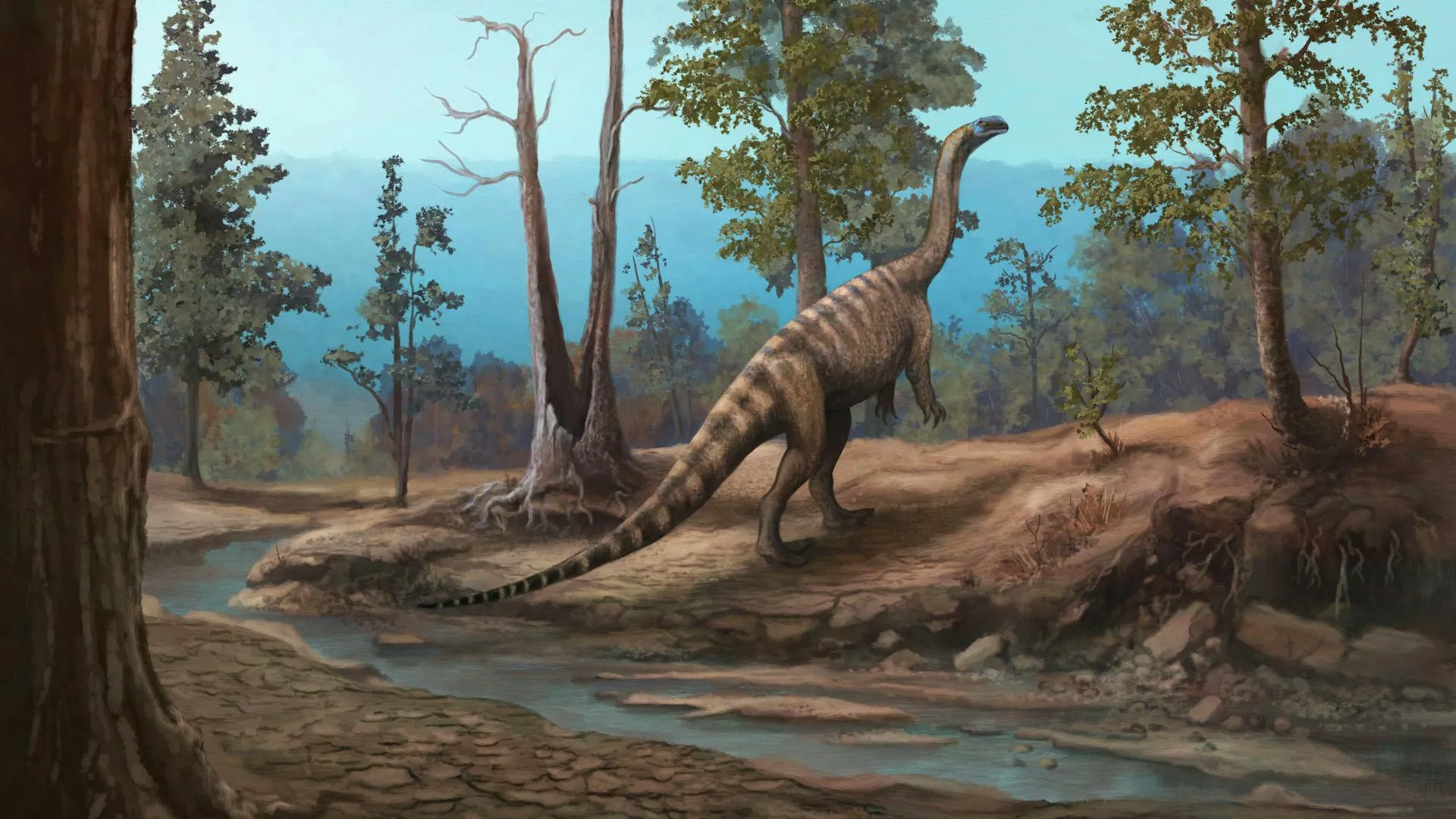
Musango was a sauropodomorph, a subgroup that later gave rise to long-necked giants like Diplodocus. Its incomplete skeleton shows it walked on two legs, reached about 4.5 meters in length, and weighed 220kg. Growth marks in its bones indicate it was a subadult when it died, and while its skull was not preserved, close relatives were largely herbivorous.
The fossils were collected from brick-red mudstones and sandstones laid down by ancient rivers. Geological evidence and plant fossils suggest the landscape was dry, dotted with large conifer trees and green corridors along permanent watercourses.
Zimbabwe is already taking a greater role in shedding much needed light on early dinosaur evolution.
— Paul Barrett
A unique dinosaur fauna
The team expected to find South African dinosaur species in these beds, given their similar age and proximity. Instead, all material collected so far has revealed animals distinct from those elsewhere, including Musango and its relative Musankwa, described in 2024. These Zimbabwean dinosaurs are not even the closest relatives of their South African neighbors.
Other fossil animals found include lungfish and aquatic reptiles called phytosaurs, which are rare or absent in South African sites. The researchers have also begun to reappraise historical collections in Bulawayo, finding that many fossils cannot be referred to South African species either, contrary to earlier assumptions.


