A Fidai Film review – Palestinian collage film transforms suppressed footage into works of art
Using archive material of destroyed houses, terrorised children and dead bodies, Kamal Aljafari adds humanity to the reels by overlaying poems by Palestinian authors In Arabic, “fidai” means someone willing to sacrifice themselves for the greater good. Borrowing this word, which is at times used in a military context, for his collage film, Palestinian film-maker Kamal Aljafari stages a potent uprising of images…
Key points
- Palestinian film-maker Kamal Aljafari's collage film A Fidai Film uses suppressed archive footage to counter propaganda and historical erasure.
- Much of the footage came from the Palestine Research Centre in Beirut, raided by Israeli forces in 1982 during the Lebanese civil war.
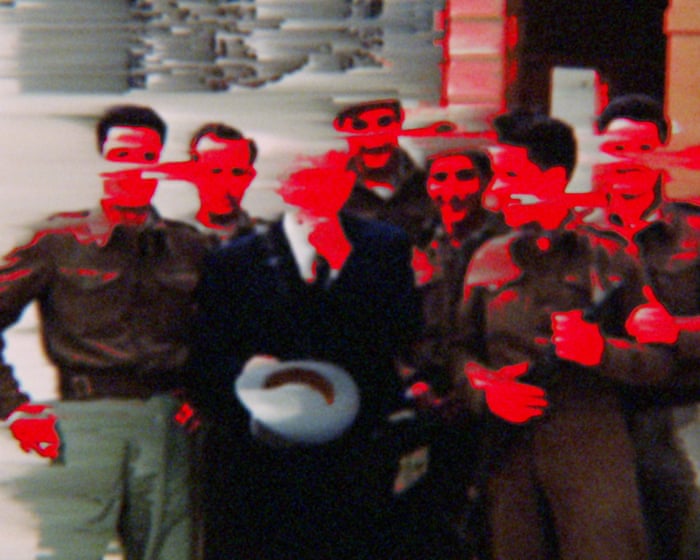
- Aljafari covers pejorative Israeli captions with red paint and replaces them with poems by Palestinian authors such as Ghassan Kanafani.
A Fidai Film, a collage work by Palestinian film-maker Kamal Aljafari, uses archive footage to stage what the review calls a potent uprising of images against propaganda and historical erasure. The film borrows the Arabic word fidai, meaning someone willing to sacrifice themselves for the greater good, a term at times used in a military context.
Much of the material comes from archives once held at the Palestine Research Centre in Beirut. In 1982, during the Lebanese civil war, Israeli forces raided the centre and seized the archive, and most of its documents on Palestinian history, including books, newspapers and audiovisual artefacts, are believed to still be in the hands of the Israeli army.
Footage and editing
The footage, obtained through clandestine means, shows physical traces of political suppression, appearing scratched, grainy and pixelated. Through montage, the film draws visual parallels pointing to violence endured by Palestinians over decades, including black-and-white film of British mandate-era soldiers patrolling and inflicting violence on the Indigenous population, followed by similar acts by Israeli forces.
Instead of a chronological order, the editing uses recurring images to build continuity, repeatedly showing torn-down houses, terrorised children and the bodies of Palestinians killed by occupation forces.
Brings liberation, if only momentarily
— A Fidai Film review
Reclaiming the archive
The film also intervenes in history: many reels carry pejorative captions added by Israeli authorities, which Aljafari covers in streaks of red paint. In their place he uses excerpts from poems by Palestinian authors such as Ghassan Kanafani, returning a sense of humanity to the images.
According to the review, these strategies of reclamation bring liberation, if only momentarily, to a captive archive.