Airport attacks put aviation in crosshairs of geopolitical conflicts
Deadly attacks at Riyadh’s main airport are disrupting airlines, closing airspace and raising new security questions for commercial aviation.

Key points
- Deadly attacks on Saudi Arabia's second-busiest airport have highlighted how Middle East conflicts are disrupting air travel on a larger scale.
- At least 13 people were killed and more than 300 injured when a projectile hit terminals at King Khalid International Airport in Riyadh over the weekend.
- Delta Air Lines postponed the debut of its Atlanta-Riyadh route until March after the FAA warned U.S. carriers about safety risks in Saudi airspace.
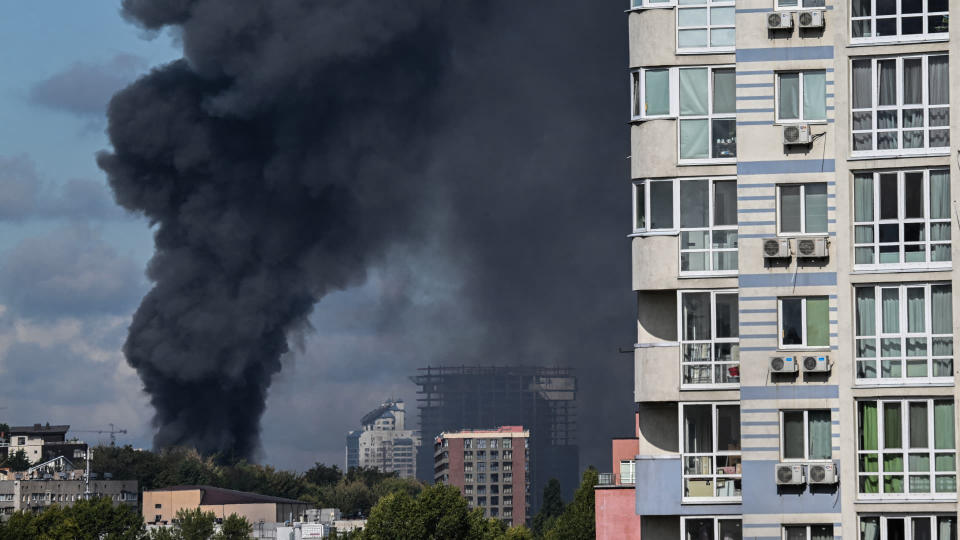
Deadly attacks on Saudi Arabia's second-busiest airport over the past week are highlighting how conflicts in the Middle East are upending air travel on a larger scale. The attacks, claimed by Yemen's Iran-backed Houthis, were the deadliest in the country in more than a decade.
Over the weekend, at least 13 people were killed and more than 300 injured when a projectile hit terminals at King Khalid International Airport in Riyadh, officials said. Other attacks have included drones.
Industry warnings
Mark Zee, founder of the independent aviation safety group OpsGroup, said, "It's a new paradigm. Civil aviation is being directly targeted and it has not been the case in the last couple of decades."
Jeff Price, a professor at Metropolitan State University of Denver's Department of Aviation and Aerospace Science and an airport management consultant, said airport security has historically focused on preventing unauthorized access to aircraft and the airport, not defending airspace.
Gulnaz Ukassova, UAE-based security director of information and analysis at risk management firm International SOS, said there is an established way to deal with conventional weapons such as missiles, but no foolproof way to deal with drones, and the technology is constantly evolving.
It's a new paradigm. Civil aviation is being directly targeted and it has not been the case in the last couple of decades.
— Mark Zee, founder of OpsGroup
Flights and airspace
King Khalid International Airport has been shut down for much of this week, and some carriers suspended operations there, citing safety concerns. CEOs of major oil companies also pulled out of an energy conference in the country.
Delta Air Lines was less than two weeks away from launching an Atlanta-Riyadh route, the first nonstop commercial flight between the two countries operated by a U.S. airline, according to the carrier. But late Sunday, the Federal Aviation Administration warned U.S. carriers about safety-of-flight risks when flying in or over Saudi Arabia. On Monday morning, Delta said it would postpone the route's debut until March.
The conflicts have cut off big parts of airspace in the Middle East, mainly over Iran. Qantas has changed its Perth, Australia-to-London route to avoid Iranian airspace and added a stop in Singapore to refuel. For four years, Western commercial passenger and cargo planes have already had to fly longer routes to avoid Russian airspace after its 2022 invasion of Ukraine.
Capacity by seats across the Middle East is down 5.7% in October from last year, 2.2 million fewer seats, according to OAG. Finnair CEO Turkka Kuusisto told reporters last month in New York, "We will not fly to Dubai and Doha, and we need to wait until the situation gets settled."