
Bacteria turn a virus’ own weapon against it
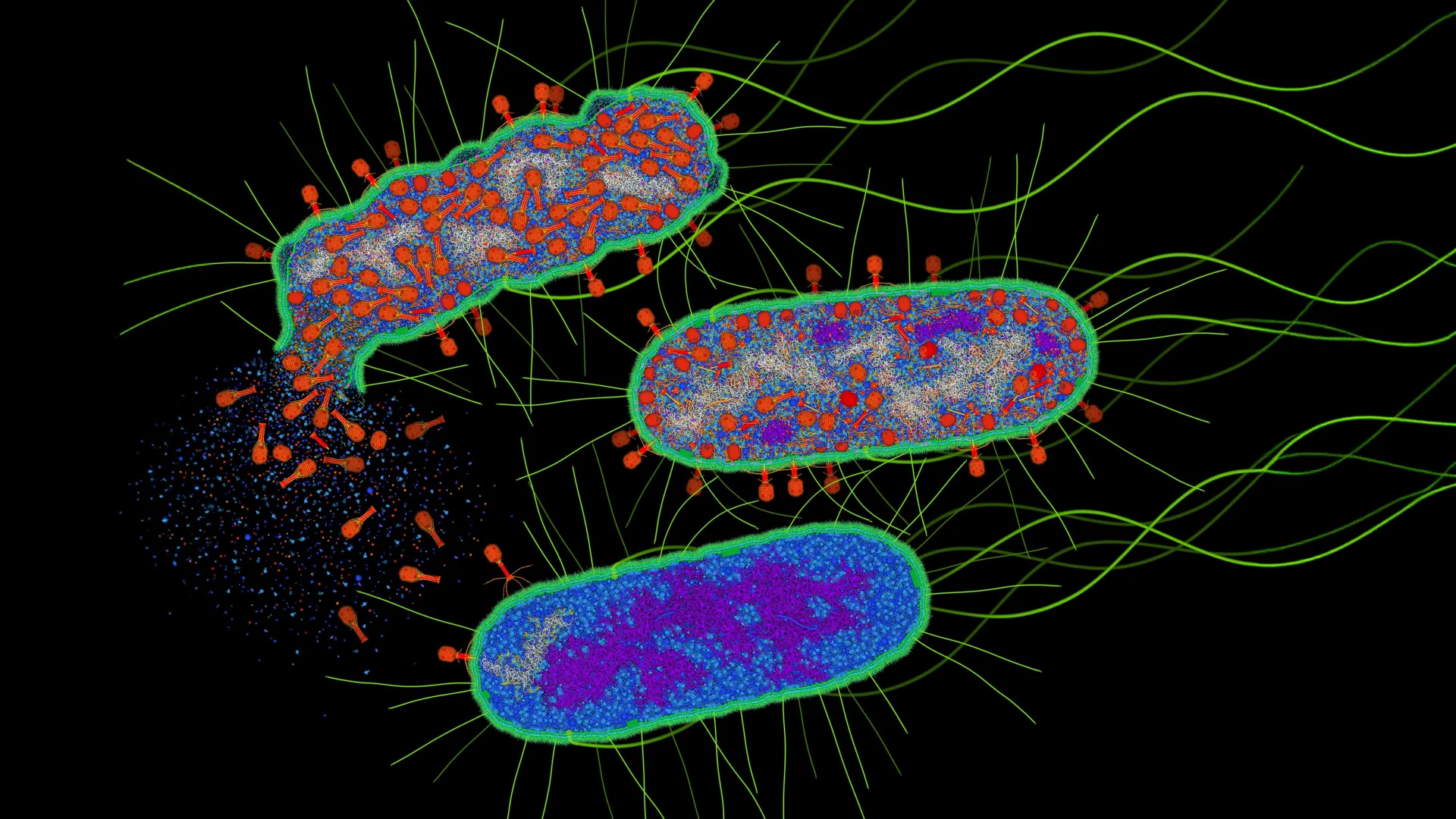
Researchers have uncovered a new way bacteria detect viral attacks: a virus-produced enzyme cuts a bacterial sensor protein, triggering a self-destructing immune response. The discovery could lead to more effective phage therapies against antibiotic-resistant bacteria and provide insight into ancient immune mechanisms shared with humans.
Key points
- Researchers found that a viral enzyme cuts a key sensor molecule in bacteria, triggering an immune alarm.
- The discovery explains part of CBASS, a bacterial immune system that can make an infected cell kill itself.
- The finding may aid development of better phage therapies and offers clues about human immunity.
Scientists have identified a new way bacteria detect viral attacks, according to research published in Science. The study found that an enzyme produced by certain bacteriophages, viruses that infect bacteria, cuts a crucial sensor molecule inside the bacterial cell. That damage acts as an alarm and switches on an immune response.
The work was led by Sam Hobbs, PhD, assistant professor of biochemistry at University of Utah Health and first author of the paper. The research focuses on a bacterial immune system called CBASS, which can trigger a fatal last-resort response in which an infected bacterium kills itself before the virus spreads to nearby cells.
How the defense works
Because activating CBASS kills the bacterium, the system must recognize a real viral threat with high precision. Hobbs and his colleagues found that this detection depends on something the virus itself needs: certain phages produce an enzyme called a protease that degrades other proteins.
The protease from the phage acts directly on a host protein, Hobbs said, and that is the signal that turns on the whole signaling pathway. This differs from related antiviral systems that recognize viral genetic material directly; in CBASS, the trigger comes from a viral protein acting on a bacterial host protein.
This is one of the most common forms of bacterial immunity, so when we finally figured it out, it was a total eureka moment
— Sam Hobbs
Implications for immunity
CBASS is related to an immune pathway found in humans, suggesting aspects of this antiviral defense have survived a long span of evolutionary history. The connection indicates the pathway dates back at least to the common ancestor shared by bacteria and humans.
Bacteria also provide a fast experimental system for studying fundamental immunity questions. Hobbs said the systems are conserved between bacteria and humans and have been maintained for billions of years, calling it a cool window into what is important in fighting viruses.


