California billionaire tax could backfire, Stanford study says
A new analysis from Stanford economists cautions that enacting a billionaire tax could have unintended consequences.
Key points
- Stanford economists say a California billionaire tax could raise far less than its backers estimate.
- Seven billionaires have left California, removing about $540 billion, or 30%, of state billionaire wealth.
- A Citrin-Politico poll finds 46% of likely voters favor Proposition 40 and 43% oppose it.
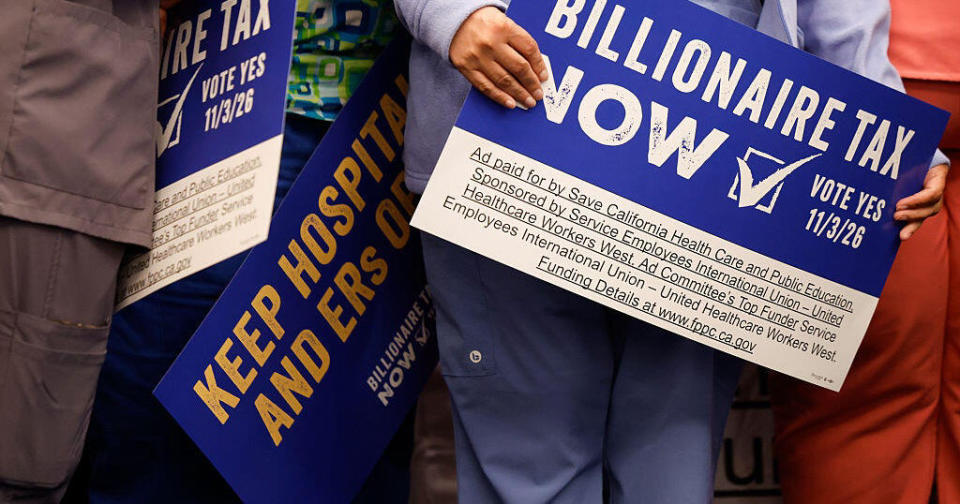
California voters will decide next month on a proposal to tax billionaire wealth and use the money to support the state's healthcare system. Stanford economists Benjamin Jaros and Joshua Rauh, in a working paper published by the National Bureau of Economic Research, warn the tax could leave California with less tax revenue than before.
Seven billionaires have already publicly left the state, including venture capitalist Peter Thiel and Google co-founders Larry Page and Sergey Brin. Their departures removed about $540 billion, or 30%, of California's total billionaire wealth from potential taxation, the economists said.
Revenue estimates and losses
The measure would apply a one-time 5% state tax on billionaire wealth. Because more billionaires have likely moved quietly since the proposal was announced, the economists estimate it may raise only about $30 billion, compared with the $100 billion supporters projected.
California could also lose roughly $1 billion to $3.5 billion a year in income tax revenue as its billionaire population shrinks. If those losses lasted permanently, their value today would exceed the wealth tax proceeds by about $39 billion, the authors calculated.
These findings suggest that the Billionaire Tax Act will not fulfill the primary functions for which it was designed
— Benjamin Jaros and Joshua Rauh
Supporters and the coming vote
The SEIU-United Healthcare Workers West, the healthcare worker union that introduced the ballot measure, disputed the research. Vice president Debru Carthan said its "sole purpose is to ensure that billionaires finally pay their fair share" and that Californians see through what she called misinformation campaigns.
Other economists, including Nobel winners Daron Acemoglu of MIT and Joseph Stiglitz of Columbia University, have backed the measure in a September letter. A Citrin-Politico poll found 46% of likely voters favor Proposition 40 and 43% are opposed, and union leader Dave Regan told CBS News he is "pretty confident" it will pass.