Deep beneath Australia, hidden caves could unlock the secrets of alien worlds
Scientists have solved the mystery of strange trenches scattered across Australia’s vast Nullarbor Plain, revealing an extensive hidden world beneath the surface. These subtle landscape features are created as deeply buried cave systems slowly collapse upward over millions of years. The discovery could help researchers locate unexplored caves containing ancient environmental records and unusual life forms.
Key points
- Researchers found that shallow trenches on the Nullarbor Plain sit above deeply buried cave systems.
- The caves are slowly collapsing upward through rock layers over millions of years.
- The findings could help locate hidden caves on other planets, including Mars.
A new study published in Communications Earth & Environment describes a method for tracking cave systems beneath Australia's Nullarbor Plain even when they are deeply buried. The plain covers more than 200,000 square kilometers across southern Australia and formed after an ancient shallow sea retreated about 14 million years ago.
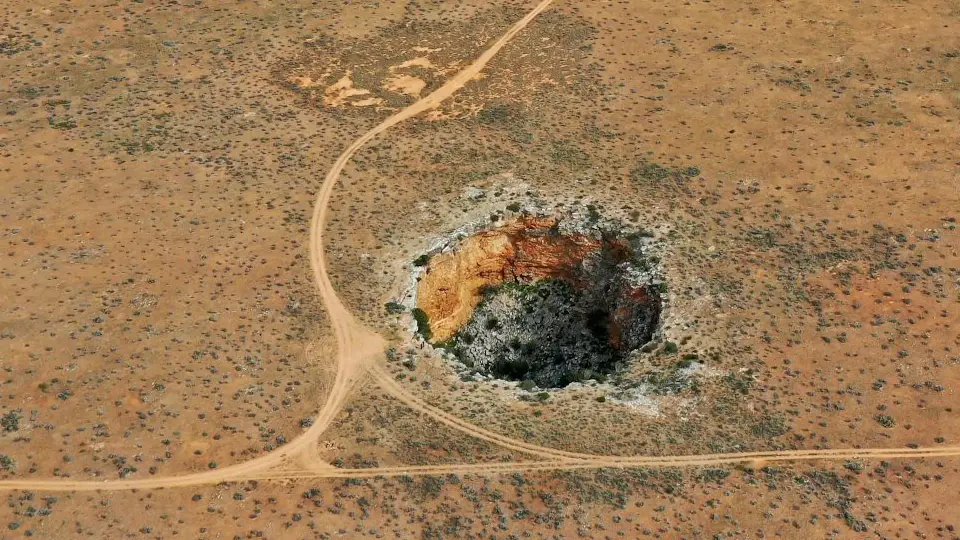
The research explains long, shallow trenches on the plain, up to 20 km long and a few meters deep, that run roughly north-south and are almost invisible from the ground. The authors say the trenches are faint surface signs of cave systems buried far below.
How the trenches formed
The team mapped the trenches using drone and aerial photography and satellite-based digital landscape models, measured soil and rock layers in boreholes and caves, and used geophysical techniques to see inside the Earth. They found the trenches sit above deep zones of broken rock and in places line up with known caves and sinkholes.
According to the study, the buried cave systems are slowly collapsing upwards through the overlying rock layers over millions of years to reach the surface. The trenches were not carved by rivers, begin and end abruptly, and lack typical river branching patterns.
the sort of place one gets into in bad dreams
— colonial Victorian-era explorers
Why the findings matter
The authors say the results will change how scientists interpret cave landscapes globally and show that surface structures can require looking deeper than expected. Knowing where voids exist underground can help with planning buildings, roads, tunnels and sewers, managing geological hazards, and protecting groundwater.
The work may also extend beyond Earth. Because caves offer stable shelter from space radiation, they are considered promising sites in the search for life on other planets, and potential caves have been identified in the Solar System, including some on Mars. The dry, stable Nullarbor surface is described as a good analogue for locating subtle surface signs of hidden caves on planets that lack a dynamic water cycle.