Scientists turn one of the world’s hardest-to-recycle plastics into high-performance lubricating oil
Virginia Tech scientists have discovered how to transform one of the world's hardest-to-recycle plastics into a valuable ingredient for high-performance engine oil. Their innovative process converts discarded PVC into a useful lubricant material in just three hours. The breakthrough could turn a major source of plastic pollution into a valuable industrial resource while making lubricant production more sustainable.
Key points
- Virginia Tech researchers converted PVC plastic waste into polyalphaolefin, a key ingredient in synthetic lubricants.
- The process heats PVC with aluminum trichloride and alpha-olefins to 158 degrees Fahrenheit for three hours.
- The study was published in Nature, and scaling the process beyond the laboratory remains the next step.
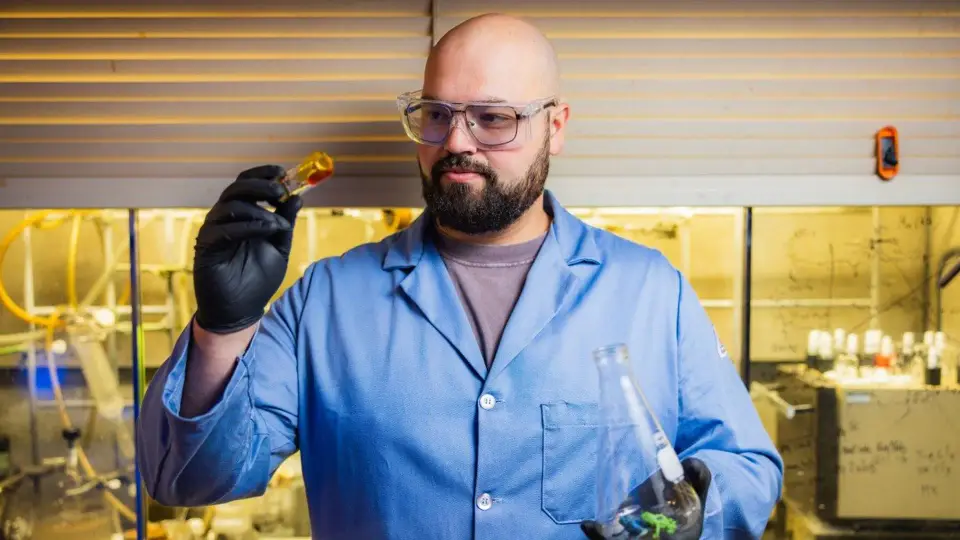
Researchers at Virginia Tech have developed a chemical process that turns polyvinyl chloride (PVC), one of the hardest plastics to recycle, into polyalphaolefin, a key ingredient in synthetic lubricants such as engine oil. The work, led by chemist and chemical engineer Guoliang "Greg" Liu, was published in the journal Nature.
PVC is difficult to recycle because of its chlorine content and the many additives manufacturers use to give it different properties, so much discarded PVC ends up in landfills. The researchers say the process could address both plastic waste and the environmental costs of producing lubricants.
How the process works
PVC of the kind used in household plumbing, window frames and credit cards is placed in a solvent with aluminum trichloride and alpha-olefins. The mixture is heated to 158 degrees Fahrenheit for three hours, after which the researchers extract a relatively thick lubricating oil.
The resulting polyalphaolefin belongs to a family of synthetic base oils valued for stability, lubricating properties and performance across a wide range of temperatures. The discovery grew out of earlier work in Liu's laboratory that turned other plastic waste into surfactants.
We want to be able to produce the oil on a larger scale to reach more people in the world
— Guoliang "Greg" Liu
Early setbacks and next steps
The team first tried replacing chlorine atoms on PVC's molecular chains, but the experiments produced soft, sticky substances with little practical value. Liu then wondered whether breaking the chains into smaller segments would work better, which led to the lubricant discovery.
Samples were evaluated by Ali Erdemir at Texas A&M University, with chemical computations from William Goddard at Caltech and economic modeling by Xi Chen at Virginia Tech. Liu said the team has shown the approach is feasible and that the lubricants are "green," but scaling production beyond the laboratory remains an important next step.