Documents falsified to evade tax on Abramovich's wealth, BBC finds
Backdated paperwork also made the Russian oligarch’s yachts and mansions disappear from accounts, investigation finds.
Key points
- BBC Panorama and the Bureau of Investigative Journalism found that Deloitte helped falsify documents to hide Roman Abramovich's wealth and evade tax.
- Leaked documents show assets worth $672m were removed from Abramovich's Cypriot company accounts through backdating.
- A tax evasion scheme involved backdated documents to make it appear a company did not own nearly $2bn, avoiding tax in Cyprus.
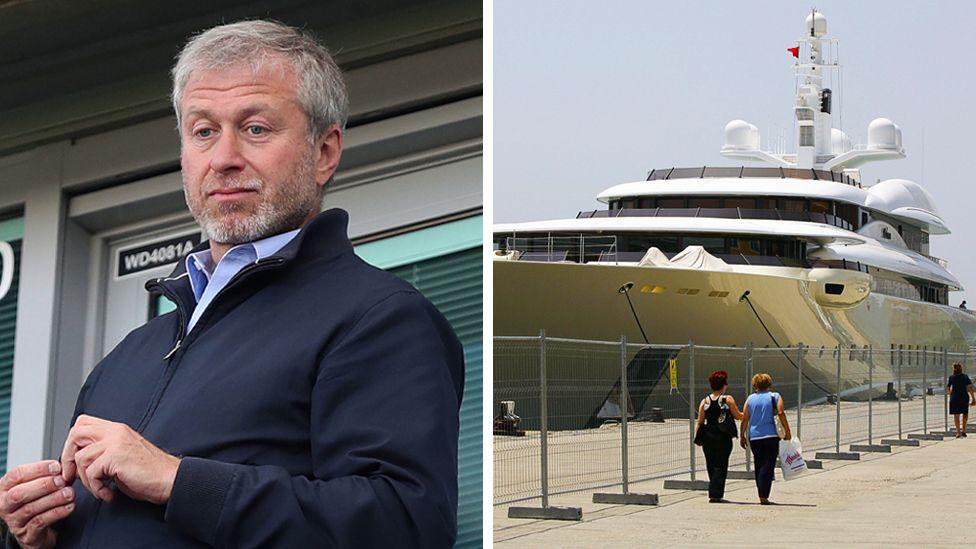
A joint investigation by BBC Panorama and the Bureau of Investigative Journalism has found that the world's biggest accountancy firm, Deloitte, helped falsify documents to hide Roman Abramovich's wealth and evade tax. The leaked documents show that accounts signed off by Deloitte in Cyprus made assets such as superyachts, mansions and private jets worth $672m (£508m) vanish from Abramovich's company accounts.
Deloitte also appears to have advised on a scheme to evade a large tax bill through the falsification of documents. Barrister Andrew Mitchell KC, an expert in financial services law, said the evidence showed the scheme was "straightforward" tax evasion and "it couldn't be more blatant".
How the assets were hidden
In 2006, after a new transparency law in Cyprus required company accounts to be made public, Abramovich's associates and the corporate services firm MeritServus decided to rewrite history. They transferred $672m of luxury property from Abramovich's Cypriot company Amiscan Investments to a parent company in the British Virgin Islands and backdated the change by three years to make it look like the transfer happened in 2003.
Deloitte Cyprus reviewed the backdated documents and said they were "adequate" to remove the assets from Amiscan's accounts. When the 2003 accounts were signed off by Deloitte in 2006, the homes, planes and yachts disappeared, leaving only $75,000 of assets. Lord Sikka, professor of accounting at the University of Sheffield, said it was a "violation of a statutory duty" and "pretty scandalous" to misrepresent transaction dates and not publish true and fair accounts.
What you take away from it is there are professionals who are prepared to bend and break the rules of their profession and therefore the law. And it looks that they will stop literally at nothing in terms of creating documents.
— Andrew Mitchell KC
Tax evasion scheme uncovered
Panorama also found evidence that backdated documents were used in a tax evasion scheme involving another Abramovich Cypriot company, Kravin Investments, which had almost $2bn in the bank in 2003. An email from MeritServus in August 2005 said a plan had been devised after a meeting with Deloitte to change financial statements for 2003 and 2004. Backdated documents were created to falsely show Kravin was only holding the funds for its BVI parent, so it would not be liable for tax in Cyprus.
Deloitte wrote in a September 2005 email that changes would have to be made to the accounts because of the backdated changes. Andrew Mitchell KC told Panorama the scheme was "straightforward" tax evasion. Cypriot MP Christos Christofides said if tax had been evaded, "we have to see how we can get our money back and how, if some people are guilty, they have to pay the price according to our law."