‘Each country goes its own way’: How Balkan politics shape ties with Israel
Countries’ ties with Israel reflect local politics, defence deals and strategic interests rather than a united stance.
Key points
- Balkan countries have sharply divergent policies toward Israel, driven by domestic politics and unrelated interests rather than a shared regional vision.
- Bosnia and Herzegovina is deeply split, with Bosniaks expressing solidarity with Palestinians while Republika Srpska leaders openly support Israel.
- Serbia has exported arms to Israel since October 2023 and opened an Israeli-linked drone assembly plant in September, while Kosovo and Albania anchor their Israel ties to US security alliances.
Balkan countries have sharply divergent policies toward Israel, shaped by domestic politics and transactional interests rather than a common regional strategy, experts told Al Jazeera. Marko Prelec of the International Crisis Group said the region has almost no common positions, adding that each country goes its own way.
Florian Bieber, a professor at the University of Graz, said the position toward Israel is strongly shaped by domestic politics and national narratives, making a regional or even country-specific position unlikely.
Divisions within Bosnia and Herzegovina
In Bosnia and Herzegovina, the Gaza war has deepened existing ethno-national divisions. Bosniak political representatives and much of the public in the Federation have expressed strong solidarity with Palestinians, while leaders in Republika Srpska have been openly pro-Israel and some Croat political figures have adopted a more sympathetic tone toward Israel.
Bieber said Bosniak solidarity with Palestinians is often viewed through the lens of war and victimhood, comparing the Palestinian experience with the Bosniak experience in the 1990s. Prelec said Bosnian Serb outreach to Israel and Likud is an attempt to find allies for its internationally unpopular flirtation with separatism.
Each country goes its own way.
— Marko Prelec, analyst at the International Crisis Group
Serbia, Kosovo and Albania
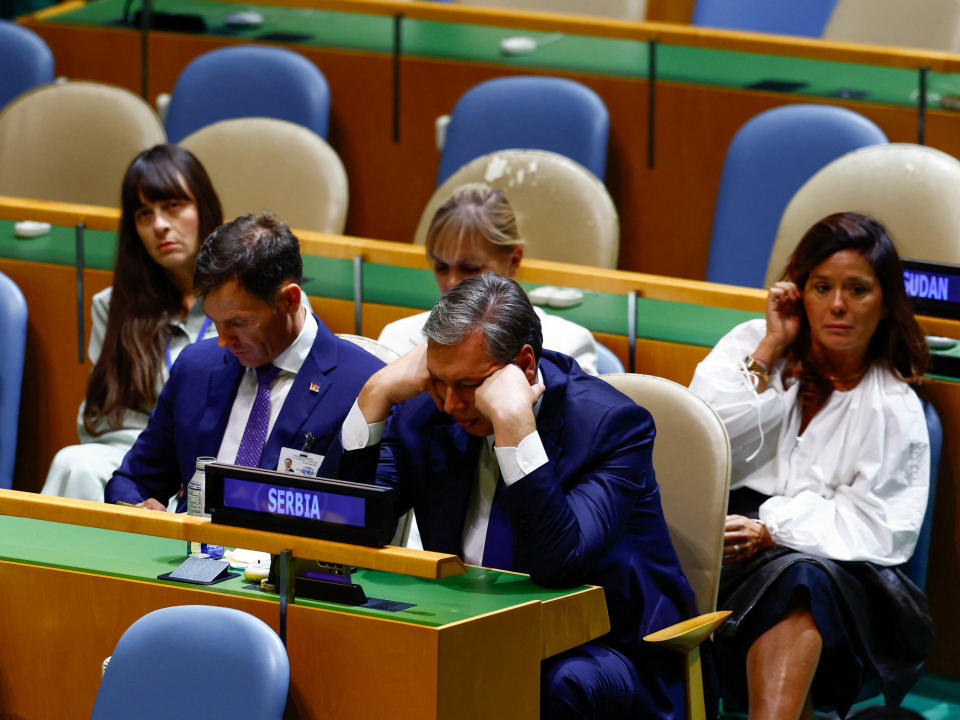
Serbia has exported ammunition and arms to Israel since October 2023 despite historically friendly ties with Palestine. In September, Serbia opened an Israeli-linked drone assembly plant. Vuk Vuksanovic of King's College London said Serbia's defense industry has not been particularly picky about its customers and the desire for profit has been a factor, while noting a tilt toward Israel on security cooperation.
Kosovo recognized Israel under the 2020 Washington Agreement in exchange for Israeli recognition of Kosovo's independence, then opened its embassy in Jerusalem. Albania, under Prime Minister Edi Rama, has preserved warm political ties with Israel and deepened cooperation with Israeli cybersecurity companies after cyberattacks.