Edge Control: the art exhibition using hidden camera images to explore race and beauty
Artist Deana Lawson uses beauty supply store surveillance images to analyze power and personhood in her exhibition at the Gagosian in New York City In her essay The Oppositional Gaze: Black Female Spectators, writer and philosopher bell hooks explains that the relationship between Black people and the act of “looking” has been traumatic since slavery. Black people, many of whom are still subject to the constant…
Key points
- Deana Lawson's exhibition Edge Control at Gagosian in New York City uses surveillance photos of alleged beauty supply store shoplifters to examine race, beauty and power.
- Lawson enlarges the photos and frames them in mirrors so viewers see themselves while looking at the subjects.
- The exhibition runs until 24 October and its official description says Lawson does not intend to cast moral judgment on the images.
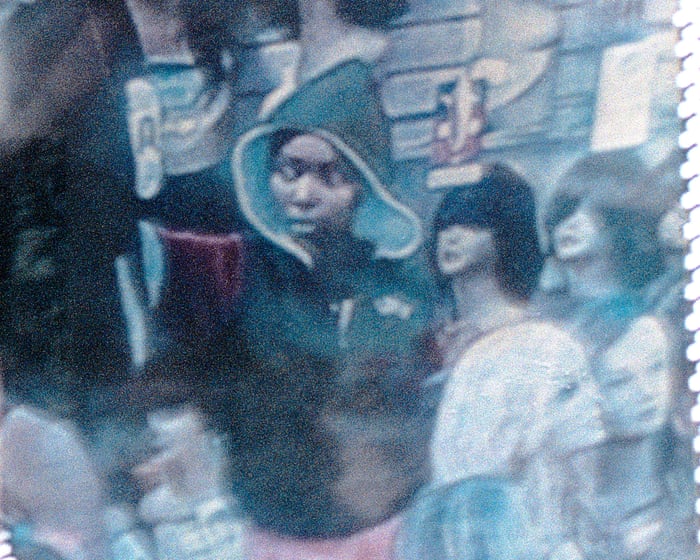
Artist Deana Lawson's photography exhibition Edge Control is on view at the Gagosian gallery in New York City until 24 October. The show uses surveillance images of alleged beauty supply store shoplifters, presented at large scale and outside their original contexts, to explore race and beauty.
Edge control refers to the gels and pomades used to slick the edges of a Black woman's hairline. In Lawson's exhibition, the phrase also serves as a tool to examine beauty products, consumerism and how surveillance and race intersect.
How the images are shown
Many beauty supply stores post small surveillance photos of alleged shoplifters as a warning to customers. These stores, which almost exclusively sell Black haircare products in Black neighborhoods, are rarely owned by Black people, and the indistinct images tend to fade into the background.
Lawson presents the photos as large portraits framed by mirrors, so onlookers see themselves at the same time as the shoplifters. The viewer appears small and narrow while the shoplifters are life-size, turning passive spectatorship into active participation. In the middle of the room, two holograms show Black women's bodies that shift with the viewer's angle.
interrogate the gaze of the Other but also look back, and at one another, naming what we see
— bell hooks
Neutrality and the gaze
The exhibition's official description states that Lawson does not intend to cast moral judgment, but rather foregrounds the implications of agency and the transformative potential of beauty products in late capitalist society. The original photos are low resolution, some subjects are masked and a few are too blurry to identify, a deliberate refusal that makes viewers question who they are looking at.
Lawson's signature portraits of Black men and women in private settings hang opposite the shoplifter images. In all the works, the subjects' gaze meets the viewers', and because of their size the subjects seem to look down at them. The article notes that early 20th-century Black photographers used suits, nuns' habits or graduate gowns to promote race pride and respectability, while Lawson shows casually dressed subjects and finds beauty in the mundane.