Egypt’s reopening of its embassy in Tripoli signals regional shift on Libya
Former rivals in Libya are pushing for a unity government to end years of conflict.
Key points
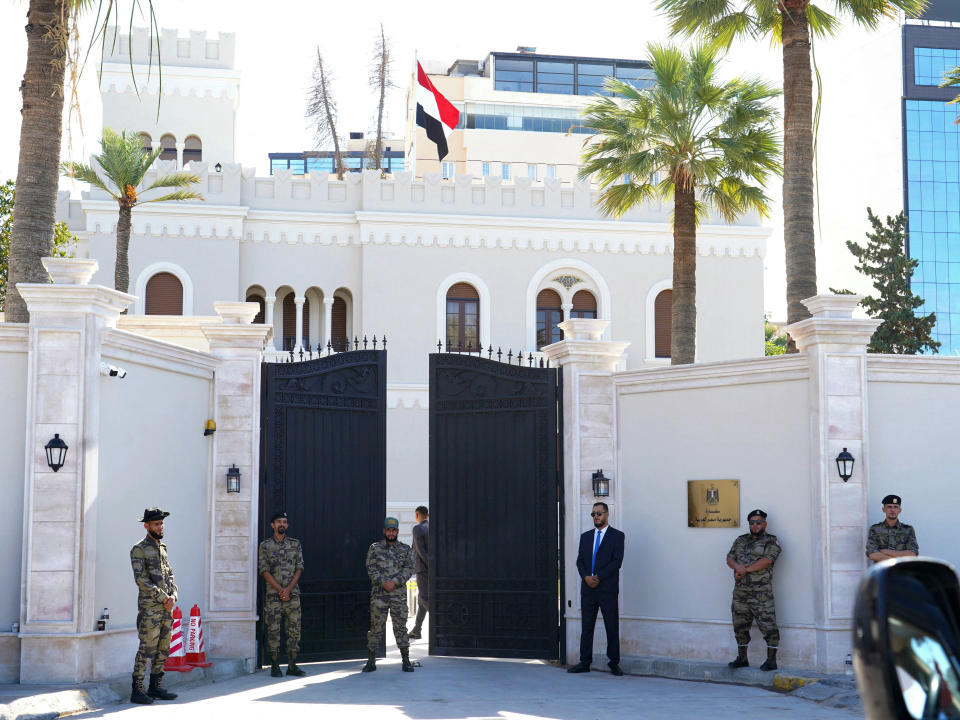
- Egypt reopened its embassy in Tripoli on Saturday after 12 years of closure over security concerns.
- Analysts say Cairo is readjusting its Libya policy after years of backing Khalifa Haftar's eastern forces.
- Egypt's foreign minister discussed maritime border concerns with Libyan officials during the Tripoli visit.
Egyptian Foreign Minister Badr Abdelatty inaugurated Egypt's embassy in Tripoli on Saturday, reopening a building that had been closed for 12 years because of security concerns. Analysts told Al Jazeera the move marks a fundamental political shift for Libya, both domestically and regionally.
Libya has been politically divided since Muammar Gaddafi fell in 2011, with rival administrations in Tripoli in the west and in Tobruk and Benghazi in the east. Egypt was widely seen as backing the eastern authority effectively led by military commander Khalifa Haftar and his Libyan National Army until recent regional developments led Cairo to rethink its approach.
Why analysts see a shift
Libyan political analyst Hazem al-Rayes said the reopening of the embassy in Tripoli, seat of the internationally recognised government Haftar was fighting, is a sign of this. He noted that no Egyptian foreign minister had visited the capital for five years.
Elias al-Barouni, a political science professor at Libya's Nalut University, said the move goes beyond resuming consular services and indicates a rearrangement of Cairo's priorities in dealing with the Libyan crisis. Badr Hassan al-Shafei of Cairo University said Egypt found that relying on Haftar's party "may not be the right bet" at present.
I can consider that what Egypt is doing in its recent moves towards the capital, Tripoli, is an attempt to readjust its behaviour in the Libyan file
— Hazem al-Rayes
Economic and regional stakes
During the visit, Abdelatty discussed economic files with Libyan officials, including the 2019 maritime border memorandum signed between Tripoli and Ankara. Egypt's foreign ministry said he stressed the importance of addressing Egyptian concerns over maritime demarcation between Libya and Turkiye under international law.
Al-Shafei said Cairo may be trying to protect its gas and oil exploration interests in the Eastern Mediterranean and to benefit from reconstruction and the revival of Libya's oil industry. Al-Rayes said a new regional consensus makes a comprehensive agreement among Libyan rivals more likely, while al-Barouni cautioned that only a comprehensive solution can end the divisions.