Ex-DRC President Kabila’s alliance with M23 rebels: Why it matters
Kabila's move confirms numerous accusations from the government in Kinshasa of his ties to armed rebels.
Key points
- Former DRC President Joseph Kabila launched a new political-military coalition, the Front pour la Refondation de la Nation (FRN), allied with M23 rebels.
- The FRN aims to 'put an end to tyranny by any means necessary, including the use of force,' according to spokesperson Claude Ibalanky.
- The move raises fears of further escalation in eastern DRC, where over 7.8 million people are displaced and 28 million face food shortages.
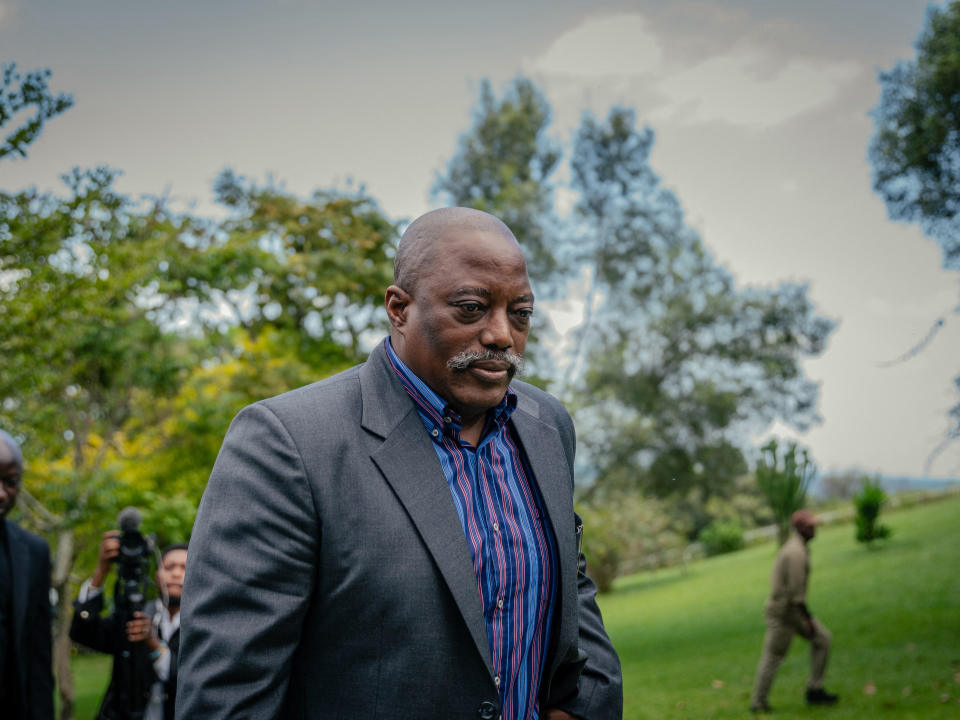
Former President Joseph Kabila of the Democratic Republic of the Congo (DRC) has officially allied with armed rebel groups, raising fears of further escalation in the country's east. On Monday, Kabila launched a new political-military coalition, the Front pour la Refondation de la Nation (FRN), to replace the M23-AFC alliance. The announcement came exactly a year after Kabila was sentenced to death by a military court for alleged links to the rebels.
The M23 crisis has affected the mineral-rich eastern DRC for nearly 15 years. The United Nations reports that more than 7.8 million people are displaced and 28 million face food shortages. The United States and UN accuse Rwanda of backing M23, though Kigali denies it.
What officials said
Coalition spokesperson Claude Ibalanky said the new movement will 'put an end to tyranny by any means necessary, including the use of force,' in what appeared to be a threat to the government in Kinshasa. Kabila introduced the FRN from his residence in Goma and said he will lead the alliance. Corneille Nangaa, a former elections commissioner, will serve as deputy alongside M23 spokesman Bertrand Bisimwa. Freddy Kaniki, a senior M23 health official, will be secretary-general, and Sultani Makenga of M23 will be army chief.
put an end to tyranny by any means necessary, including the use of force
— Claude Ibalanky
Background and reactions
Kabila, 55, is the son of former President Laurent Kabila. He took office in 2001 after his father was assassinated. His term, which officially ended in 2016, was marked by rights violations and corruption; he delayed elections until 2018 and left office in 2019. He is believed to have signed a power-sharing deal with current President Felix Tshisekedi, but the truce collapsed in 2020. Tshisekedi's government launched corruption investigations against Kabila, forcing him into exile in South Africa in 2023. Last October, a military court sentenced Kabila to death on charges including treason and war crimes. In April, Washington imposed sanctions on him for allegedly funding rebel groups.
Al Jazeera's Alain Uaykani reported that Congolese are worried the conflict could escalate and that soldiers may defect to serve Kabila. There are also fears that peace talks could collapse. In June 2025, DRC and Rwanda signed a US-led peace agreement. In a separate Qatar-mediated process, the DRC and M23-AFC signed the Doha Framework last November and were meant to meet this month. Bram Verelst of the Institute for Security Studies told Al Jazeera that Kigali will likely want to continue US-led talks, but the real threat lies to the Doha process. He noted that Kinshasa's position toward the rebels and Kabila will likely harden, and the conflict's outcome depends on Kabila's capacity to control the rebellion and expand alliances beyond North and South Kivu.