Faust review – FW Murnau’s silent masterpiece is a devilishly dazzling vision
The 1926 film of Goethe’s tragic tale of a man who sells his soul to the devil remains a spectacular feat of German expressionism The centenary of FW Murnau’s silent fantasy-melodrama from 1926 is the occasion to ponder this mysterious film, taken from Goethe’s 19th-century depiction of the alchemist and natural philosopher who sells his soul to the devil but, in a very high-minded climax of German romanticism, is…
Key points
- FW Murnau's 1926 silent film Faust is being revisited for its centenary.
- The film adapts Goethe's tale of an alchemist who sells his soul to the devil and is redeemed by love.
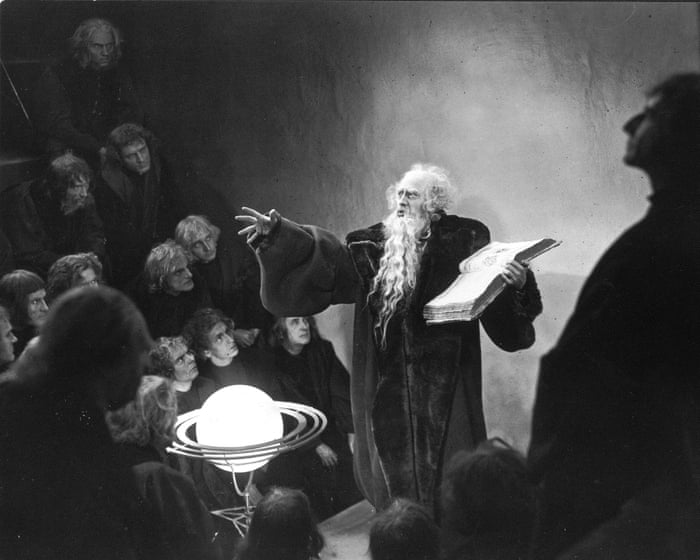
- Gösta Ekman plays Faust and Emil Jannings plays Mephisto in the German expressionist work.
FW Murnau's 1926 silent fantasy-melodrama Faust is the subject of a review timed to its centenary. The film adapts Goethe's 19th-century depiction of an alchemist and natural philosopher who sells his soul to the devil but is redeemed by love in a climax of German romanticism.
The review notes that Murnau's film differs sharply from Christopher Marlowe's scarier, more unforgiving account of Doctor Faustus. In Murnau's version, the word Liebe appears at the centre of a radiating vision of concentric circles conjured by the heavens, annulling Faust's debt to the Evil One.
Cast and key scenes
Gösta Ekman plays Faust as ancient and grey-haired, while veteran stager Emil Jannings plays the grinning Mephisto, who wagers that he can corrupt a decent man. Jannings won the first best actor Oscar two years later.
After striking a provisional 24-hour bargain with Mephisto, Faust is scared of a crucifix, like a vampire. The film includes a book-burning scene in which Faust immolates his necromancy volumes along with the Bible, which the review notes resonated with later events.
Plot and visual ambition
Mephisto offers Faust whatever he wants, including a bacchanal and a dalliance with the Duchess of Parma, described as the most beautiful woman in Italy. Faust instead returns to his home village as a young man and falls in love with Gretchen, played by Camilla Horn.
The story leads to horror: Gretchen is sentenced to be burned at the stake for murdering the child she conceived with Faust, who is wanted for killing her brother Valentin in a duel. The review praises the film's model work for landscapes and cityscapes, and the painterly image of Mephisto as a vast evil angel brooding over the city.