Finding the groove: what’s the best genre of music to dance to?
What is it about music that makes even non-professionals want to hit the dancefloor, and is it disco, funk or even classical that does it best? Four leading choreographers discuss their theories, with the science to back them up ‘I don’t know what it is about house music that makes me move, but I just can’t help it,” says Faye Stoeser. “And I don’t care what I look like. I just go for it.” “If a Missy [Elliott]…
Key points
- Four leading choreographers discuss what makes music danceable, with scientific studies on groove.
- Neuroscientist Petr Janata's 2012 study found Stevie Wonder's Superstition to be the grooviest track.
- Tempo around 120bpm and syncopation are key factors in making people want to dance.
Choreographers Faye Stoeser and Dannielle "Rhimes" Lecointe are among four dance professionals who shared their theories on the best music for dancing, with scientific evidence, in a Guardian Culture article. They discussed genres including house, hip-hop, funk, and classical, drawing on personal experience and research.
The article noted that DJ Intelligence found Whitney Houston's I Wanna Dance With Somebody was the most-requested track by UK DJs last year, while Billboard's top US wedding song was Uptown Funk by Mark Ronson featuring Bruno Mars. A 2013 Mixmag poll named Daft Punk's One More Time as the ultimate dance track, and Radio 2 listeners in 2008 voted for Michael Jackson's Billie Jean.
What the science says
Oxford professor Morten Kringelbach played funk drum breaks with varying syncopation to test subjects and found an inverted-U relationship: too little or too much syncopation reduces the urge to dance. James Brown's music hits the sweet spot. In a 2012 study, cognitive neuroscientist Petr Janata identified Stevie Wonder's Superstition as the grooviest piece, and neuroscientist Daniel Levitin highlighted Wonder's varied drumming and clavinet tones as "ear candy".
Other factors positively linked to groove include a prominent pulse, many different notes per bar, short or accented beats, low to medium harmonic complexity, and heavy bass. Tempo also matters: Superstition is around 100bpm, while one 2018 analysis suggested an optimum of 107-126bpm and other studies found 120bpm.
Sometimes I'll have the music on in my headphones, and I'm trying to block [some choreography] mentally or write something down, and then I get lost and distracted because I'm like: This beat is so funky!
— Nahum McLean
Choreographers on funk and house
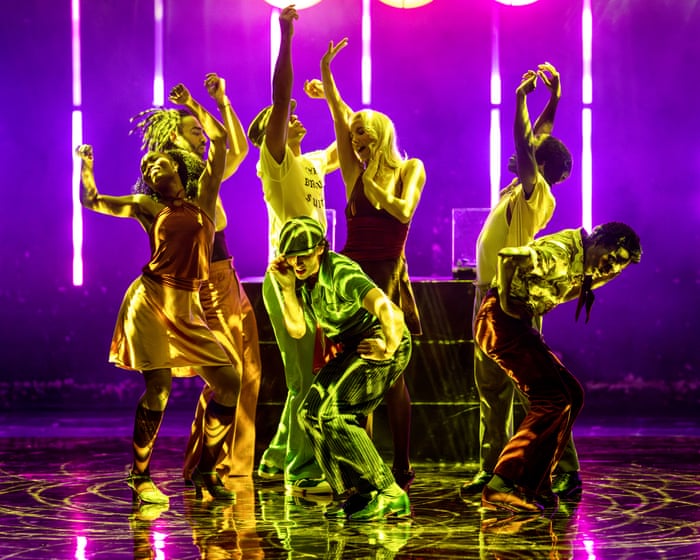
Nahum McLean and Darius Drooh of dance company BlacBrik said they choreograph only after finding the music, sometimes a week before a show. Their current show The Brown Suite is soundtracked by James Brown, Etta James, and Sam Cooke. McLean called Brown's music "so infectious" and said the bassline, percussion, and horns create an involuntary reaction in audiences.
Hannah Ekholm and Faye Stoeser of Ekleido, who specialize in new way vogue danced to house music, agreed that 120-126bpm feels groovy. Stoeser mentioned "collective effervescence" as the feeling of losing oneself together in a club. Lecointe, who leads hip-hop show Ebony Scrooge, said she feels music in the solar plexus, vibrating at different levels.