Forget rockets — Longshot wants to fire cargo into space from a gun. See it at TechCrunch Disrupt 2026
Longshot is trying to build a gun big enough to make space data centers a reality.
Key points
- Longshot Space Technology in Alameda, California, is developing a gun to fire cargo into space.
- The startup has raised about $20 million from venture investors for its mission.
- It plans a 3,000-foot gun to launch 220-pound payloads at Mach 8.
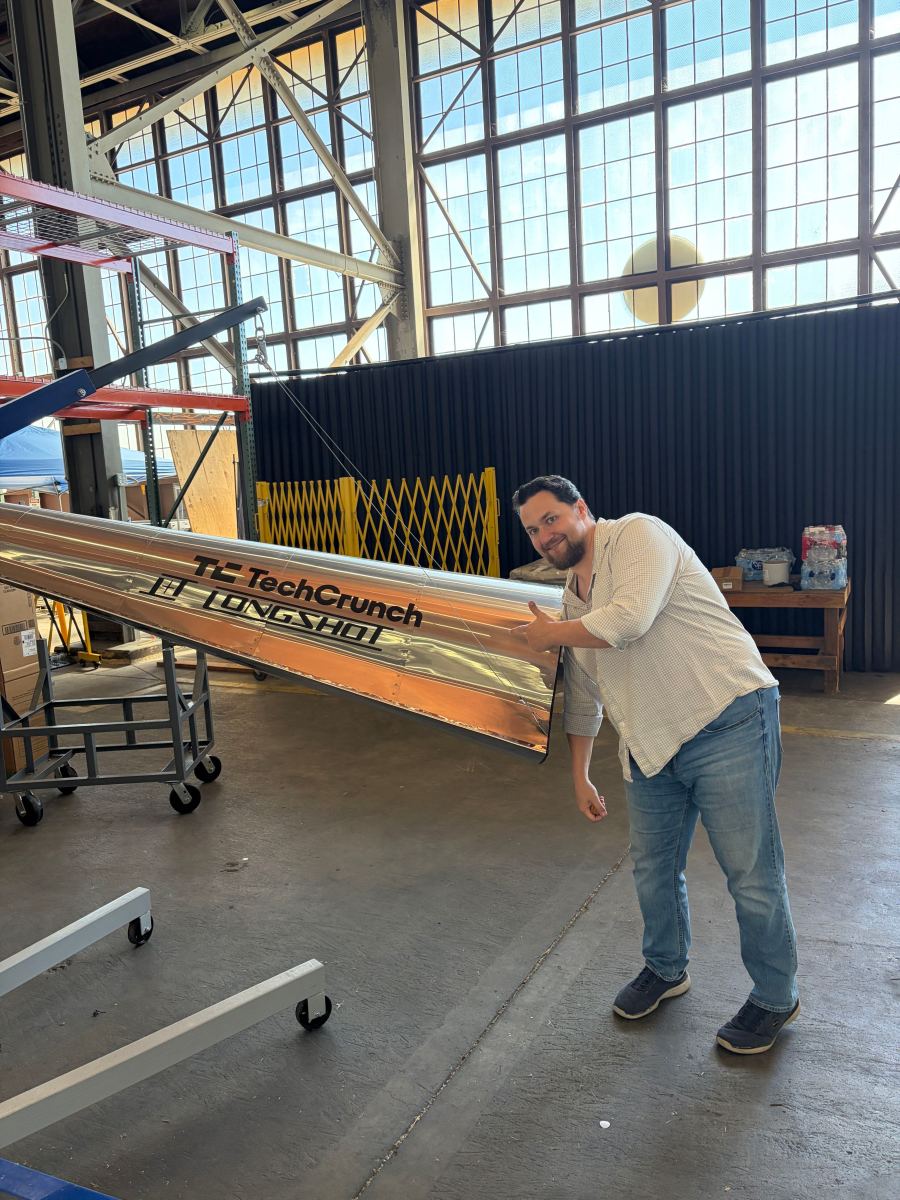
Longshot Space Technology, a startup based in Alameda, California, is developing a gun to fire cargo into space. Co-founders CEO Mike Grace and CTO Nato Saichek are leading the effort, and the company has raised about $20 million from venture investors.
The company is currently firing a 70-foot gun with a six-inch diameter at its test site near Barstow, California, and says it can accelerate projectiles up to near-hypersonic speeds. It expects to soon start firing a 140-foot-long gun with a 30-inch diameter at its Alameda test site.
How the gun works
The design uses multi-injection guns, originally built for World War II and during 1960s research programs. A steel pipe is mounted horizontally over the ground, with tanks of high-pressure gas attached at ports along its length. When a projectile moves down the barrel, the tanks fire at precise times to accelerate it to speeds as high as Mach 4, thus far.
The projectile is a lifting body, meaning its shape generates lift, so it will aerodynamically gain altitude once it exits the barrel. The guns do not need to point up at an angle.
The hard part is not building the thing, it’s finding a place where they will let you build the thing
— Nato Saichek
Plans and revenue
After the 140-foot gun, Longshot is preparing to build a 30-inch diameter gun that is 328-feet long, with plans to extend it to about 3,000 feet, making it the largest gun on the planet. It will be capable of launching 220-pound payloads up to speeds of Mach 8, the team says.
The guns will let Longshot keep proving its technology while generating revenue from hypersonic testing for the U.S. military, which has awarded several contracts. Grace envisions building one on a U.S. military installation like Fort Bliss, where it could be part of infrastructure for testing the next generation of U.S. interceptors.
The ultimate goal is putting large payloads into space. The team is confident it can scale up its current design to accelerate payloads to as much as five kilometers per second (more than 11,000 mph). That would require a gun 10 kilometers long and nearly 10 feet in diameter. Grace expects that if everything works out, they can send payloads to space for about $50 per kilogram.