Gaza’s women filmmakers turn pain into cinema as new academy launches
Gaza film festival highlights women's resilience through stories of war, loss and survival.
Key points
- The second Gaza International Women's Film Festival opened Monday at the destroyed al-Nakheel Hall in al-Bureij, screening five documentaries by Palestinian women and launching the Gaza Cinema Academy.
- The films, produced through a filmmaking diploma programme that began in March with 25 young Palestinian women, document hunger, disability, displacement and loss during the war.
- The festival runs until October 31 with 73 films from 24 countries, though filmmakers face destroyed institutions, scarce equipment, limited funding and power outages.
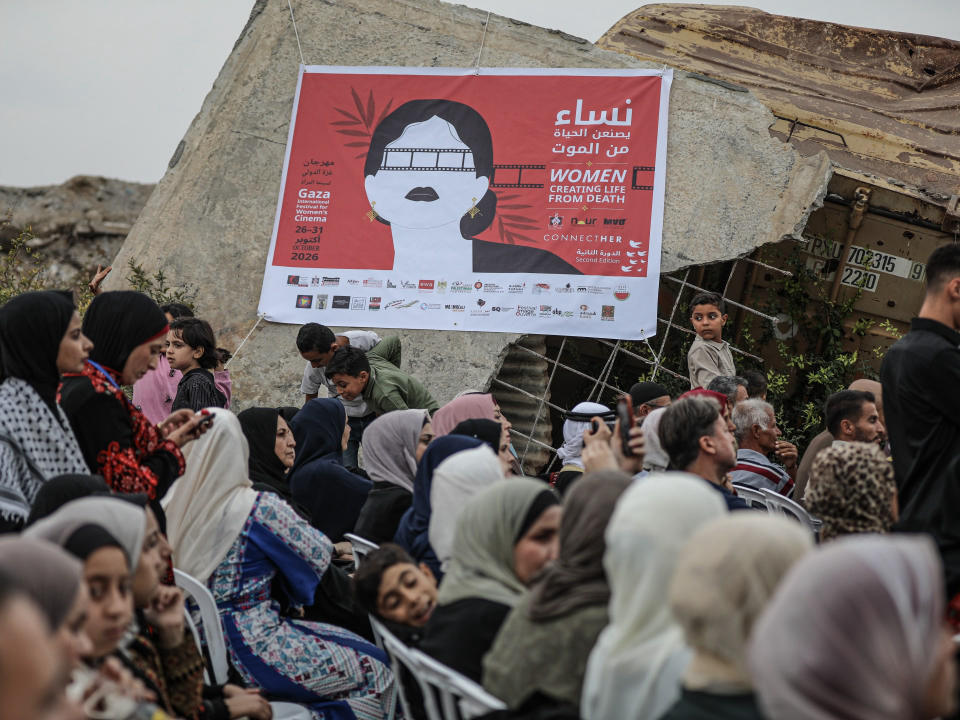
The second Gaza International Women's Film Festival opened Monday at the site of the destroyed al-Nakheel Hall in al-Bureij, central Gaza, screening five documentaries by Palestinian women and officially launching the Gaza Cinema Academy. The event was held under the slogan "Women Creating Life from Death".
The five films were produced through a filmmaking diploma programme that began in March and brought together 25 young Palestinian women. The festival runs until October 31 and features 73 films from 24 countries.
Films and their subjects
Mona Abu Qass's 11-minute documentary A Sack of Flour draws on her personal experience to examine Israel's use of starvation against Palestinians in Gaza. It captures the struggle to find food, the dangers at aid distribution points and the lives lost while trying to obtain flour.
Raghda al-Buhaisi's Beyond Silence tells the story of a deaf artist whose studio in Rafah was destroyed and whose parents and several family members were killed. The other three films are Soso: The Lifeline, Remnants of Light and Dandana, which document life in Gaza and the suffering brought by war.
The idea for the film stems from a personal experience and a true story
— Mona Abu Qass
Challenges for filmmakers
Festival director Ezzedine Shallah said the films turn individual pain into broader human stories and preserve stories that might otherwise never reach the screen. Co-founder Rima Mahmoud said war and the Israeli siege have hindered young women's filmmaking, pushing some to use simple methods and self-fund projects.
The article cites destroyed cultural institutions, scarce equipment, limited funding, power and internet outages, and the pressures of war and displacement as restrictions on film production. Women filmmakers also struggle to access training, production opportunities and international festivals.