Israeli election exit polls show race headed toward stalemate
Israeli Prime Minister Benjamin Netanyahu appears to have won fewer votes than his main challenger, according to early exit polls, but both sides will likely struggle to cobble together a coalition.
Key points
- Exit polls from Israel's major TV networks project a majority voted against Benjamin Netanyahu's coalition in Tuesday's election, though his Likud party was still the largest single party.
- Neither Netanyahu's bloc nor the opposition won a clear majority in the 120-seat Knesset, so both sides face coalition negotiations.
- Israel's two Arab parties won more seats than in any previous election, but both blocs have vowed not to form a government reliant on Arab parties.
Exit polls from Israel's major television networks project that a majority of voters cast ballots against Prime Minister Benjamin Netanyahu's coalition in Tuesday's election, while his Likud party still emerged as the largest party among all contenders. Neither bloc has a clear majority in the 120-seat Knesset.
Israel's two Arab parties won more seats in parliament than in any previous election. Some Arab voters told CBS News the period under Netanyahu's hard-right government had been difficult, prompting a historic turnout for the minority community, which makes up around 20% of the population.
Rival blocs and campaign pledges
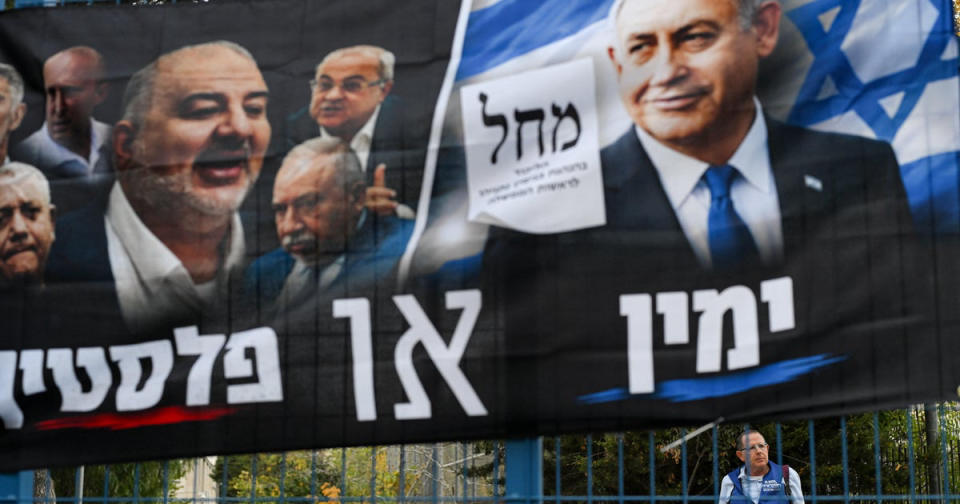
Netanyahu, Israel's longest-serving prime minister, is seeking another coalition like his current one, built on partnerships with ultranationalist and Jewish religious parties. He says Israel's campaigns in Gaza, Lebanon and especially Iran are ongoing and he needs more time to finish them. President Trump endorsed him last week, writing on Truth Social that "America will have to do this work ourselves" if Israel has a leader other than "Bibi."
The opposition is a diverse group of parties united by the goal of removing Netanyahu. Former military chief Gadi Eisenkot, who leads the centrist Yashar party, is the front-runner to head the "change bloc." Both blocs have vowed not to form a government reliant on Arab parties, arguing it would endanger the country.
If Israel has the wrong Leader, which would be anyone other than Bibi, America will have to do this work ourselves, and I am not inclined to do so
— President Trump
Possible paths forward
If neither bloc wins a clear majority, lawmakers could break election pledges and switch sides, with weeks of negotiations possible before a coalition is agreed. The change bloc could also seek a minority government if it wins more seats collectively than the other side, with Arab parties providing a plurality by voting in favor or abstaining.
If neither side can build a coalition, the country would hold new elections. Israel held five elections between 2019 and 2022 because of electoral deadlock.