How Israel’s ‘Yellow Line’ is reshaping southern Lebanon
Demolished homes, shifting military lines, stalled withdrawals leave Lebanese uncertain if they can return.
Key points
- Israel occupies up to 10 km of southern Lebanon behind a 'Yellow Line' despite a June framework agreement.
- Around 50 frontline villages, including Khiam and Bint Jbeil, have been destroyed and depopulated.
- Analysts say the occupation could last indefinitely and resembles a 'Gaza model' applied to Lebanon.
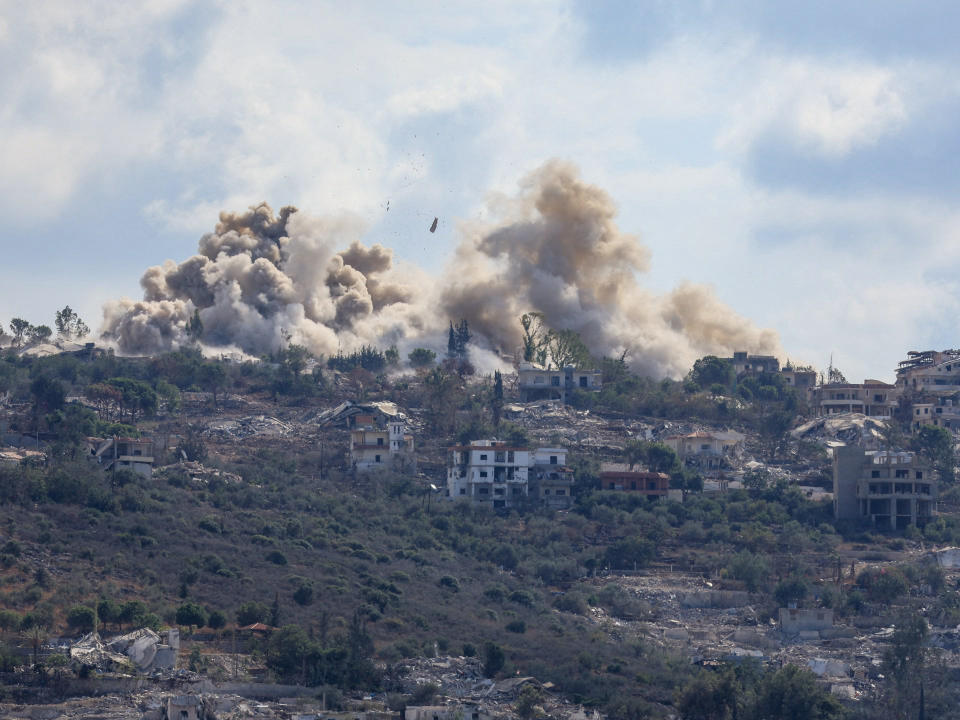
Israel continues to occupy large parts of southern Lebanon behind a demarcation known as the 'Yellow Line', despite a June framework agreement between the two countries that was meant to secure a phased Israeli withdrawal. The line marks the end of an occupation zone stretching up to 10 kilometres into Lebanese territory, where Israel has systematically demolished homes and infrastructure in dozens of villages.
The destruction has displaced tens of thousands of Lebanese. Around 50 frontline villages, including Khiam and Bint Jbeil, have been destroyed. Israeli Defence Minister Israel Katz has previously said troops will not be withdrawn, suggesting an extended occupation.
What analysts say
Mohamad Bazzi, a New York-based political analyst originally from Bint Jbeil, told Al Jazeera that Israel's primary goals were to empty, depopulate and make frontline villages uninhabitable. He said it was a way of applying the Gaza model to Lebanon. He added that most of the destruction occurred since April, despite several ceasefire announcements.
Ahmad Baydoun, a Lebanese architect and open-source researcher, said the Yellow Line is treated as a hard boundary for troop presence and controlled demolitions, which continue despite the ceasefire. He described the situation for those who remain as the 'West Bankification' of southern Lebanon, where residents are permitted to exist but not to use their land freely.
Southerners are living a tragedy. This is all from flawed tragedies and failed politics.
— Ali, a displaced man from Khiam
Displacement and future
The framework agreement included 'pilot zones' from which Israel would withdraw and be replaced by the Lebanese Armed Forces. One such town is Froun, which was destroyed by Israeli air and drone strikes but not entered by troops. Hasan Bazzi, president of Froun's municipal office, told Al Jazeera they were surprised it was included as a pilot zone.
Analysts believe the occupation could extend into the foreseeable future. The Lebanese government has promised prefabricated homes in some areas but may struggle to provide services where infrastructure is widely damaged. Ali, a displaced man from Khiam, said the village is uninhabitable for the next 10 to 20 years and that 'They returned us to the Stone Age.'