How the downfall of Serbia's Vučiċ mirrored that of Hungary's Orbán
Defeat for Serbia's Aleksandar Vučiċ in last weekend's vote was a carbon copy of Viktor Orbán's fall in Hungary.
Key points
- Serbian President Aleksandar Vučić and Hungarian Prime Minister Viktor Orbán were both ousted within a year by popular movements.
- Young, tech-savvy voters and election monitors helped opposition parties win in both countries.
- Vučić conceded at 21:30 on Sunday, the same time Orbán conceded on 12 April.
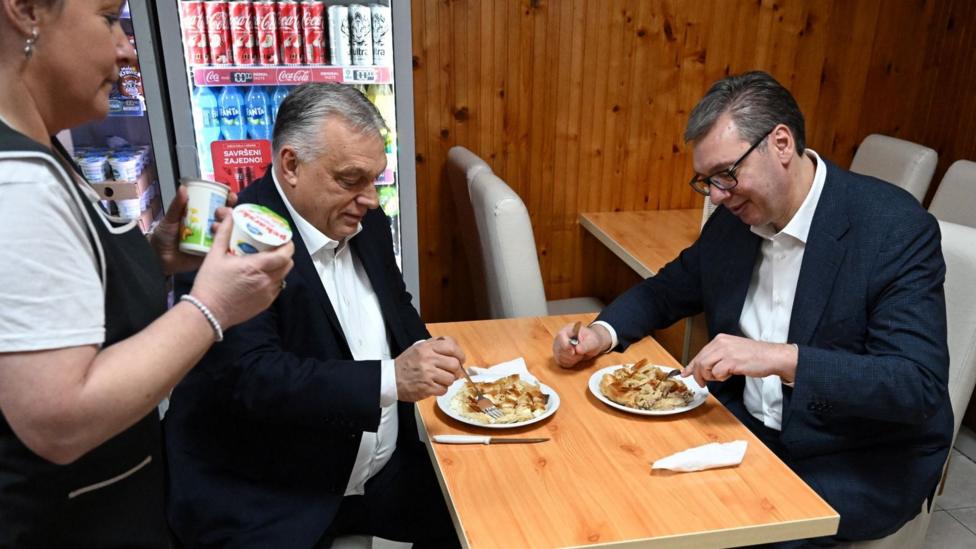
Serbian President Aleksandar Vučić and Hungarian Prime Minister Viktor Orbán, who met in northern Serbia last November, were both out of power within a year. Orbán was defeated in April by Péter Magyar's Tisza party. Last Sunday, a student movement less than two years old won Serbia's parliamentary elections by a landslide.
The two opposition movements differ: Tisza is centred on its leader's personality, while the Serbian students insist they have no leadership. But high turnout, 79% in Hungary and 69% in Serbia, was driven by tech-savvy young people in both countries. They used AI tools to analyse data, identify threats to the vote and mobilise tens of thousands of election monitors to prevent intimidation and fraud.
Election monitoring tactics
Hungary's DE civic action group sent 70 election monitors to Serbia last weekend to work with student movement representatives in Vojvodina. During the summer, before the election was called, they held workshops to share methods from the Hungarian election.
A key technique was identifying "infected" polling districts in advance, where unusually high past votes for the governing party suggested intimidation or "chain voting". Student activist Péter Klemm from Subotica told the BBC that from around 16:00 on election day, groups of masked Vučić supporters gathered near voting stations, so mobile teams were sent to film everything. He believes 20 to 30 volunteers at each threatened station deterred intimidation or fraud.
It is always good to hear that the story of Tisza could provide an inspiration for other nations.
— Péter Magyar
Parallels and reactions
Vučić admitted defeat at exactly 21:30 on Sunday, just as Orbán did on 12 April. There has been speculation that Vučić spoke to Orbán twice on Sunday night, once before conceding and again at 23:15, and that Orbán convinced him not to use force. Vučić denies speaking to Orbán before his announcement but acknowledges the later conversation. Orbán declined to comment to the BBC.
The Student List will have 140 seats in Serbia's 250-seat parliament, the same number Tisza won in Hungary's 199-seat parliament. Magyar was the only European leader to call the students directly to congratulate them. "It is always good to hear that the story of Tisza could provide an inspiration for other nations," Magyar told the BBC. Student List head Ilija Srdanović said on the eve of the vote that the Hungarian result clearly showed "what we are doing here is right".