IceCube detects ghost particles with 10 billion times the energy of solar neutrinos
Mysterious particles called neutrinos constantly stream through our bodies, and scientists are now detecting incredibly powerful versions arriving from distant cosmic sources using a massive observatory buried in Antarctic ice. These elusive “ghost particles” could hold extraordinary clues about the Big Bang, extreme cosmic events, and some of the universe’s greatest mysteries.
Key points
- Physicist Francis Halzen received this year's Nobel Prize in Physics for his work on IceCube and high-energy astrophysical neutrinos.
- Neutrinos have no electric charge and extremely small mass, and about 100 billion pass through each square centimeter of the body every second.
- IceCube, embedded in roughly one cubic kilometer of Antarctic ice, detects only a few dozen of the most energetic cosmic neutrinos each year.
Neutrinos, nearly massless particles with no electric charge, pass through Earth and human bodies in vast numbers while rarely interacting with matter. George Fuller, a Distinguished Professor of Physics at the University of California San Diego, explained their unusual properties in comments reported by ScienceDaily.
The article notes that neutrino research has contributed to five Nobel Prizes in Physics, and that physicist Francis Halzen received this year's award for his work on the IceCube Neutrino Observatory and the discovery of high-energy neutrinos of astrophysical origin.
Why Antarctica suits neutrino hunting
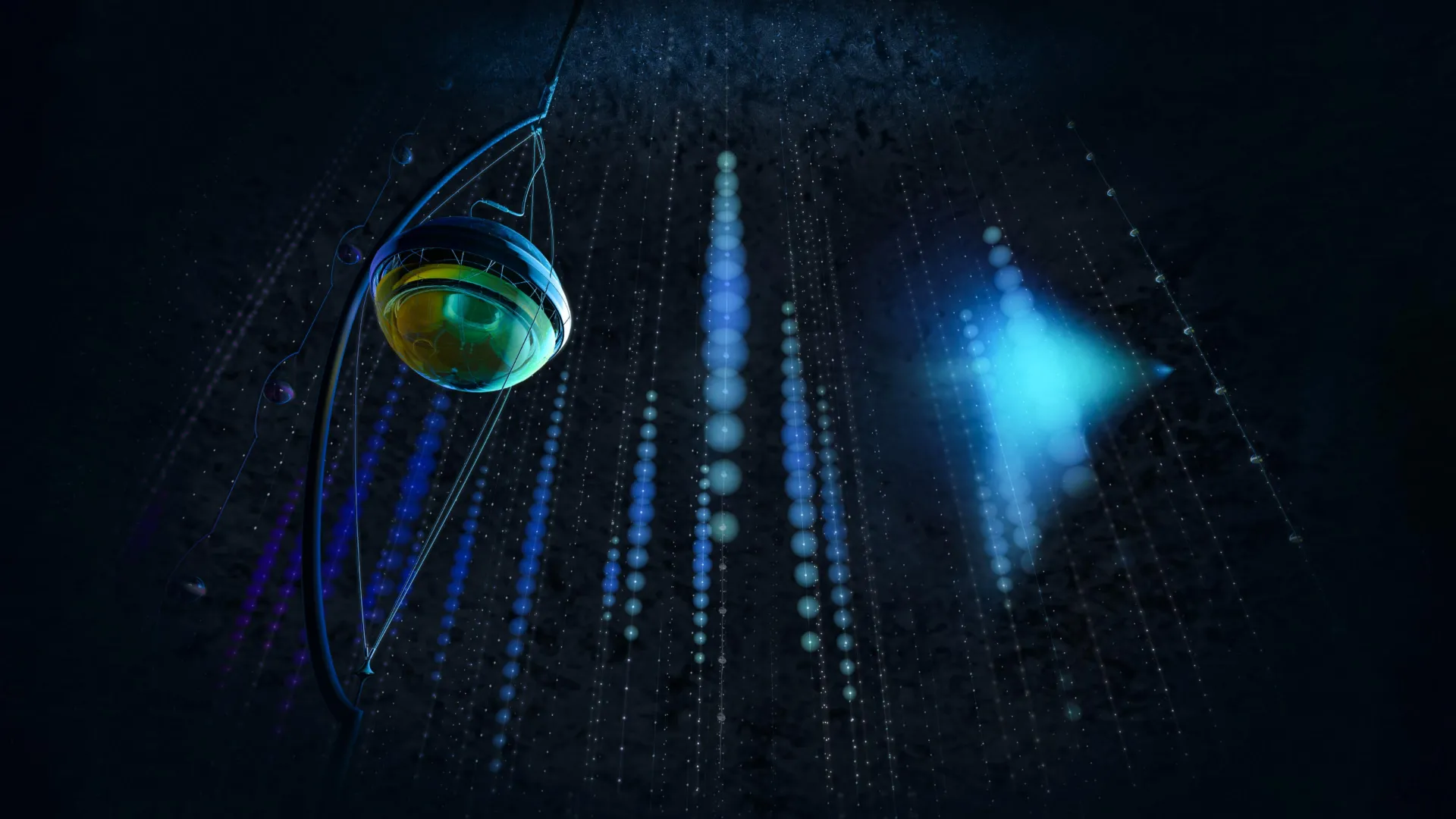
During the 1990s, Halzen identified the South Pole as a strong setting for neutrino research because the deep ice there is exceptionally clear, with few bubbles or contaminants that would interfere with faint light signals. IceCube was eventually built within roughly one cubic kilometer of Antarctic ice, using long strings of light detectors lowered into deep holes.
The detectors look for brief flashes of blue light called Cherenkov radiation, produced when a neutrino interacts with the ice and creates a charged particle moving faster than light travels through that material. The observatory records only a few dozen of the most energetic cosmic neutrinos each year.
Neutrinos are truly ghost-like particles. It's hard to stop them. It's hard to catch them.
— George Fuller
Extreme energies and early universe
Fuller said some ultra-high-energy neutrinos detected at IceCube carry roughly 10 billion times the energy of a typical solar neutrino, and one found by a similar experiment had 200 times more energy than that. He said scientists do not know where that neutrino came from.
Researchers at UC San Diego are also involved in the Simons Observatory in Chile's Atacama Desert, which studies the cosmic microwave background. Fuller said its measurements could reveal information about neutrinos from the universe's earliest stages.