Light and Magic: The Birth of Art Photography review – a rhapsodic show to stop you in your tracks
Tate Modern, London From a Singapore construction worker to a loincloth-wearing Sri Lankan, this awe-inspiring and truly global exhibition finds epic beauty in the everyday I don’t remember the last time I saw such a well-researched and truly globally representative exhibition that doesn’t patronise but quietly makes its case unapologetically, fearlessly and through sheer quality. Apart from being the first…
Key points
- Tate's show is the first retelling of the international pictorialism movement, with about half the works new to the UK.
- The exhibition spans colour prints, salon photography from Sydney, Hong Kong and Brazil, and works by Yip Cheong Fun and Han Youngsoo.
- The reviewer says the show leaves politics aside and includes some unnecessary educational elements, such as a darkroom recreation.
A new exhibition at Tate, Light and Magic: The Birth of Art Photography, is described by the Guardian's reviewer as the first retelling of the international pictorialism movement. About half of the works on display have never been shown in the UK, the review says.
The show moves between three-colour carbon prints of flowers in a London garden in the 1920s and works from photographic salons and clubs in Sydney, Hong Kong and Brazil. The reviewer calls it well-researched and globally representative, and says it makes its case through sheer quality.
Works that stop the viewer
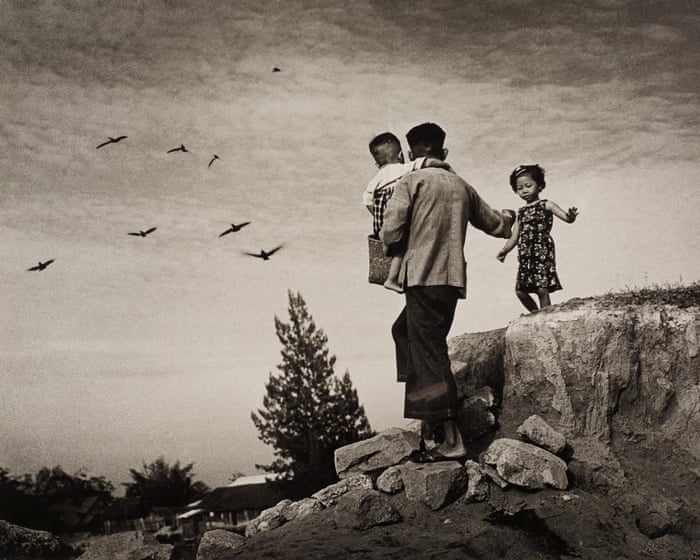
The reviewer singles out Yip Cheong Fun's 1940 Father's Care, an image of a man helping two children down a rocky crag, as a touching picture of parenthood and the passage of time. Lionel Wendt's study of a young Sri Lankan man in his Colombo studio is described as an ambiguous exploration of hidden desires.
Also noted are Han Youngsoo's small, noirish 1955 Korean street scenes and two 1925 bromide prints by Kate Smith titled The Listener, which the reviewer says leave the viewer between the visible and the imagined.
I stopped in my tracks
— The Guardian reviewer
Criticism of the presentation
The review says the exhibition is not a critical look at pictorialism, leaving mysteries intact and politics largely at the door. It adds that some educational elements feel unnecessary, including a timeline of photographic techniques and a full-scale darkroom recreation visitors cannot enter.
Despite this, the reviewer concludes that the show is intelligent, beautiful and rhapsodic, and a reminder that seeking moments of magic and beauty is a human instinct.