
October’s night sky is full of cosmic tricks and treats
October’s skies are packed with celestial surprises, from Jupiter disappearing behind the Moon to two meteor showers lighting up the darkness. NASA highlights four must-see events, including shooting stars from Halley’s Comet and a glowing Hunter’s Moon just before Halloween.
Key points
- Jupiter was occulted by the Moon before sunrise on October 6 for about an hour, visible in parts of North America.
- The Draconid meteor shower peaks on the evening of October 8, with ideal dark skies due to a near-new Moon.
- The Orionid meteor shower peaks on October 21, but moonlight may hinder viewing until after 3 a.m. local time.
October's night sky will feature several celestial events, including a lunar occultation of Jupiter, two meteor showers, and a full Moon on Halloween, according to NASA.
The events offer skywatchers opportunities to observe astronomical phenomena, some without special equipment.
Jupiter hides behind the Moon
Before sunrise on Tuesday, October 6, skywatchers in parts of North America could see Jupiter disappear behind the Moon's slender crescent for about an hour. This phenomenon, called a lunar occultation, occurs when the Moon passes between Earth and a more distant object, temporarily blocking it from view.
The event was visible to the naked eye, though binoculars provided a more detailed view. Observers with optical equipment might also have seen some of Jupiter's moons vanish and reappear behind the lunar edge. Viewing depended on location, with the occultation visible across eastern and central North America, occurring around 4 a.m. EDT in some areas.
NASA's month of celestial tricks and treats
— NASA
Meteor showers and full Moon
The Draconid meteor shower peaks on the evening of Thursday, October 8, with favorable viewing from about 9 p.m. EDT into early Friday. Unlike many showers, the Draconids are best seen soon after nightfall. The near-new Moon means dark skies, making even faint meteors easier to spot. The shower typically produces only a few meteors per hour, so observers should seek dark locations and let their eyes adjust.
The Orionid meteor shower peaks on October 21. These meteors are debris from Halley's Comet. NASA estimates 3 to 6 meteors per hour may be visible in suburban areas, with more in darker skies. However, the waxing gibbous Moon may obscure dimmer meteors until it sets around 3 a.m. local time, when Orion will be higher.
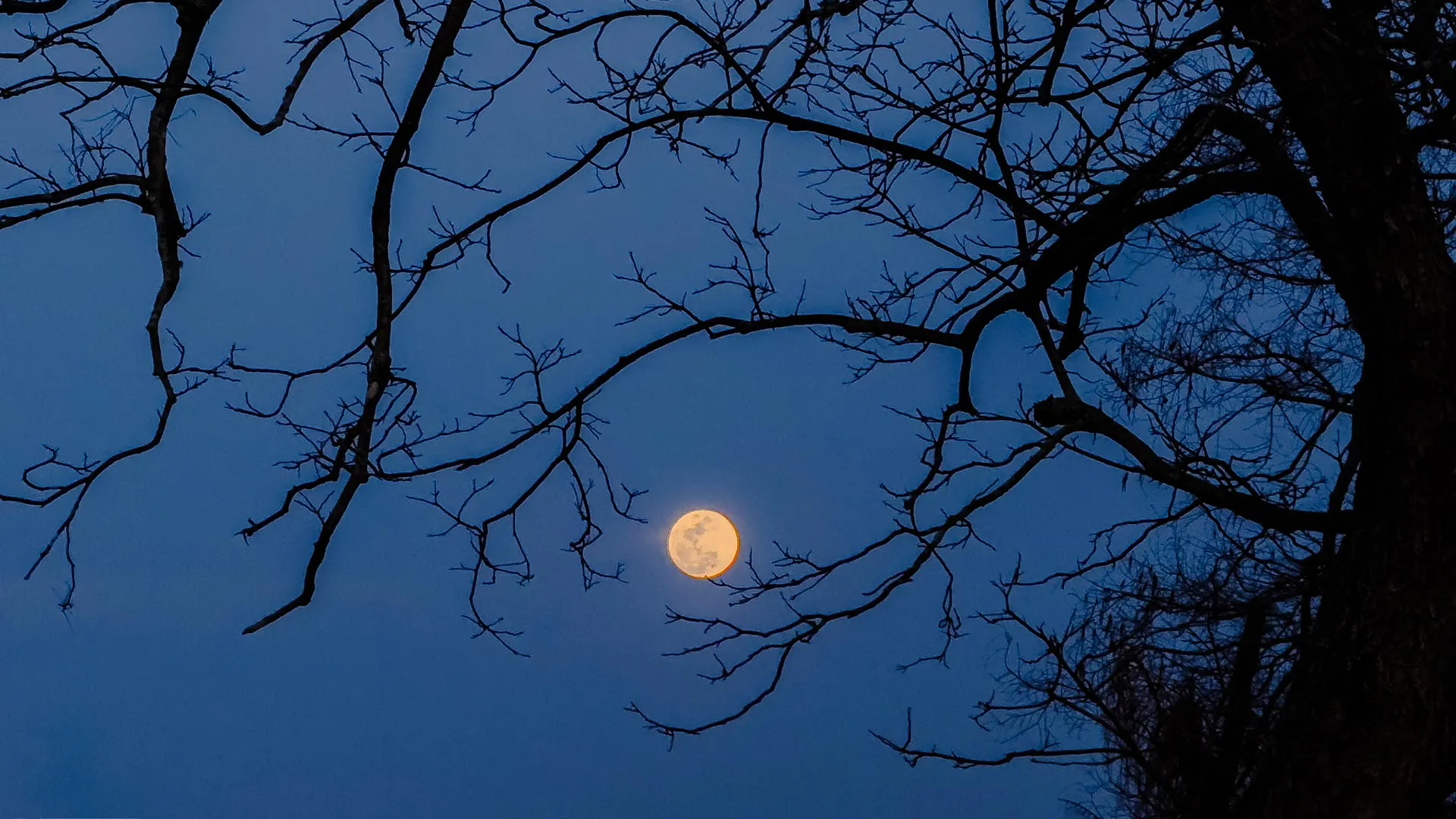
October's full Hunter's Moon occurs on October 26 in Universal Time, appearing full on the evening of Sunday, October 25 for much of North America. The name comes from autumn traditions when bright moonlight helped hunters after sunset. The Moon will remain prominent, gradually becoming a waning gibbous as Halloween approaches.


