School headscarf ban sparks rare protests in Azerbaijan and row with Turkey
Protests have taken place over the rules which have seen pupils wearing hijabs turned away from schools.
Key points
- Azerbaijan began enforcing a school hijab ban on Monday, sparking rare protests in Baku and southern districts.
- Police detained 37 people on Monday for obstructing the rules and violating public order.
- The ban has caused a diplomatic row with Turkey, where officials called the restrictions unacceptable.
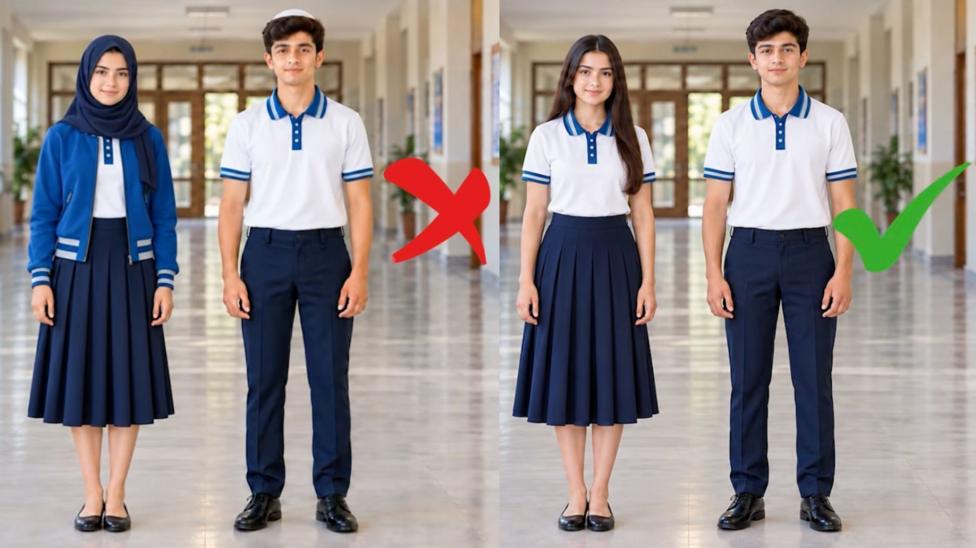
Azerbaijan's education ministry began enforcing new uniform rules last Monday that turn away female pupils wearing hijabs from state schools. Protests broke out outside schools in the capital Baku and in southern districts including Masally and Jalilabad. Such protests are rare in the oil- and gas-producing country of 10.5 million people.
The interior ministry said it detained 37 people on Monday who tried to obstruct the rules and "grossly violate public order". The rules, approved on 21 September, ban clothing that contradicts the principle of secularism in education in state schools. They do not mention the hijab. Similar guidelines were extended to teachers on 6 October.
Protests and detentions
Videos shared online show girls in hijabs protesting outside schools. One banner outside School No. 69 in Balakhany read: "The hijab does not prevent anyone from getting an education." Shahiza Huseynova, a mother protesting in the Mashtaga district, was detained on Tuesday. Her husband Agha told Meydan TV that she was warned: "Either you take off your child's hijab and send them to school, or you go to prison."
Activist Ilkin Huseynov launched an online platform called "Let Leyli Go to School" on Tuesday, offering free lessons to barred pupils. A friend said Huseynov left his Baku home with unidentified men around 16:00 on Wednesday and his phone has been off since. Authorities have not commented. Users have reported problems accessing Instagram and TikTok without a VPN since the protests began.
A child has no freedom to choose a religion. This is a conscious prerogative of adults.
— Nigar Arpadarai, Azerbaijani MP
Turkey dispute and cyberattack
The row has spilled over into Turkey, Azerbaijan's closest ally. Turkish President Recep Tayyip Erdoğan's chief adviser, Oktay Saral, called the restrictions "unacceptable" and urged Baku to "reverse this mistake". Several MPs from Turkey's governing AK Party joined in. Small demonstrations were held outside Azerbaijan's embassy in Ankara and consulate in Istanbul.
President Aliyev's New Azerbaijan Party accused Turkish officials of an "openly defamatory" information campaign and warned against interference. Earlier this month, Aliyev said no one should "stick their noses into our way of life". On 13 October, Azerbaijan's State Service for Special Communications said a "foreign hacker group" attacked over 100 state websites. A pro-Iranian group calling itself the 313 Team claimed responsibility.