
Scientists created a tiny device that can control your nerves to treat chronic pain
Scientists have developed a tiny, injectable device that can control nerve activity without surgery, batteries, or wires, potentially transforming treatment for chronic pain and movement disorders. Powered wirelessly from outside the body, the seed-sized technology has shown promising results in early testing.
Key points
- Scientists at NYU Abu Dhabi and Cleveland Clinic Abu Dhabi developed a seed-sized injectable device that regulates nerve activity wirelessly without surgery or wires.
- The device, described in Science Advances, can be guided and monitored using ultrasound and CT scans and delivers programmable electrical stimulation.
- Early laboratory and preclinical testing showed the device could activate nerves in living organisms, but its effectiveness in human patients has not yet been established.
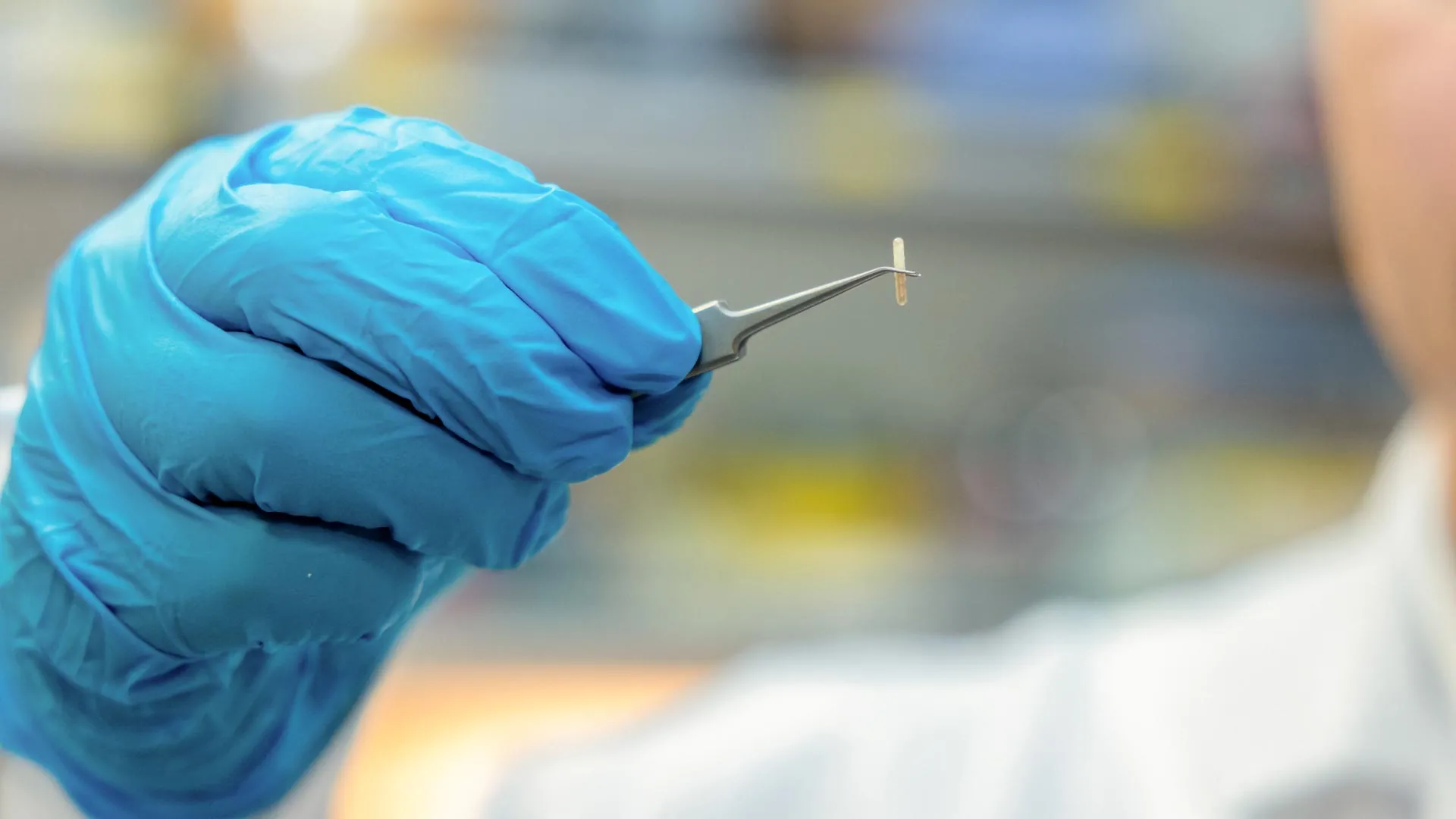
Scientists at NYU Abu Dhabi, working with Cleveland Clinic Abu Dhabi, have created a miniature medical device that could change how chronic pain and movement disorders are treated. The device is small enough to be delivered through a standard needle and regulates nerve activity without surgical implantation, batteries or connecting wires.
The findings were published in Science Advances. The device, roughly the size of a small seed, is injected and positioned near a specific nerve, where it sends controlled electrical signals. Power comes wirelessly from outside the body, letting doctors or patients adjust stimulation in real time.
How the device works
Doctors can locate and monitor the device using familiar imaging methods, including ultrasound and computed tomography scans, to guide placement near the intended nerve and check its position afterward. The implant also provides programmable electrical stimulation, meaning signals can be adjusted to suit a patient's needs.
The researchers say the technology could offer another option alongside existing treatments such as medications and surgically implanted devices, rather than replacing them.
By creating a device that can be injected rather than surgically implanted, we are making these therapies simpler, safer, and more accessible
— Prof. Khalil Ramadi
Early testing and outlook
The team evaluated the technology through laboratory experiments and preclinical testing. Results showed the device could deliver precise nerve stimulation while staying consistent under conditions meant to resemble real-world use. The device also successfully activated nerves in vivo, within a living organism rather than only in an isolated lab setting.
The study's senior author, Prof. Khalil Ramadi of NYU Abu Dhabi and NYU Tandon, said the work marks a shift in thinking about nerve-related conditions. First author Dr. Mohamed Elsherif said the technology could bridge the gap between non-invasive therapies and traditional implants. However, the device's ability to relieve chronic pain or improve movement disorders in humans has not yet been established.


