
Scientists discover a hidden factor that can make or break chemical reactions
Researchers discovered a hidden factor that can determine whether chemical reactions succeed or fail, and then used it to boost the proportion of the desired product from 16% to 97%. By controlling acidity near electrodes, they developed a promising way to manufacture chemicals for plastics, medicines, and other products using oxygen and electricity instead of hazardous added oxidants.
Key points
- Researchers at Seoul National University found that controlling local pH near electrodes raised the share of a desired chemical product from about 16% to 97%.
- A survey of more than 600 papers since 2010 found about 89% of organic electrosynthesis studies involved reactions where both electrons and protons were transferred, suggesting local pH effects are widespread.
- The team used oxygen and electricity instead of added peroxide oxidants and produced lactones from 18 ketones and epoxides from six alkenes.
Scientists at Seoul National University College of Engineering have identified a hidden factor that can decide whether a chemical reaction succeeds or fails: the acidity, or pH, in the tiny region right next to an electrode. By controlling these local pH differences, the team raised the proportion of the desired product in a reaction from about 16% to 97%.
The research, led by Professor Jaeyune Ryu of the Department of Chemical and Biological Engineering, was published in the Journal of the American Chemical Society. It uses oxygen and electricity to make compounds found in plastics, medicines and adhesives, without adding peroxide oxidants.
Why local pH matters
During an electrochemical reaction, protons can be produced or consumed at the electrodes faster than they move through the liquid, so the pH near an electrode can differ greatly from the pH of the rest of the solution. The researchers estimated that even in a neutral solution, conditions near the cathode could reach about pH 11 and near the anode about pH 2.5.
The team examined more than 600 papers on organic electrosynthesis published since 2010 and found that about 89% involved reactions at one or more electrodes in which both electrons and protons were transferred, suggesting the issue may be widespread.
This study transforms 'local pH' near the electrode from a hidden variable into a controllable design principle.
— Professor Jaeyune Ryu
Reactor redesign and results
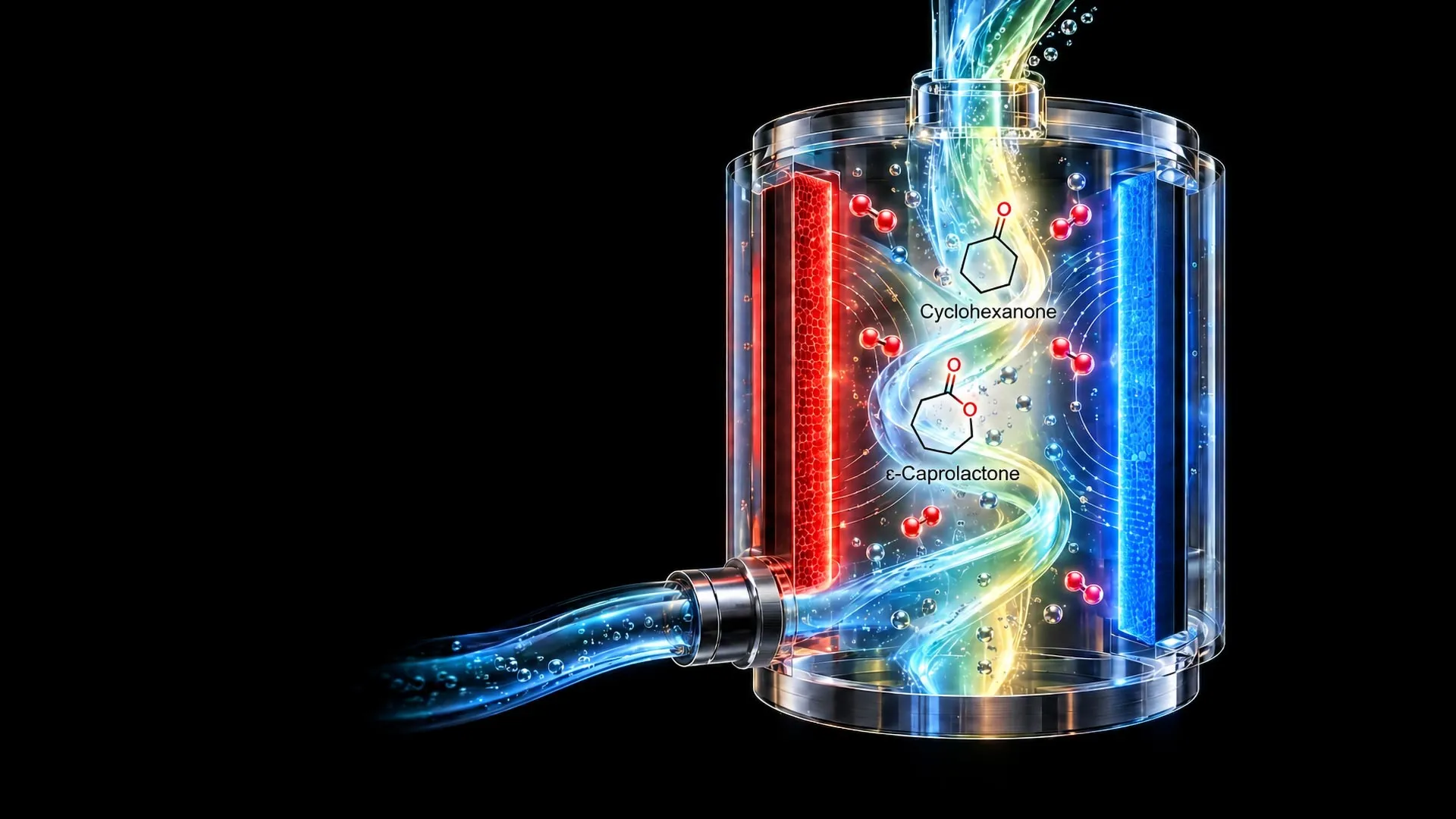
To control local pH, the researchers redesigned the reactor to place the electrodes closer together and let the electrolyte flow between them. Under uncontrolled conditions, about 16% of the relevant products formed were the target compound; with the new design, selectivity rose to about 97%.
The team also produced lactones from 18 different ketone compounds, including ε-caprolactone at an 82% yield, and made epoxides from six alkene starting materials. The reactions run at room temperature and normal pressure, and the researchers say further optimization and larger-scale testing will be needed before industrial use.


