Scientists reprogram immune cells inside the body to fight cancer
Scientists at UC San Francisco have developed a way to create cancer-fighting CAR-T cells directly inside the body, potentially avoiding the slow and extremely expensive process of removing, engineering, and reinfusing a patient’s immune cells. Using a two-particle delivery system, the researchers sent CRISPR gene-editing tools and new cancer-targeting DNA specifically into T cells, where the DNA was inserted at a…
Key points
- UCSF researchers inserted large DNA into precise locations in human T cells without removing them from the body.
- In mice with humanized immune systems, the treatment eliminated leukemia, multiple myeloma, and a solid sarcoma tumor.
- The in vivo engineered T cells performed better than lab-made CAR-T cells, and a company was founded to advance the approach.
Researchers at UC San Francisco have developed a potential alternative to standard CAR-T cell therapy that could reprogram cancer-fighting immune cells directly inside the body. The work, described in Nature, marks the first time scientists have inserted a large stretch of DNA into a precise location in human T cells without first removing those cells from the body.
The targeted technique also performed better than the conventional strategy of using viruses to insert DNA at random locations, suggesting the advance could have implications beyond CAR-T for cell and gene therapies more broadly.
How the new approach works
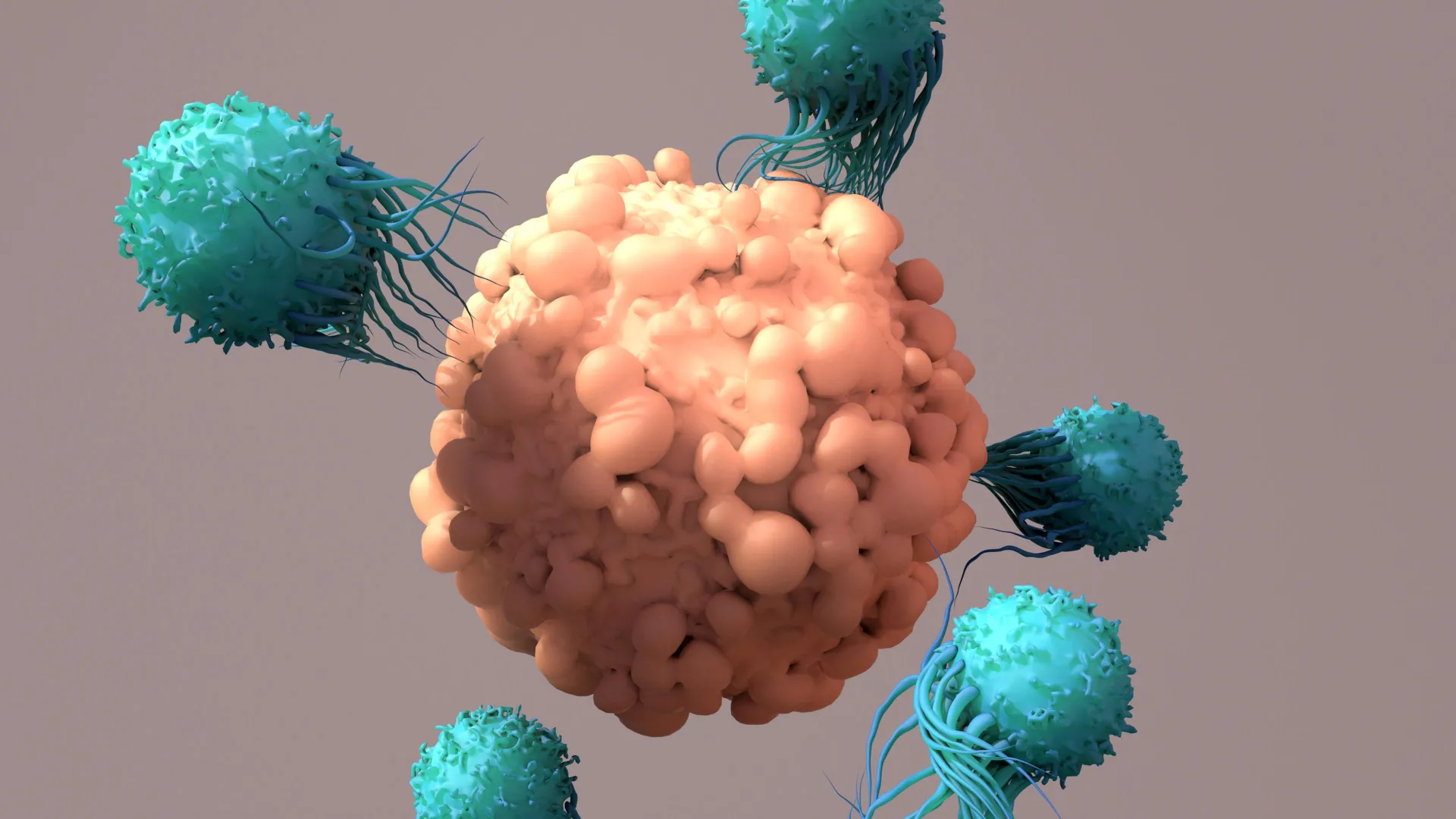
The system uses two different particles to deliver CRISPR-Cas9 gene-editing machinery directly to T cells circulating in the body. One particle carries the CRISPR-Cas9 tools and has antibodies on its surface that recognize CD3, a protein found exclusively on T cells.
The second particle delivers DNA instructions for producing the cancer-fighting CAR and directs the new DNA to a precise location in the T cell genome that contains a molecular on switch active only in T cells. The researchers also designed the particles to avoid immediate destruction by the immune system.
I think this is just the beginning of a big wave of new therapies that will be truly transformational and save a lot of lives
— Justin Eyquem, PhD
Results in mice
In experiments using mice with humanized immune systems, the team tested the system against aggressive leukemia. After a single injection of the two-particle treatment, all detectable cancer disappeared in nearly all of the mice within two weeks, and in some organs the newly engineered CAR-T cells made up as much as 40% of the immune cell population.
The same strategy proved effective against multiple myeloma and a solid sarcoma tumor. Researchers also found that T cells engineered directly inside the body appeared to perform better than comparable cells produced in the laboratory.
Next steps toward patients
The technology is not yet ready for patients. Researchers still need to scale up the approach for human use, and clinical trials will be required to determine whether it is safe and effective in people.
Eyquem and his collaborators have founded Azalea Therapeutics to move the dual-particle platform toward clinical development. If successful in humans, the approach could change how CAR-T treatments are delivered, potentially reducing costs, eliminating waiting times, and allowing community hospitals to offer the therapy.