Tesla says it will start selling Cybercabs by end of year
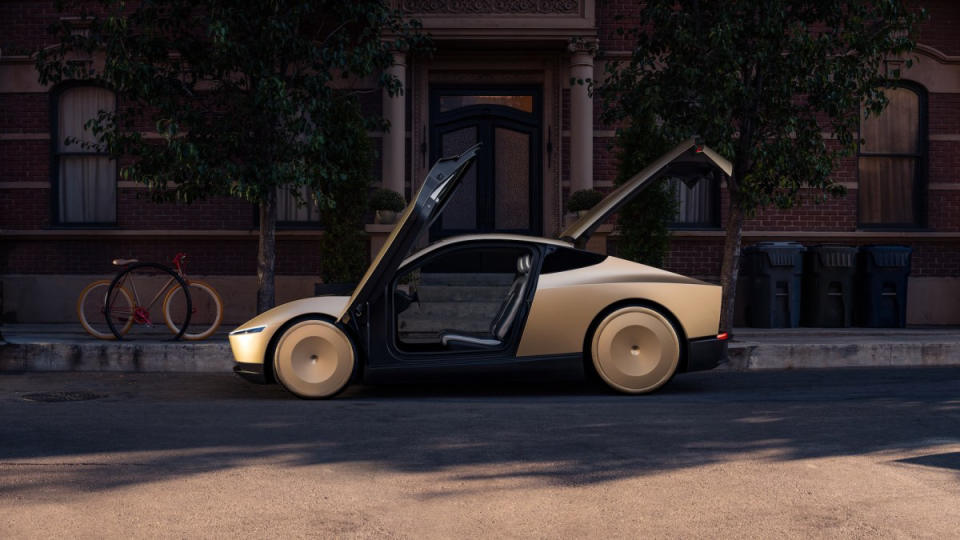
Tesla said Wednesday it will start selling its Cybercab to customers by the end of the year, even as federal regulators investigate whether the vehicle meets vehicle safety standards. The gold-hued, autonomous two-seater lacks a steering wheel and other traditional controls. During the company’s third-quarter earnings call, Lars Moravy, vice president of engineering at Tesla, […]
Key points
- Tesla plans to begin selling its Cybercab to customers by the end of the year, starting small and scaling up.
- The two-seater Cybercab has no steering wheel or traditional controls and is intended mainly for Tesla's own robotaxi fleet.
- NHTSA opened an investigation into the Cybercab after it began operating on public streets in Austin.
Tesla said Wednesday that it will start selling its Cybercab to customers by the end of the year, even as federal regulators investigate whether the vehicle meets safety standards. The gold-colored, autonomous two-seater has no steering wheel or other traditional controls.
On the company's third-quarter earnings call, Lars Moravy, vice president of engineering at Tesla, said Cybercabs produced today are all headed to Tesla's own robotaxi fleet. As that fleet grows, he said, the company will mainly deliver fully designed autonomous vehicles to customers, starting small and scaling as it learns about delivery, ownership and fleet management.
Shift in robotaxi strategy
Tesla first raised the idea of selling the autonomous vehicle to third parties last month around its Cybercab event in Austin and posted a form for people interested in buying robotaxis. Until recently, CEO Elon Musk's robotaxi plans centered on turning privately owned Teslas into self-driving taxis through a software update, a plan that has not yet materialized.
Musk said the Cybercab is meant for ride-hailing rather than personal ownership. He said most Cybercabs will be Tesla-owned and offered as transport as a service, while models such as the 3, Y and Roadster would be the cars customers want to own.
Cybercab is primarily going to be something that is offered as like transport as a service
— Elon Musk
Federal safety investigation
The National Highway Traffic Safety Administration announced last month that it had opened an investigation into the Cybercab, hours after the vehicles began operating on public streets in Austin. Federal Motor Vehicle Safety Standards require manual controls such as brake pedals, along with features like rearview and side mirrors; Tesla self-certified the Cybercab as automakers traditionally do.
Current regulations do not accommodate vehicles without manual controls, though the Department of Transportation has proposed removing those requirements for autonomously driven vehicles. NHTSA said it would examine the process and technical data Tesla relied on when certifying the Cybercab. The investigation's outcome could affect whether Tesla or anyone else can legally operate the vehicle.