The F1 pit stop that helped save lives
How an F1 pit stop inspired changes to hospital care that have helped save lives ever since.
Key points
- McLaren's sub-seven-second pit stop at the 2001 Spanish Grand Prix inspired Great Ormond Street Hospital doctors to redesign surgical handovers.
- A 2007 study by GOSH and Oxford researchers found the F1-inspired handover process reduced technical errors, information omissions and handover time.
- F1 methods have since improved neonatal resuscitation at University Hospital of Wales and cut Air Ambulance Cornwall's take-off time from five minutes to three and a half.
- Williams and Advanced Healthcare Technology developed the Babypod, a carbon fibre carrier designed to withstand a 20G crash for transporting babies.
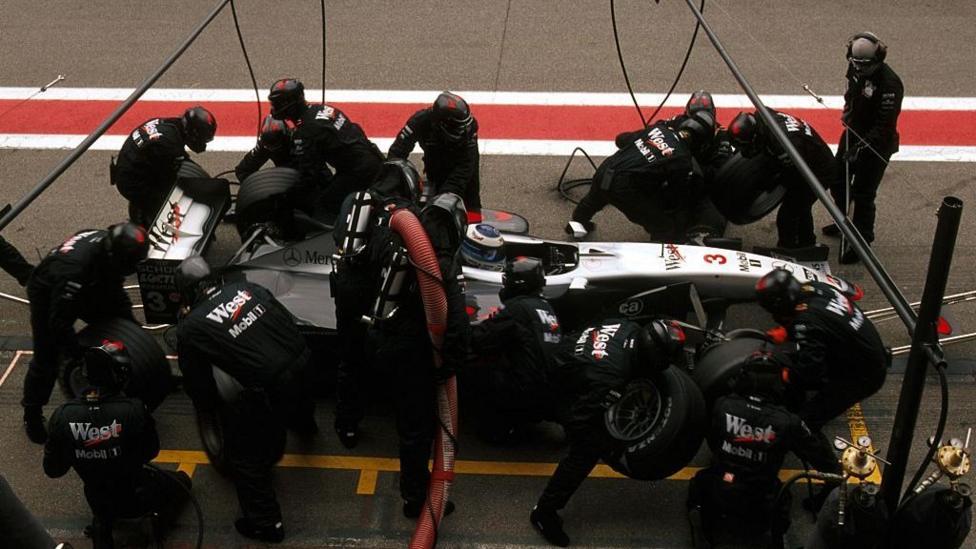
A McLaren pit stop at the 2001 Spanish Grand Prix, completed in under seven seconds, inspired changes in hospital care that are still spreading 25 years later. Dr Martin Elliott and colleagues at Great Ormond Street Hospital in London watched the stop after finishing a life-saving operation on a young child.
The doctors applied F1 practices to surgery-to-ICU handovers and neonatal care. At Ferrari's factory in Maranello, the medical team studied how pit crews organised roles, communication and handovers.
Checklists and handover changes
Doctors and nurses began each procedure with a checklist that set out specific roles and tasks. This reduced human error and helped ensure key tasks were completed. All patient data was shared from the operating theatre to the care unit.
Gaps in performance were identified and addressed, and repeated rehearsals helped refine the process. A 2007 study by researchers at GOSH and the University of Oxford found the F1-inspired handover process reduced technical errors, information omissions and handover time. The model was later adopted by other healthcare teams.
The environment we were working in then and in many ways still do is fundamentally potentially dangerous at every step.
— Dr Martin Elliott
Neonatal care and air ambulances
Fifteen years ago, Williams worked with the University Hospital of Wales to improve neonatal resuscitation. Former Williams human performance specialist Gemma Fisher saw that pit-crew equipment organisation could apply in hospitals. Video analysis showed chaotic emergencies with overlapping voices and misplaced equipment. Standardising roles and debriefings sped up responses and encouraged junior doctors to raise concerns without fear of blame.
Williams and Advanced Healthcare Technology later developed the Babypod, a carbon fibre carrier designed to withstand a 20G crash for transporting babies from ambulance to hospital. At this year's Silverstone race, a collaboration with Air Ambulance Cornwall cut take-off time from five minutes to three and a half using quick, organised starts and clear communication.