The Gulf has entered a new era of instability. If its leaders think they can rely on old alliances, they are wrong | Nesrine Malik
The latest attack by Houthi rebels on Saudi Arabia may prove to be more calamitous for the region than the world imagines On Saturday, Houthi rebels launched a shocking and deadly attack on Saudi Arabia’s capital city, Riyadh. At the time of writing, the missile strike on King Khalid international airport has killed at least 13 people and left 300 injured, marking a significant turn in a regional conflagration that…
Key points
- Houthi rebels launched a deadly missile strike on Riyadh's King Khalid international airport on Saturday, killing at least 13 people and injuring 300.
- It was the deadliest attack on any Gulf country since the US and Israel launched their war on Iran in February.
- The article says the Gulf has entered a new era of instability and old alliances can no longer be relied upon.
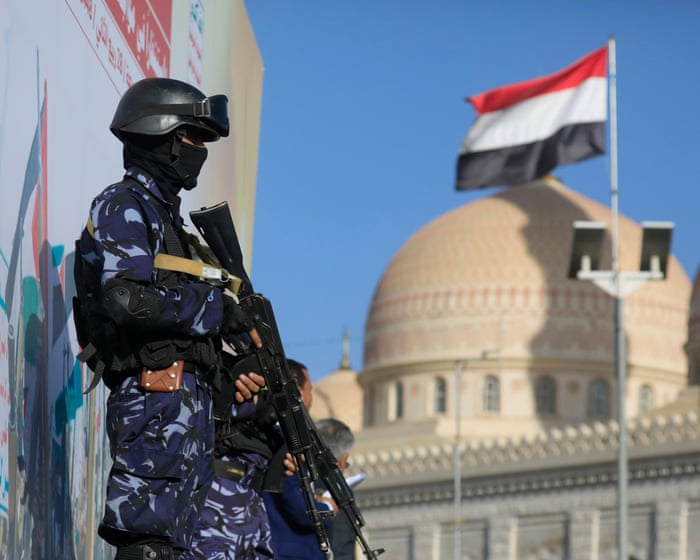
Houthi rebels launched a deadly missile attack on Saudi Arabia's capital, Riyadh, on Saturday, striking King Khalid international airport. At the time of writing, the strike had killed at least 13 people and left 300 injured.
The article describes it as the single most deadly attack on any Gulf country since the US and Israel launched their war on Iran in February. It says the death toll is unusually high for Saudi Arabia and is likely to prompt a bloody response.
A new era of instability
The article argues that over the past year the Gulf has entered a new era of instability that is not temporary and cannot be reversed. It says the gradual erosion of peace and security in Saudi Arabia, Qatar and the UAE has changed the region more than its leaders would like to admit.
It points to Iran firing missiles at a Qatar airbase hosting American troops, Israel later striking Doha without warning, and the 2026 US-Israeli war on Iran, after which Tehran struck Saudi Arabia, Qatar, the UAE, Bahrain, Kuwait and Oman, targeting military sites, energy facilities and desalination plants.
so that the world understands
— a senior Houthi official
Houthi advances and US limits
The article says the 2026 war against Iran created strategic openings and stirred political loyalties, leading to a surge of Houthi advancement in Yemen. It cites the closure of the strait of Hormuz shifting commercial traffic along Yemen's coastline, prompting Houthi territorial gains and a push for control of the Bab al-Mandab strait.
It also says the limits of the US security umbrella became clear when the Trump administration refused to extend military assistance to Saudi Arabia against the Houthis, after US officials met the Houthis, who assured them they would not attack US ships in the Red Sea, only Saudi vessels.