U.S. reportedly considers use of 'mother of all bombs' as Iran vows to fight on
The U.S. military has reportedly drawn up options for strikes on Iran that include the potential use of one of the biggest nonnuclear bombs in its arsenal.
Key points
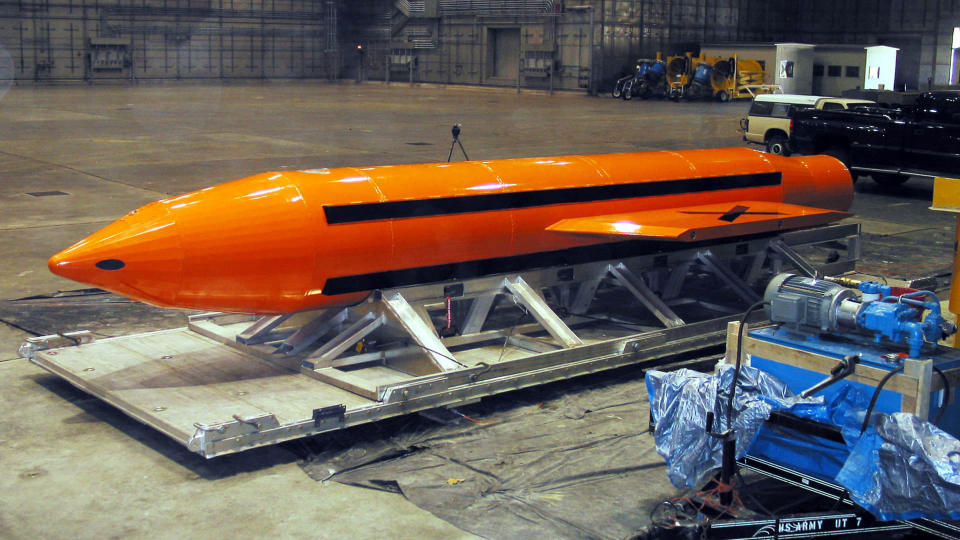
- CNN reported that U.S. strike options against Iran include the possible use of the GBU-43/B Massive Ordnance Air Blast Bomb.
- Iranian Parliament Speaker Mohammad Bagher Ghalibaf said Iran must keep using military and defensive capabilities, negotiations and regional leverage to push the U.S. to accept its demands.
- Trump said last week he would not order a resumption of military strikes before the Nov. 3 midterm elections.
The U.S. military has prepared options for renewed strikes on Iran that include the possible use of one of the largest nonnuclear bombs in its arsenal, CNN reported Thursday. The plans involve the GBU-43/B Massive Ordnance Air Blast Bomb, known as the "mother of all bombs," according to CNN, which cited multiple U.S. officials familiar with the matter. CNBC said it had not independently confirmed the report and had asked the Defense Department for comment.
The 21,600-pound airburst weapon is designed to affect surface targets over a wide area and has not been deployed by the U.S. in earlier strikes inside Iran. It was used in Afghanistan in 2017 during the previous Trump administration.
Iran vows to keep fighting
Iranian Parliament Speaker Mohammad Bagher Ghalibaf said in a televised address late Wednesday that Iran must continue to combine military and defensive capabilities, negotiations and regional strategic leverage to press the U.S. to accept its demands. Tehran has previously listed demands including Washington lifting its naval blockade and sanctions and withdrawing U.S. military forces from the region.
Ghalibaf said Iran's aim is not to be trapped in an endless war, but to stop the U.S. and its other adversaries from achieving their objectives through military attacks, according to Iranian state-affiliated media.
Iran must continue to use a combination of military and defensive capabilities, negotiations, and regional strategic leverage
— Mohammad Bagher Ghalibaf
Regional tensions and midterms
President Donald Trump said last week he would not order a resumption of military strikes before the midterm elections on Nov. 3. Tensions in the Middle East remain elevated after a container ship sank in the Strait of Hormuz on Wednesday and a series of fatal attacks on Saudi Arabia by the Iran-backed Houthis.
The White House faces growing pressure to show progress on its Middle East goals before the midterms, as Americans feel the effects at home through soaring energy prices and broader cost pressures. The Wall Street Journal reported that Tehran is strengthening defenses around sensitive energy and nuclear sites ahead of any renewed attacks.